PI3KC2α-IN-3
Modify Date: 2025-08-27 00:00:08
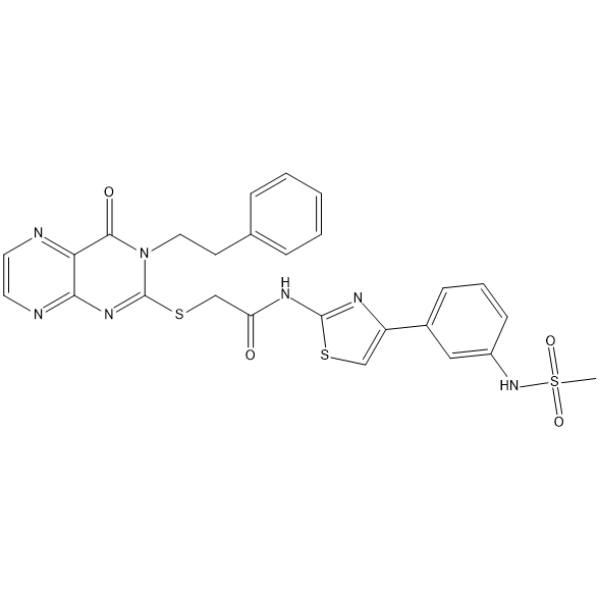
PI3KC2α-IN-3 structure
|
Common Name | PI3KC2α-IN-3 | ||
|---|---|---|---|---|
| CAS Number | 2397679-88-6 | Molecular Weight | 593.70 | |
| Density | N/A | Boiling Point | N/A | |
| Molecular Formula | C26H23N7O4S3 | Melting Point | N/A | |
| MSDS | N/A | Flash Point | N/A | |
Use of PI3KC2α-IN-3PI3KC2α-IN-3 is a potent and highly selective PI3KC2α inhibitor (IC50: 126 nM). PI3KC2α-IN-3 interacts with the ATP-binding site of PI3KC2α. PI3KC2α-IN-3 impairs endocytic membrane dynamics and membrane remodeling. PI3KC2α-IN-3 can be used in the research of thrombosis, diabetes and cancers[1]. |
| Name | PI3KC2α-IN-3 |
|---|
| Description | PI3KC2α-IN-3 is a potent and highly selective PI3KC2α inhibitor (IC50: 126 nM). PI3KC2α-IN-3 interacts with the ATP-binding site of PI3KC2α. PI3KC2α-IN-3 impairs endocytic membrane dynamics and membrane remodeling. PI3KC2α-IN-3 can be used in the research of thrombosis, diabetes and cancers[1]. |
|---|---|
| Related Catalog | |
| Target |
PI3KC2α:126 nM (IC50) PI3KC2β:>10 μM (IC50) PI3KC2γ:>10 μM (IC50) |
| In Vitro | PI3KC2α-IN-3 (PITCOIN3, 30 nM-1 mM, HEK293T cell lysates) is highly selective in targeting PI3KC2α but no other human kinases (Kinobead profiling assay)[1]. PI3KC2α-IN-3 (100 μM, 20 h) shows no detectable cytotoxicity in HeLa cells[1]. PI3KC2α-IN-3 (6 h) blocks plasma membrane tubulation induced by eGFP–SNX9 in HeLa cells (EC50: 4.6 μM)[1]. PI3KC2α-IN-3 (20 μM, 6 h) results in impaired clathrin-mediated endocytosis of transferrin in Cos7 cells[1]. PI3KC2α-IN-3 (20 μM, 6 h) inhibits endosomal PI(3)P synthesis[1]. PI3KC2α-IN-3 (20 μM, 6 h) impairs platelet membrane and thrombus formation in mouse resting platelets[1]. Cell Viability Assay[1] Cell Line: Cos7 cells Concentration: 20 μM Incubation Time: 6 h Result: Reduced endosomal PI(3)P, and reduced endosomal membrane recruitment of the PI(3)P-binding effector early endosomal antigen 1 (EEA1). |
| Molecular Formula | C26H23N7O4S3 |
|---|---|
| Molecular Weight | 593.70 |
| InChIKey | ZQUVBPXCXCKORU-UHFFFAOYSA-N |
| SMILES | CS(=O)(=O)Nc1cccc(-c2csc(NC(=O)CSc3nc4nccnc4c(=O)n3CCc3ccccc3)n2)c1 |