T0070907
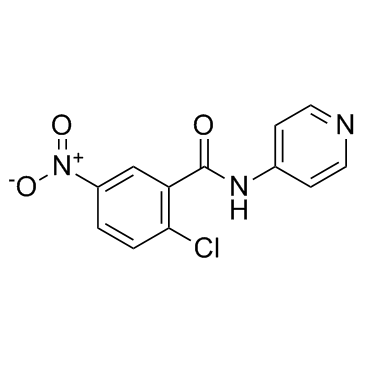
T0070907 structure
|
Common Name | T0070907 | ||
|---|---|---|---|---|
| CAS Number | 313516-66-4 | Molecular Weight | 277.663 | |
| Density | 1.5±0.1 g/cm3 | Boiling Point | 381.7±37.0 °C at 760 mmHg | |
| Molecular Formula | C12H8ClN3O3 | Melting Point | N/A | |
| MSDS | USA | Flash Point | 184.6±26.5 °C | |
| Symbol |

GHS07 |
Signal Word | Warning | |
|
A Sativex(®) -like combination of phytocannabinoids as a disease-modifying therapy in a viral model of multiple sclerosis.
Br. J. Pharmacol. 172 , 3579-95, (2015) Sativex(®) is an oromucosal spray, containing equivalent amounts of Δ(9) -tetrahydrocannabinol (Δ(9) -THC) and cannabidiol (CBD)-botanical drug substance (BDS), which has been approved for the treatment of spasticity and pain associated to multiple sclerosis ... |
|
|
Cyclohexane-1,2-dicarboxylic acid diisononyl ester and metabolite effects on rat epididymal stromal vascular fraction differentiation of adipose tissue.
Environ. Res. 140 , 145-56, (2015) Plastics are generally mixed with additives like plasticizers to enhance their flexibility, pliability, and elasticity proprieties. Plasticizers are easily released into the environment and are absorbed mainly through ingestion, dermal contact, and inhalation... |
|
|
Bioenergetic programming of macrophages by the apolipoprotein A-I mimetic peptide 4F.
Biochem. J. 467(3) , 517-27, (2015) The apoA-I (apolipoprotein A-I) mimetic peptide 4F favours the differentiation of human monocytes to an alternatively activated M2 phenotype. The goal of the present study was to test whether the 4F-mediated differentiation of MDMs (monocyte-derived macrophag... |
|
|
Neurorestoration after traumatic brain injury through angiotensin II receptor blockage.
Brain 138 , 3299-315, (2015) See Moon (doi:10.1093/awv239) for a scientific commentary on this article.Traumatic brain injury frequently leads to long-term cognitive problems and physical disability yet remains without effective therapeutics. Traumatic brain injury results in neuronal in... |
|
|
Pharmacological evaluation of the mechanisms involved in increased adiposity in zebrafish triggered by the environmental contaminant tributyltin.
Toxicol. Appl. Pharmacol. 294 , 32-42, (2016) One proposed contributing factor to the rise in overweight and obesity is exposure to endocrine disrupting chemicals. Tributyltin chloride (TBT), an organotin, induces adipogenesis in cell culture models and may increases adipose mass in vivo in vertebrate mo... |
|
|
Cultured human periosteal-derived cells have inducible adipogenic activity and can also differentiate into osteoblasts in a perioxisome proliferator-activated receptor-mediated fashion.
Int. J. Med. Sci. 11(11) , 1116-28, (2014) We investigated the adipogenic activity of cultured human periosteal-derived cells and studied perioxisome proliferator-activated receptor (PPAR) ligand-mediated differentiation of cultured human periosteal-derived cells into osteoblasts. Periosteal-derived c... |
|
|
Fisetin up-regulates the expression of adiponectin in 3T3-L1 adipocytes via the activation of silent mating type information regulation 2 homologue 1 (SIRT1)-deacetylase and peroxisome proliferator-activated receptors (PPARs).
J. Agric. Food Chem. 62(43) , 10468-74, (2014) Adiponectin, an adipokine, has been described as showing physiological benefits against obesity-related malfunctions and vascular dysfunction. Several natural compounds that promote the expression and secretion of adipokines in adipocytes could be useful for ... |
|
|
Use of an electronic nose system for diagnoses of urinary tract infections.
Biosens. Bioelectron. 17(10) , 893-9, (2002) The use of volatile production patterns produced by bacterial contaminants in urine samples were examined using electronic nose technology. In two experiments 25 and 45 samples from patients were analysed for specific bacterial contaminants using agar culture... |
|
|
An ADP-ribosyltransferase as a potential target for nitric oxide action in hippocampal long-term potentiation.
Proc. Natl. Acad. Sci. U. S. A. 91(25) , 11958-62, (1994) Recent studies of long-term potentiation (LTP) in the CA1 region of the hippocampus have demonstrated that nitric oxide (NO) may be involved in some forms of LTP and have suggested that postsynaptically generated NO is a candidate to act as a retrograde messe... |
|
|
Studying arrhythmogenic right ventricular dysplasia with patient-specific iPSCs.
Nature 494 , 105-10, (2013) Cellular reprogramming of somatic cells to patient-specific induced pluripotent stem cells (iPSCs) enables in vitro modelling of human genetic disorders for pathogenic investigations and therapeutic screens. However, using iPSC-derived cardiomyocytes (iPSC-CM... |