Adenosine dialdehyde
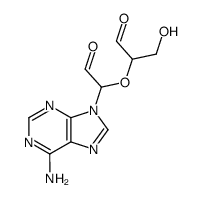
Adenosine dialdehyde structure
|
Common Name | Adenosine dialdehyde | ||
|---|---|---|---|---|
| CAS Number | 34240-05-6 | Molecular Weight | 265.22500 | |
| Density | N/A | Boiling Point | N/A | |
| Molecular Formula | C10H11N5O4 | Melting Point | N/A | |
| MSDS | Chinese USA | Flash Point | N/A | |
|
Elasticity assessment of electrospun nanofibrous vascular grafts: a comparison with femoral ovine arteries.
Mater. Sci. Eng. C. Mater. Biol. Appl. 45 , 446-54, (2014) Development of successful small-diameter vascular grafts constitutes a real challenge to biomaterial engineering. In most cases these grafts fail in-vivo due to the presence of a mechanical mismatch between the native vessel and the vascular graft. Biomechani... |
|
|
Efflux of glutathione and glutathione complexes from human erythrocytes in response to vanadate.
Blood Cells Mol. Dis. 50(1) , 1-7, (2013) The main objective of the present study was to investigate if vanadate is extruded from the cells in a glutathione dependent manner resulting in the appearance of extracellular glutathione and complexes of glutathione with vanadium. Vanadate significantly dep... |
|
|
Involvement of Src and the actin cytoskeleton in the antitumorigenic action of adenosine dialdehyde.
Biochem. Pharmacol. 85(8) , 1042-56, (2013) Transmethylation is an important reaction that transfers a methyl group in S-adenosylmethionine (SAM) to substrates such as DNA, RNA, and proteins. It is known that transmethylation plays critical roles in various cellular responses. In this study, we examine... |
|
|
Increased plasma S-adenosylhomocysteine-accelerated atherosclerosis is associated with epigenetic regulation of endoplasmic reticulum stress in apoE-/- mice.
Arterioscler. Thromb. Vasc. Biol. 35(1) , 60-70, (2015) S-Adenosylhomocysteine (SAH) is a better predictor of cardiovascular disease than homocysteine is, and it has been implicated in mediating the pathogenicity of hyperhomocysteinemia in atherosclerosis via an epigenetic mechanism. However, the underlying mechan... |
|
|
Adenosine dialdehyde suppresses MMP-9-mediated invasion of cancer cells by blocking the Ras/Raf-1/ERK/AP-1 signaling pathway.
Biochem. Pharmacol. 86(9) , 1285-300, (2013) Adenosine dialdehyde (AdOx) inhibits transmethylation by the accumulation of S-adenosylhomocysteine (SAH), a negative feedback inhibitor of methylation, through the suppression of SAH hydrolase (SAHH). In this study, we aimed to determine the regulatory effec... |
|
|
Differential effects of AdOx on gene expression in P19 embryonal carcinoma cells.
BMC Neurosci. 13 , 6, (2012) Pluripotent cells maintain a unique gene expression pattern and specific chromatin signature. In this study, we explored the effect of the methyltransferase inhibitor adenosine dialdehyde (AdOx) on pluripotency maintenance and gene expression in P19 embryonal... |
|
|
Gender specific differences in bladder cancer.
J. Urol. 188(1) , 10-1, (2012)
|
|
|
Elimination of high amounts of extracellular homocysteine in human cell lines.
Clin. Chim. Acta 356(1-2) , 117-24, (2005) Many clinical and epidemiological studies show that mild hyperhomocysteinemia is associated with premature vascular disease. Information about the metabolism of homocysteine is therefore essential for an understanding of its role in atherogenesis, thereby ena... |
|
|
Induction of human fetal hemoglobin expression by adenosine-2',3'-dialdehyde.
J. Transl. Med. 11 , 14, (2013) Pharmacologic reactivation of fetal hemoglobin expression is a promising strategy for treatment of sickle cell disease and β-thalassemia. The objective of this study was to investigate the effect of the methyl transferase inhibitor adenosine-2',3'-dialdehyde ... |
|
|
Methyltransferase inhibitor adenosine dialdehyde suppresses androgen receptor expression and prostate cancer growth.
J. Urol. 188(1) , 300-6, (2012) Although most prostate cancers regress after androgen deprivation therapy is given at diagnosis, they eventually regrow in a castration resistant manner, spread systemically and end fatally. Thus, novel therapeutic compounds are needed for prostate cancer. We... |