Differential effects of AdOx on gene expression in P19 embryonal carcinoma cells.
Li Yan, Hai-Yong Zhao, Ye Zhang, Yu-Fei Shen
Index: BMC Neurosci. 13 , 6, (2012)
Full Text: HTML
Abstract
Pluripotent cells maintain a unique gene expression pattern and specific chromatin signature. In this study, we explored the effect of the methyltransferase inhibitor adenosine dialdehyde (AdOx) on pluripotency maintenance and gene expression in P19 embryonal carcinoma cells.After AdOx treatment, the pluripotency-related gene network became disordered, and the early developmental genes were released from the repression. Remarkably, AdOx caused contrasting effects on the expression of two key pluripotency genes, nanog and oct3/4, with the reduction of the repressive histone marks H3K27me3, H3K9me3 and H3K9me2 only in the nanog gene.Key pluripotency genes were controlled by different mechanisms, including the differential enrichment of repressive histone methylation marks. These data provided novel clues regarding the critical role of histone methylation in the maintenance of pluripotency and the determination of cell fate in P19 pluripotent cells.
Related Compounds
| Structure | Name/CAS No. | Molecular Formula | Articles |
|---|---|---|---|
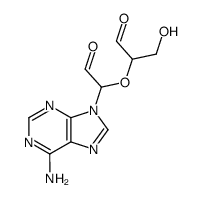 |
Adenosine dialdehyde
CAS:34240-05-6 |
C10H11N5O4 |
|
Elasticity assessment of electrospun nanofibrous vascular gr...
2014-12-01 [Mater. Sci. Eng. C. Mater. Biol. Appl. 45 , 446-54, (2014)] |
|
Efflux of glutathione and glutathione complexes from human e...
2013-01-01 [Blood Cells Mol. Dis. 50(1) , 1-7, (2013)] |
|
Involvement of Src and the actin cytoskeleton in the antitum...
2013-04-15 [Biochem. Pharmacol. 85(8) , 1042-56, (2013)] |
|
Increased plasma S-adenosylhomocysteine-accelerated atherosc...
2015-01-01 [Arterioscler. Thromb. Vasc. Biol. 35(1) , 60-70, (2015)] |
|
Adenosine dialdehyde suppresses MMP-9-mediated invasion of c...
2013-11-01 [Biochem. Pharmacol. 86(9) , 1285-300, (2013)] |