disperse orange 3
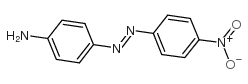
disperse orange 3 structure
|
Common Name | disperse orange 3 | ||
|---|---|---|---|---|
| CAS Number | 730-40-5 | Molecular Weight | 242.23300 | |
| Density | 1.34 g/cm3 | Boiling Point | 460.2ºC at 760 mmHg | |
| Molecular Formula | C12H10N4O2 | Melting Point | ~200 °C (dec.)(lit.) | |
| MSDS | Chinese USA | Flash Point | N/A | |
| Symbol |

GHS07 |
Signal Word | Warning | |
|
Multifunctional core-shell nanoparticles: discovery of previously invisible biomarkers.
J. Am. Chem. Soc. 133(47) , 19178-88, (2011) Many low-abundance biomarkers for early detection of cancer and other diseases are invisible to mass spectrometry because they exist in body fluids in very low concentrations, are masked by high-abundance proteins such as albumin and immunoglobulins, and are ... |
|
|
Assessment of the sensitizing potential of textile disperse dyes and some of their metabolites by the loose-fit coculture-based sensitization assay (LCSA).
Arch. Toxicol. 86(5) , 733-40, (2012) Certain textile disperse dyes are known to cause allergic reactions of the human skin. Here, we examined 8 disperse dyes and 7 products of azo-cleavage of these dyes in an in vitro assay. We used the loose-fit coculture-based sensitization assay (LCSA) of pri... |
|
|
Contact allergy from disperse dyes in textiles: a review.
Contact Dermatitis 68(2) , 65-75, (2013) Several disperse dyes (DDs) are still considered to be the most important allergens in textile dermatitis, but there are sparse data about their current use in textiles. The aim of this review was to evaluate published studies and reports on contact allergy t... |
|
|
2 cases of multiple azo dye sensitization.
Contact Dermatitis 24(1) , 60-2, (1991)
|
|
|
Effectiveness of disperse dyes mix in detection of contact allergy to textile dyes: an Italian multicentre study.
Contact Dermatitis 33(5) , 351, (1995)
|
|
|
Thin-layer chromatography search for Disperse Yellow 3 and Disperse Orange 3 in 52 stockings and pantyhose.
Contact Dermatitis 10(3) , 154-7, (1984) Thin-layer (uni-dimensional and bi-dimensional) chromatography studies were performed on 52 beige stockings and pantyhose from different countries. They demonstrated the presence of Disperse Yellow 3 in 51 and Disperse Orange 3 in 15 stockings. In the absence... |
|
|
Para-phenylenediamine-specific lymphocyte activation test: a sensitive in vitro assay to detect para-phenylenediamine sensitization in patients with severe allergic reactions.
Exp. Dermatol. 19(5) , 435-41, (2010) Patients sensitized to para-phenylenediamine (PPD) by semi-permanent tattoos increasingly develop threatening allergic reactions in response to black hair dye. The gold standard to diagnose allergic contact dermatitis is to perform epicutaneous patch tests, h... |
|
|
Removal of disperse dye from aqueous solution using waste-derived activated carbon: optimization study.
J. Hazard. Mater. 170(2-3) , 612-9, (2009) The purpose of this work is to obtain optimal preparation conditions for activated carbons prepared from rattan sawdust (RSAC) for removal of disperse dye from aqueous solution. The RSAC was prepared by chemical activation with phosphoric acid using response ... |
|
|
High frequency of simultaneous sensitivity to Disperse Orange 3 in patients with positive patch tests to para-phenylenediamine.
Contact Dermatitis 48(5) , 248-50, (2003) Cross-sensitization between para-phenylenediamine (PPD) and Disperse Orange 3 (DO3), among other textile dyes, has frequently been reported. We evaluated the frequency of simultaneous patch test reactions to PPD and a range of textile dyes. Retrospectively, w... |