High frequency of simultaneous sensitivity to Disperse Orange 3 in patients with positive patch tests to para-phenylenediamine.
Anthony T-J Goon, Nicola J Gilmour, David A Basketter, Ian R White, Richard J G Rycroft, John P McFadden
Index: Contact Dermatitis 48(5) , 248-50, (2003)
Full Text: HTML
Abstract
Cross-sensitization between para-phenylenediamine (PPD) and Disperse Orange 3 (DO3), among other textile dyes, has frequently been reported. We evaluated the frequency of simultaneous patch test reactions to PPD and a range of textile dyes. Retrospectively, we studied 128 patients who were patch test positive to PPD and who had also been tested to textile dyes. The dyes that most commonly also reacted were DO3 (46.1%) followed by Disperse Yellow 3 (21.9%). 80% of 55 patients who had a + + or stronger reaction to PPD also reacted to DO3. Dyes that were least likely also to react were Bismarck Brown (0%), Naphthol AS (1.06%), Disperse Yellow 9 (1.06%), Disperse Blue 3 (1.56%) and Disperse Red 11 (2.13%). We interpreted the simultaneous patch test reactions to PPD and DO3 as due either to cross-sensitivity proper, or to metabolic conversion of textile dyes in the skin to PPD.
Related Compounds
| Structure | Name/CAS No. | Molecular Formula | Articles |
|---|---|---|---|
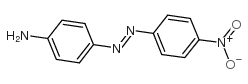 |
disperse orange 3
CAS:730-40-5 |
C12H10N4O2 |
|
Multifunctional core-shell nanoparticles: discovery of previ...
2011-11-30 [J. Am. Chem. Soc. 133(47) , 19178-88, (2011)] |
|
Assessment of the sensitizing potential of textile disperse ...
2012-05-01 [Arch. Toxicol. 86(5) , 733-40, (2012)] |
|
Contact allergy from disperse dyes in textiles: a review.
2013-02-01 [Contact Dermatitis 68(2) , 65-75, (2013)] |
|
2 cases of multiple azo dye sensitization.
1991-01-01 [Contact Dermatitis 24(1) , 60-2, (1991)] |
|
Effectiveness of disperse dyes mix in detection of contact a...
1995-11-01 [Contact Dermatitis 33(5) , 351, (1995)] |