2-Nitrochlorobenzene
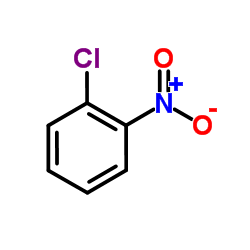
2-Nitrochlorobenzene structure
|
Common Name | 2-Nitrochlorobenzene | ||
|---|---|---|---|---|
| CAS Number | 88-73-3 | Molecular Weight | 157.555 | |
| Density | 1.4±0.1 g/cm3 | Boiling Point | 245.5±0.0 °C at 760 mmHg | |
| Molecular Formula | C6H4ClNO2 | Melting Point | 31-33 °C(lit.) | |
| MSDS | Chinese USA | Flash Point | 96.5±19.8 °C | |
| Symbol |

GHS06 |
Signal Word | Danger | |
|
Dinitrochlorobenzene is inherently mutagenic in the presence of trace mutagenic contaminants.
Arch. Dermatol. 124(3) , 396-8, (1988) 2,4-Dinitrochlorobenzene (DNCB) is used for immunotherapy of alopecia areata and verruca vulgaris. We initially postulated that the presence of mutagenic contaminants in commercially available DNCB might account for part of its mutagenicity. We have now chara... |
|
|
Determination of trace level genotoxic impurities in small molecule drug substances using conventional headspace gas chromatography with contemporary ionic liquid diluents and electron capture detection.
J. Chromatogr. A. 1361 , 217-28, (2014) Ionic liquids (ILs) were used as a new class of diluents for the analysis of two classes of genotoxic impurities (GTIs), namely, alkyl/aryl halides and nitro-aromatics, in small molecule drug substances by headspace gas chromatography (HS-GC) coupled with ele... |
|
|
2-Chloronitrobenzene, 3-chloronitrobenzene and 4-chloronitrobenzene.
IARC Monogr. Eval. Carcinog. Risks Hum. 65 , 263-96, (1996)
|
|
|
Electron induced ortho-meta isomerization of single molecules.
Phys. Rev. Lett. 98(11) , 116102, (2007) A scanning tunneling microscope operating at 5 K is used to induce the isomerization of single chloronitrobenzene molecules on Cu(111) and verify the reaction. The threshold voltage of (227+/-7) mV for this reaction is explained based on electron-induced vibr... |
|
|
Substituent effect on electronic structures of halonitrobenzenes.
Spectrochim. Acta. A. Mol. Biomol. Spectrosc. 71(4) , 1499-502, (2008) The electronic structures and substituent effects of o-, m-, and p-chloronitrobenzene and bromonitrobenzene have been studied by ultraviolet photoelectron spectroscopy (UPS). It was found that the o-isomer possesses particular electronic properties. This char... |
|
|
Detection of trace nitroaromatic isomers using indium tin oxide electrodes modified using β-cyclodextrin and silver nanoparticles.
Anal. Chem. 84(20) , 8557-63, (2012) The determination of nitroaromatic compounds in aqueous solution was investigated at β-cyclodextrin (β-CD)/silver nanoparticle (AgNPs) composite modified ITO electrodes. This method relies on the different reduction potentials for the various nitroaromatic is... |
|
|
Assessment of toxicity of o-nitrochlorobenzene in rats following a 4-week inhalation exposure.
Fundam. Appl. Toxicol. 7(4) , 609-14, (1986) o-Nitrochlorobenzene (ONCB) is a chemical intermediate used for the synthesis of various industrial chemicals. To evaluate the subchronic toxicity of this compound, three groups of 15 male and 15 female Sprague-Dawley rats were exposed to ONCB vapor 6 hr/day,... |
|
|
The role of mononitrochlorobenzene as a contaminant in dinitrochlorobenzene.
J. Am. Acad. Dermatol. 6(3) , 325-7, (1982) Dinitrochlorobenzene (DNCB) has been purported to possess potential mutagenic and carcinogenic hazards. This potential hazard may be due to contamination of DNCB with known carcinogenic precursors, mononitrochlorobenzenes. Three samples of commercially availa... |
|
|
Enrichment of chlorobenzene and o-nitrochlorobenzene on biomimetic adsorbent prepared by poly-3-hydroxybutyrate (PHB).
J. Hazard. Mater. 177(1-3) , 508-15, (2010) Poly-3-hydroxybutyrate (PHB) was used as a new material to prepare a biomimetic adsorbent by a modified double emulsion solvent evaporation technique. The enrichment capacities of the adsorbent for the toxic liposoluble organic compounds were evaluated by chl... |
|
|
Internal exposure, health effects, and cancer risk of humans exposed to chloronitrobenzene.
Environ. Sci. Technol. 40(1) , 387-94, (2006) Chloronitrobenzenes (CNBs) are important intermediates for the production of dyes, pesticides, rubber chemicals, and drugs. 2CNB and 4CNB are possible human carcinogens. Therefore, it is important to develop methods to biomonitor people exposed to these occup... |