胶霉毒素
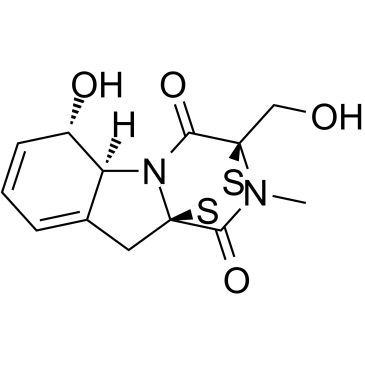
胶霉毒素结构式

|
常用名 | 胶霉毒素 | 英文名 | Gliotoxin |
|---|---|---|---|---|
| CAS号 | 67-99-2 | 分子量 | 326.391 | |
| 密度 | 1.8±0.1 g/cm3 | 沸点 | 699.7±55.0 °C at 760 mmHg | |
| 分子式 | C13H14N2O4S2 | 熔点 | 153.5ºC | |
| MSDS | 中文版 美版 | 闪点 | 377.0±31.5 °C | |
| 符号 |


GHS02, GHS07 |
信号词 | Danger |
|
The MAP kinase MpkA controls cell wall integrity, oxidative stress response, gliotoxin production and iron adaptation in Aspergillus fumigatus.
Mol. Microbiol. 82(1) , 39-53, (2011) The saprophytic fungus Aspergillus fumigatus is the most important air-borne fungal pathogen. The cell wall of A. fumigatus has been studied intensively as a potential target for development of effective antifungal agents. A major role in maintaining cell wal... |
|
|
Single-pot derivatisation strategy for enhanced gliotoxin detection by HPLC and MALDI-ToF mass spectrometry.
Anal. Bioanal. Chem 401(8) , 2519-29, (2011) Gliotoxin is produced by non-ribosomal peptide synthesis and secreted from certain fungi, including Aspergillus fumigatus. It is an epipolythiodioxopiperazine that contains an intact disulphide bridge and is the focus of intense research as a consequence of i... |
|
|
Individual and combined effects of mycotoxins from typical indoor moulds.
Toxicol. In Vitro 27(6) , 1970-8, (2013) The mycotoxins patulin, gliotoxin and sterigmatocystin can be produced by common indoor moulds and enter the human body via inhalation of mycotoxin containing spores and particulates. There are various studies about the individual effects of these mycotoxins,... |
|
|
Manipulation of host angioneogenesis: A critical link for understanding the pathogenesis of invasive mold infections?
Virulence 1(3) , 192-6, (2010) Despite progress over the last decade, opportunistic mold infections continue to be associated with high rates of morbidity and mortality in immunocompromised patients. Given the propensity of molds to invade blood vessels, vasculopathy may be a barrier to ef... |
|
|
Gliotoxin contamination in and pre- and postfermented corn, sorghum and wet brewer's grains silage in Sao Paulo and Rio de Janeiro State, Brazil.
J. Appl. Microbiol. 112(5) , 865-73, (2012) The aim of this study was to determine total fungal counts and the relative density of Aspergillus fumigatus and related species in silage samples intended for bovines before and after fermentation as well as to monitor the natural occurrence of gliotoxin in ... |
|
|
Depletion of activated hepatic stellate cell correlates with severe liver damage and abnormal liver regeneration in acetaminophen-induced liver injury.
Acta Biochim. Biophys. Sin. (Shanghai) 43(4) , 307-15, (2011) Hepatic stellate cells (HSCs) are important part of the local 'stem cell niche' for hepatic progenitor cells (HPCs) and hepatocytes. However, it is unclear as to whether the products of activated HSCs are required to attenuate hepatocyte injury, enhance liver... |
|
|
Apoptosis of oligodendrocytes in the central nervous system results in rapid focal demyelination.
Ann. Neurol. 72(3) , 395-405, (2012) Multiple sclerosis (MS) is a demyelinating disease of the central nervous system that presents with variable pathologies that may reflect different disease-causing mechanisms. Existing animal models of MS induce pathology using either local injection of gliot... |
|
|
Gliotoxin effects on fungal growth: mechanisms and exploitation.
Fungal Genet. Biol. 49(4) , 302-12, (2012) Although initially investigated for its antifungal properties, little is actually known about the effect of gliotoxin on Aspergillus fumigatus and other fungi. We have observed that exposure of A. fumigatus to exogenous gliotoxin (14 μg/ml), under gliotoxin-l... |
|
|
Glionitrin B, a cancer invasion inhibitory diketopiperazine produced by microbial coculture.
J. Nat. Prod. 74 , 2309-12, (2011) A new diketopiperazine, glionitrin B (1), was produced using a microbial coculture of the fungus Aspergillus fumigatus KMC-901 and the bacterium Sphingomonas sp. KMK-001 that were isolated from acidic coal mine drainage. The structure of 1 was determined to b... |
|
|
Antifungal activity of microbial secondary metabolites.
PLoS ONE 6(9) , e25321, (2011) Secondary metabolites are well known for their ability to impede other microorganisms. Reanalysis of a screen of natural products using the Caenorhabditis elegans-Candida albicans infection model identified twelve microbial secondary metabolites capable of co... |