Combretastatin A4
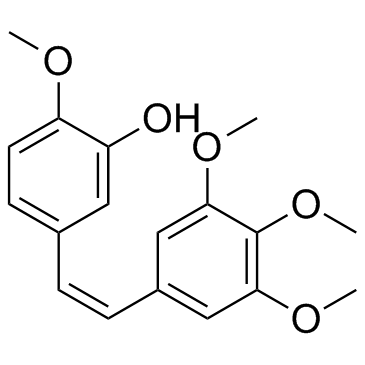
Combretastatin A4 structure
|
Common Name | Combretastatin A4 | ||
|---|---|---|---|---|
| CAS Number | 117048-59-6 | Molecular Weight | 316.348 | |
| Density | 1.2±0.1 g/cm3 | Boiling Point | 490.3±45.0 °C at 760 mmHg | |
| Molecular Formula | C18H20O5 | Melting Point | 84.5-85.5ºC | |
| MSDS | Chinese USA | Flash Point | 250.3±28.7 °C | |
| Symbol |


GHS05, GHS06 |
Signal Word | Danger | |
Use of Combretastatin A4Combretastatin A4 is a microtubule-targeting agent that binds β-tubulin with Kd of 0.4 μM. |
This table lists Chinese names, IUPAC names and various aliases of this chemical substance.
| Name | Combretastatin A4 |
|---|---|
| Synonym | More Synonyms |
This table contains bioactivity, target information and biological‑assay experimental data of this compound.
| Description | Combretastatin A4 is a microtubule-targeting agent that binds β-tubulin with Kd of 0.4 μM. |
|---|---|
| Related Catalog | |
| Target |
Kd: 0.4 μM (β-tubulin) |
| In Vitro | Combretastatin A4 phosphate (≥ 50 µM) significantly increases the percentage of annexin-V-binding cells and significantly decreases forward scatter. Combretastatin A4 phosphate does not appreciably increase hemolysis. Hundred µM Combretastatin A4 phosphate significantly increases Fluo3-fluorescence. The effect of Combretastatin A4 phosphate (100 µM) on annexin-V-binding is significantly blunted, but not abolished, by removal of extracellular Ca2+. Combretastatin A4 phosphate (≥ 50 µM) significantly decreases GSH abundance and ATP levels but does not significantly increase ROS or ceramide[2]. Polymersomes co-encapsulating doxorubicin-combretastatin-A4 phosphate (1:10) shows strong synergistic cytotoxicity against human nasopharyngeal epidermal carcinoma (KB) cells[3]. Pretreatment with Combretastatin A4 phosphate does not influence the amount of VM in 3-D culture as well as the expression of these key molecules[4]. |
| In Vivo | DBP and MBP at 30 minutes after administration are higher in rats treated with Combretastatin A4 disodium phosphate 120 mg/10 mL/kg. The toxicokinetic parameters of Combretastatin A4 phosphate and Combretastatin A4 in rats treated with Combretastatin A4 disodium phosphate 120 mg/10 mL/kg are indicated, and the values of Cmax, T1/2, and AUC0-inf for Combretastatin A4 are 156±13 μM, 5.87±1.69 h, and 89.4±10.1 h·μM, respectively[1]. In vivo, W256 tumors show marked intratumoral hypoxia after Combretastatin A4 phosphate treatment, accompanied by increased VM formation. Combretastatin A4 phosphate exhibits only a delay in tumor growth within 2 days but rapid tumor regrowth afterward. VM density is positively related to tumor volume and tumor weight at day 8. Combretastatin A4 phosphate causes hypoxia which induces VM formation in W256 tumors through HIF-1α/EphA2/PI3K/matrix metalloproteinase (MMP) signaling pathway, resulting in the consequent regrowth of the damaged tumor[4]. |
| Animal Admin | Rats: Rats are administered a single intravenous dose of Combretastatin A4 disodium phosphate at 120 mg/10 mL/kg by bolus infusion (n=3). Blood is taken via the jugular vein and collected in heparin-coated tubes at 10 minutes and 1, 3, 6, and 24 hours after administration. Plasma is separated by centrifugation immediately after sampling. After centrifugation, an aliquot of plasma is mixed with the equivalent volume of 1% formic acid and stored at −20°C. The thawed plasma samples are purified by solid-phase extraction, and the plasma concentrations of combretastatin A4 phosphate (free base of Combretastatin A4 disodium phosphate; Combretastatin A4 phosphate) and combretastatin A4 (the metabolite of Combretastatin A4 disodium phosphate; Combretastatin A4 ) are determined by liquid chromatography-tandem mass spectrometry (LC-MS/MS). Toxicokinetic parameters [maximum concentration (Cmax), terminal half-life (T1/2), and area under the concentration-time curve from time zero to infinity (AUC0-inf)] are obtained by non-compartmental analysis using Phoenix WinNonlin 6.3. |
| References |
This table shows physicochemical parameters including melting point, boiling point, density, solubility and optical rotation. Missing data is marked as N/A.
| Density | 1.2±0.1 g/cm3 |
|---|---|
| Boiling Point | 490.3±45.0 °C at 760 mmHg |
| Melting Point | 84.5-85.5ºC |
| Molecular Formula | C18H20O5 |
| Molecular Weight | 316.348 |
| Flash Point | 250.3±28.7 °C |
| Exact Mass | 316.131073 |
| PSA | 57.15000 |
| LogP | 3.57 |
| Vapour Pressure | 0.0±1.3 mmHg at 25°C |
| Index of Refraction | 1.607 |
| Storage condition | Desiccate at -20°C |
| Water Solubility | DMSO: >10mg/mL |
This table provides MSDS information including hazard classification, first‑aid, fire‑fighting, spill handling, operation and storage instructions.
This table covers safety warnings, protective measures, incompatible substances and disposal guidelines for this compound.
| Symbol |
GHS05, GHS06 |
|---|---|
| Signal Word | Danger |
| Hazard Statements | H301 + H311 + H331-H318 |
| Precautionary Statements | P261-P280-P301 + P310-P305 + P351 + P338-P311 |
| Personal Protective Equipment | Eyeshields;Faceshields;Gloves;type P2 (EN 143) respirator cartridges |
| Hazard Codes | T: Toxic; |
| Risk Phrases | R23/24/25;R41 |
| Safety Phrases | 26-36/37-39-45 |
| RIDADR | UN 2811 |
| Packaging Group | Ⅲ |
| Hazard Class | 6.0 |
This table presents publicly reported synthetic routes, reaction conditions, reactants and product information of the compound.
|
~0%
Combretastatin A4 CAS#:117048-59-6 |
| Literature: Malysheva, Yulia B.; Combes, Sebastien; Fedorov, Alexey Yu.; Knochel, Paul; Gavryushin, Andrei E. Synlett, 2012 , vol. 23, # 8 p. 1205 - 1208 |
|
~14%
Combretastatin A4 CAS#:117048-59-6 |
| Literature: Bioorganic and Medicinal Chemistry Letters, , vol. 20, # 9 p. 2780 - 2784 |
|
~%
Combretastatin A4 CAS#:117048-59-6 |
| Literature: WO2007/59118 A1, ; Page/Page column 27-28 ; |
|
~%
Combretastatin A4 CAS#:117048-59-6 |
| Literature: Journal of Chemical Research, , vol. 35, # 4 p. 229 - 230 |
|
~%
Combretastatin A4 CAS#:117048-59-6 |
| Literature: Guo, Xiaotao; Zhang, Dan; Yu, Zhifang; Liu, Tianzhen; Li, Dachang; Li, Chunbao Journal of Chemical Research, 2011 , vol. 35, # 4 p. 229 - 230 |
|
~%
Combretastatin A4 CAS#:117048-59-6 |
| Literature: Chemical Communications, , vol. 48, # 44 p. 5419 - 5421 |
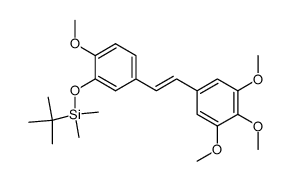
![2-methoxy-5-[2-(3,4,5-trimethoxyphenyl)ethenyl]phenol structure](https://image.chemsrc.com/caspic/240/117048-62-1.png)
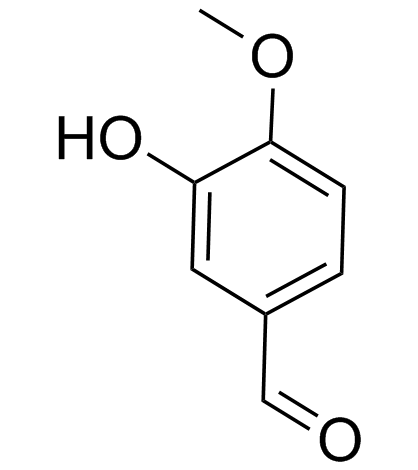
![Triphenyl-[(3,4,5-trimethoxyphenyl)-methyl]-phosphonium chloride structure](https://image.chemsrc.com/caspic/411/108683-61-0.png)
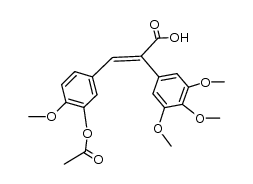
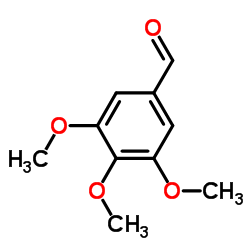

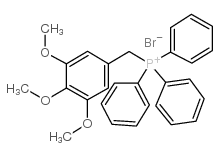

This table lists upstream starting materials and downstream derivative products related to this chemical.
| Precursor 7 | |
|---|---|
| DownStream 0 | |
This table lists relevant public references with title, journal and publication metadata for this compound.
|
Microfluidic Synthesis of Hybrid Nanoparticles with Controlled Lipid Layers: Understanding Flexibility-Regulated Cell-Nanoparticle Interaction.
ACS Nano 9 , 9912-21, (2015) The functionalized lipid shell of hybrid nanoparticles plays an important role for improving their biocompatibility and in vivo stability. Yet few efforts have been made to critically examine the shel... |
|
|
The vascular disrupting activity of OXi8006 in endothelial cells and its phosphate prodrug OXi8007 in breast tumor xenografts.
Cancer Lett. 369 , 229-41, (2015) This study describes the vascular disrupting ability and the mechanism of action of the indole-based tubulin-binding compound, OXi8006, and its water-soluble phosphate prodrug OXi8007. Treatment of ra... |
|
|
PD806: a novel oral vascular disrupting agent shows antitumor and antivascular effects in vitro and in vivo.
Anticancer Drugs 26(2) , 148-59, (2014) The aim of this study was to investigate the antitumor and antivascular effects of PD806, a new oral prodrug of AVE8063 in vitro and in vivo. The cytotoxicity of PD806 was determined against H22, Walk... |
This table contains target information, in‑vitro & in‑vivo assay data for this compound.
This table collects all English aliases, systematic names and CAS‑related synonyms of the compound.
| (Z)-2-Methoxy-5-[2-(3,4,5,-trimethoxyphenyl)ethenyl]phenol |
| (Z)-CombretastatinA4 |
| (Z)-2-Methoxy-5-(3,4,5-trimethoxystyryl)phenol |
| 3'-Hydroxy-3,4,4',5-tetramethoxy-cis-stilbene |
| CS A4 |
| 2-Methoxy-5-[(Z)-2-(3,4,5-trimethoxyphenyl)ethenyl]benzolol |
| 2-methoxy-5-[(Z)-2-(3,4,5-trimethoxyphenyl)ethenyl]phenol |
| 2-Methoxy-5-[(Z)-2-(3,4,5-trimethoxyphenyl)vinyl]phenol |
| Combretastatin A-4 |
| 3,4,5-Trimethoxy-3'-hydroxy-4'-methoxy-(Z)-stilbene |
This section contains frequently‑asked‑questions about this compound, including basic parameters, properties, storage conditions and corresponding answers.
| Q: What is the LogP of Combretastatin A4? |
| A: LogP of Combretastatin A4 is 3.57. |
| Q: What is the English name of Combretastatin A4? |
| A: The English name of Combretastatin A4 is Combretastatin A4. |
| Q: What are the uses of Combretastatin A4? |
| A: Main uses of Combretastatin A4: Combretastatin A4 is a microtubule-targeting agent that binds β-tubulin with Kd of 0.4 μM. |
| Q: What is the molecular weight of Combretastatin A4? |
| A: Molecular weight of Combretastatin A4 is 316.348. |
| Q: What is the safety information for Combretastatin A4? |
| A: Safety information for Combretastatin A4: 26-36/37-39-45. |
| Q: What is the CAS number of Combretastatin A4? |
| A: CAS number of Combretastatin A4 is 117048-59-6. |
| Q: What is the molecular formula of Combretastatin A4? |
| A: Molecular formula of Combretastatin A4 is C18H20O5. |
| Q: What is the melting point of Combretastatin A4? |
| A: Melting point of Combretastatin A4 is 84.5-85.5ºC. |
| Q: What are the upstream materials of Combretastatin A4? |
| A: Related upstream materials(CAS) of Combretastatin A4: 847063-26-7;621-59-0;108683-61-0;39500-10-2;86-81-7;111394-52-6;61240-20-8. |
| Q: What are the storage conditions for Combretastatin A4? |
| A: Storage conditions for Combretastatin A4: Desiccate at -20°C. |
This table lists manufacturers and suppliers of this compound, including vendor names and product supply reference information.
| Shanghai Nianxing Industrial Co., Ltd |
| Dayang Chem (Hangzhou) Co., Ltd. |