Serotonin hydrochloride

Serotonin hydrochloride structure
|
Common Name | Serotonin hydrochloride | ||
|---|---|---|---|---|
| CAS Number | 153-98-0 | Molecular Weight | 212.676 | |
| Density | N/A | Boiling Point | 416.1ºC at 760 mmHg | |
| Molecular Formula | C10H13ClN2O | Melting Point | 149-154 °C(lit.) | |
| MSDS | Chinese USA | Flash Point | 205.4ºC | |
| Symbol |

GHS07 |
Signal Word | Warning | |
Use of Serotonin hydrochlorideSerotonin hydrochloride is a monoamine neurotransmitter in the CNS and an endogenous 5-HT receptor agonist. Serotonin hydrochloride is also a catechol O-methyltransferase (COMT) inhibitor with a Ki of 44 μM. |
Summary: Serotonin hydrochloride, also known as 5-hydroxytryptamine hydrochloride, Chinese name: 血清胺盐酸盐, CAS number: 153-98-0, molecular formula: C10H13ClN2O, molecular weight: 212.676. It is a white to off-white powder, with a melting point of 149-154°C. For research-use only, not for medical or clinical usage.
This table lists Chinese names, IUPAC names and various aliases of this chemical substance.
| Name | Serotonin hydrochloride |
|---|---|
| Synonym | More Synonyms |
This table contains bioactivity, target information and biological‑assay experimental data of this compound.
| Description | Serotonin hydrochloride is a monoamine neurotransmitter in the CNS and an endogenous 5-HT receptor agonist. Serotonin hydrochloride is also a catechol O-methyltransferase (COMT) inhibitor with a Ki of 44 μM. |
|---|---|
| Related Catalog | |
| Target |
5-HT receptor[1] Ki: 44 μM (COMT)[1] |
| In Vitro | Serotonin hydrochloride is a monoamine neurotransmitter in the CNS and an endogenous 5-HT receptor agonist. Serotonin hydrochloride also inhibits catechol O-methyltransferase (COMT), an enzyme that contributes to modultion the perception of pain, via non-competitive binding to the site bound by catechol substrates with a binding affinity comparable to the binding affinity of catechol itself (Ki= 44 μM). Results show that addition of 100 μM of Serotonin hydrochloride decreases the reaction velocity of COMT[1]. |
| In Vivo | Serotonin hydrochloride produces robust hypersensitivity compare to saline-treated controls (p<0.001)[1]. A significant increase in colonic 5-HT content is observed in IL-13-/- mice receiving Serotonin hydrochloride compare to IL-13-/- receiving vehicle following induction of DSS colitis[2]. |
| Cell Assay | For macrophage culture, peritoneal cavity cells are collected from WT and IL-13-/- mice with or without dextran sodium sulfate (DSS) treatment and cultured. Cells are plated at a concentration of 3.0×10⁶ cells per millilitre, and treated with either lipopolysaccharides (LPS); (100 ng/mL) or Serotonin hydrochloride (10-10 M) for 24 hours. The culture supernatant are collected and stored in -80°C until determination of cytokine levels using protein array system[2]. |
| Animal Admin | Dextran sodium sulfate (DSS) colitis is induced by orally administering 5% DSS in drinking water for 5 days. In a separate experiment, IL-13-/- mice are injected subcutaneously with 100 mg/kg of Serotonin hydrochloride (5-HTP) twice daily for 8 days beginning 3 days prior to induction of DSS colitis; whereas, the control IL-13-/- mice receive saline as vehicle. Animals are anaesthetized prior to euthanization via cervical dislocation at the conclusion of each experiment or if they reach a predetermined end point (ie, loss of ≥20% body weight and/or significant deterioration of body condition)[2]. |
| References |
This table shows physicochemical parameters including melting point, boiling point, density, solubility and optical rotation. Missing data is marked as N/A.
| Boiling Point | 416.1ºC at 760 mmHg |
|---|---|
| Melting Point | 149-154 °C(lit.) |
| Molecular Formula | C10H13ClN2O |
| Molecular Weight | 212.676 |
| Flash Point | 205.4ºC |
| Exact Mass | 212.071640 |
| PSA | 62.04000 |
| LogP | 2.87700 |
| Vapour Pressure | 1.63E-07mmHg at 25°C |
| InChIKey | MDIGAZPGKJFIAH-UHFFFAOYSA-N |
| SMILES | Cl.NCCc1c[nH]c2ccc(O)cc12 |
| Storage condition | 2-8°C |
| Stability | Stable, but light sensitive and hygroscopic. Incompatible with strong oxidizing agents. |
| Water Solubility | soluble |
This table provides MSDS information including hazard classification, first‑aid, fire‑fighting, spill handling, operation and storage instructions.
This table covers safety warnings, protective measures, incompatible substances and disposal guidelines for this compound.
| Symbol |
GHS07 |
|---|---|
| Signal Word | Warning |
| Hazard Statements | H302-H312-H315-H319-H332-H335 |
| Precautionary Statements | P261-P280-P305 + P351 + P338 |
| Personal Protective Equipment | dust mask type N95 (US);Eyeshields;Gloves |
| Hazard Codes | Xn:Harmful; |
| Risk Phrases | R20/21/22;R36/37/38 |
| Safety Phrases | S22-S26-S36 |
| RIDADR | UN2811 |
| WGK Germany | 3 |
| RTECS | NM2571000 |
| Packaging Group | III |
| Hazard Class | 6.1 |
| HS Code | 2933990090 |
This table lists upstream starting materials and downstream derivative products related to this chemical.
| Precursor 0 | |
|---|---|
| DownStream 10 | |
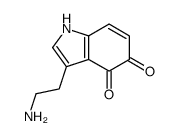 CAS#:108560-71-0
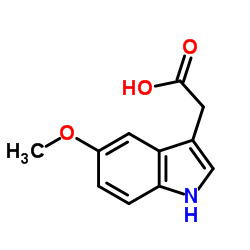 CAS#:608-07-1
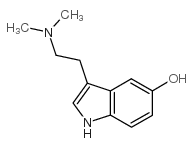 CAS#:487-93-4
 CAS#:1892-21-3
![1H-Pyrido[3,4-b]indol-6-ol,2,3,4,9-tetrahydro-1-methyl structure](https://image.chemsrc.com/caspic/158/3000-36-0.png) CAS#:3000-36-0
CAS#:3000-36-0![3,4,5,6-tetrahydro-7-hydroxy-6-methyl-1H-azepino[5,4,3-cd]indole structure](https://image.chemsrc.com/caspic/028/374680-35-0.png) CAS#:374680-35-0
CAS#:374680-35-0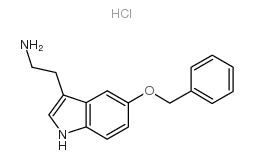 CAS#:20776-45-8
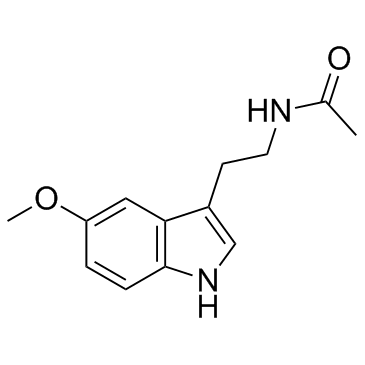 CAS#:73-31-4
![BENZYL[2-(5-HYDROXYINDOL-3-YL)-ETHYL]CARBAMATE structure](https://image.chemsrc.com/caspic/311/53157-50-9.png) CAS#:53157-50-9
CAS#:53157-50-9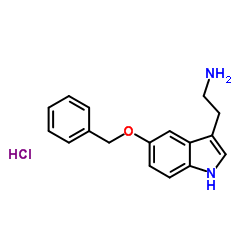 CAS#:52055-23-9
This table shows customs‑related data including HS‑code, tariff and regulatory conditions for import and export.
| HS Code | 2933990090 |
|---|---|
| Summary | 2933990090. heterocyclic compounds with nitrogen hetero-atom(s) only. VAT:17.0%. Tax rebate rate:13.0%. . MFN tariff:6.5%. General tariff:20.0% |
This table lists relevant public references with title, journal and publication metadata for this compound.
|
Chemical genetics reveals a complex functional ground state of neural stem cells.
Nat. Chem. Biol. 3(5) , 268-273, (2007) The identification of self-renewing and multipotent neural stem cells (NSCs) in the mammalian brain holds promise for the treatment of neurological diseases and has yielded new insight into brain canc... |
|
|
Simultaneous determination of the repertoire of classical neurotransmitters released from embryonal carcinoma stem cells using online microdialysis coupled with hydrophilic interaction chromatography–tandem mass spectrometry
Anal. Chim. Acta 849 , 70-9, (2014) [Display omitted] |
|
|
Evaluation of thein vitro/in vivodrug interaction potential of BST204, a purified dry extract of ginseng, and its four bioactive ginsenosides through cytochrome P450 inhibition/induction and UDP-glucuronosyltransferase inhibition
Food Chem. Toxicol. 68 , 117-27, (2014) • BST204 is a purified dry extract of ginseng containing high amounts of Rh2 and Rg3. • BST204 had only weak inhibitory effects on nine CYPs and five UGTs. • It is unlikely that BST204 alter pharmacok... |
This table collects all English aliases, systematic names and CAS‑related synonyms of the compound.
| 3-(2-aminoethyl)-1H-indol-5-ol,hydrochloride |
| 3-(2-Aminoethyl)-1H-indol-5-ol hydrochloride |
| 3-(2-Aminoethyl)-5-hydroxyindole hydrochloride,5-HT,5-Hydroxytryptamine hydrochloride |
| 5-hydroxytryptamine hydrochloride |
| Serotonin HCl |
| 1H-Indol-5-ol, 3-(2-aminoethyl)-, hydrochloride (1:1) |
| 3-(2-Aminoethyl)-1H-indol-5-ol hydrochloride (1:1) |
| EINECS 244-464-4 |
| MFCD00012686 |
| 5-Hydroxytryptamine HCl |
This section contains frequently‑asked‑questions about this compound, including basic parameters, properties, storage conditions and corresponding answers.
| Q: What is the LogP of Serotonin hydrochloride? |
| A: LogP of Serotonin hydrochloride is 2.87700. |
| Q: What is the safety information for Serotonin hydrochloride? |
| A: Safety information for Serotonin hydrochloride: S22-S26-S36. |
| Q: What is the polar surface area (PSA) of Serotonin hydrochloride? |
| A: Polar surface area (PSA) of Serotonin hydrochloride is 62.04000. |
| Q: What is the English name of Serotonin hydrochloride? |
| A: The English name of Serotonin hydrochloride is Serotonin hydrochloride. |
| Q: What is the molecular weight of Serotonin hydrochloride? |
| A: Molecular weight of Serotonin hydrochloride is 212.676. |
| Q: How is the water solubility of Serotonin hydrochloride? |
| A: Water solubility of Serotonin hydrochloride: soluble. |
| Q: What is the melting point of Serotonin hydrochloride? |
| A: Melting point of Serotonin hydrochloride is 149-154 °C(lit.). |
| Q: What is the molecular formula of Serotonin hydrochloride? |
| A: Molecular formula of Serotonin hydrochloride is C10H13ClN2O. |
| Q: What is the boiling point of Serotonin hydrochloride? |
| A: Boiling point of Serotonin hydrochloride is 416.1ºC at 760 mmHg. |
| Q: What is the CAS number of Serotonin hydrochloride? |
| A: CAS number of Serotonin hydrochloride is 153-98-0. |
This table lists manufacturers and suppliers of this compound, including vendor names and product supply reference information.
| Shanghai Nianxing Industrial Co., Ltd |
| BioBioPha |
| Dayang Chem (Hangzhou) Co., Ltd. |
| Henan Tianfu Chemical Co., Ltd. |