Adenine
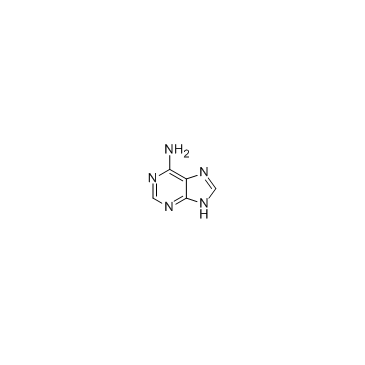
Adenine structure
|
Common Name | Adenine | ||
|---|---|---|---|---|
| CAS Number | 73-24-5 | Molecular Weight | 135.127 | |
| Density | 1.9±0.1 g/cm3 | Boiling Point | 243.2±50.0 °C at 760 mmHg | |
| Molecular Formula | C5H5N5 | Melting Point | 360-365ºC | |
| MSDS | Chinese USA | Flash Point | 100.9±30.1 °C | |
| Symbol |

GHS06 |
Signal Word | Danger | |
Use of AdenineAdenine is a purine derivative and a nucleobase with a variety of roles in biochemistry. Target: Nucleoside antimetabolite/analogAdenine is a nucleobase with a variety of roles in biochemistry including cellular respiration, in the form of both the energy-rich adenosine triphosphate (ATP) and the cofactors nicotinamide adenine dinucleotide (NAD) and flavin adenine dinucleotide (FAD), andprotein synthesis, as a chemical component of DNA and RNA. The shape of adenine is complementary to either thymine in DNA or uracil in RNA.In older literature, adenine was sometimes called Vitamin B4. It is no longer considered a true vitamin or part of the Vitamin B complex. However, two B vitamins, niacin and riboflavin, bind with adenine to form the essential cofactors nicotinamide adenine dinucleotide (NAD) and flavin adenine dinucleotide (FAD), respectively. Hermann Emil Fischer was one of the early scientists to study adenine. Experiments performed in 1961 by Joan Oró have shown that a large quantity of adenine can be synthesized from the polymerization of ammonia with fivehydrogen cyanide (HCN) molecules in aqueous solution, whether this has implications for the origin of life on Earth is under debate. |
This table lists Chinese names, IUPAC names and various aliases of this chemical substance.
| Name | adenine |
|---|---|
| Synonym | More Synonyms |
This table contains bioactivity, target information and biological‑assay experimental data of this compound.
| Description | Adenine is a purine derivative and a nucleobase with a variety of roles in biochemistry. Target: Nucleoside antimetabolite/analogAdenine is a nucleobase with a variety of roles in biochemistry including cellular respiration, in the form of both the energy-rich adenosine triphosphate (ATP) and the cofactors nicotinamide adenine dinucleotide (NAD) and flavin adenine dinucleotide (FAD), andprotein synthesis, as a chemical component of DNA and RNA. The shape of adenine is complementary to either thymine in DNA or uracil in RNA.In older literature, adenine was sometimes called Vitamin B4. It is no longer considered a true vitamin or part of the Vitamin B complex. However, two B vitamins, niacin and riboflavin, bind with adenine to form the essential cofactors nicotinamide adenine dinucleotide (NAD) and flavin adenine dinucleotide (FAD), respectively. Hermann Emil Fischer was one of the early scientists to study adenine. Experiments performed in 1961 by Joan Oró have shown that a large quantity of adenine can be synthesized from the polymerization of ammonia with fivehydrogen cyanide (HCN) molecules in aqueous solution, whether this has implications for the origin of life on Earth is under debate. |
|---|---|
| Related Catalog | |
| Target |
Human Endogenous Metabolite |
| References |
[1]. Reader V. The assay of vitamin B(4). Biochem J. 1930;24(6):1827-31. |
This table shows physicochemical parameters including melting point, boiling point, density, solubility and optical rotation. Missing data is marked as N/A.
| Density | 1.9±0.1 g/cm3 |
|---|---|
| Boiling Point | 243.2±50.0 °C at 760 mmHg |
| Melting Point | 360-365ºC |
| Molecular Formula | C5H5N5 |
| Molecular Weight | 135.127 |
| Flash Point | 100.9±30.1 °C |
| Exact Mass | 135.054489 |
| PSA | 80.48000 |
| LogP | -2.12 |
| Vapour Pressure | 0.0±0.5 mmHg at 25°C |
| Index of Refraction | 1.954 |
| InChIKey | GFFGJBXGBJISGV-UHFFFAOYSA-N |
| SMILES | Nc1ncnc2nc[nH]c12 |
| Water Solubility | 0.5 g/L (20 ºC) |
This table provides MSDS information including hazard classification, first‑aid, fire‑fighting, spill handling, operation and storage instructions.
This table summarizes toxicological test data, acute & chronic toxicity and ecological hazard parameters for this chemical.
CHEMICAL IDENTIFICATION
HEALTH HAZARD DATAACUTE TOXICITY DATA
MUTATION DATA
|
This table covers safety warnings, protective measures, incompatible substances and disposal guidelines for this compound.
| Symbol |
GHS06 |
|---|---|
| Signal Word | Danger |
| Hazard Statements | H301 |
| Precautionary Statements | P301 + P310 |
| Personal Protective Equipment | dust mask type N95 (US);Eyeshields;Faceshields;Gloves |
| Hazard Codes | Xn:Harmful |
| Risk Phrases | R22 |
| Safety Phrases | S26-S36 |
| RIDADR | UN 2811 6.1/PG 3 |
| WGK Germany | 3 |
| RTECS | AU6125000 |
| Packaging Group | III |
| Hazard Class | 6.1 |
| HS Code | 2936290090 |
This table presents publicly reported synthetic routes, reaction conditions, reactants and product information of the compound.
This table lists upstream starting materials and downstream derivative products related to this chemical.
| Precursor 10 | |
|---|---|
| DownStream 9 | |
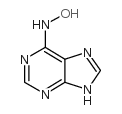 CAS#:5667-20-9
 CAS#:65758-94-3
 CAS#:122-51-0
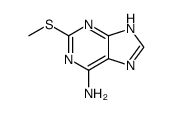 CAS#:1198-83-0
 CAS#:3647-48-1
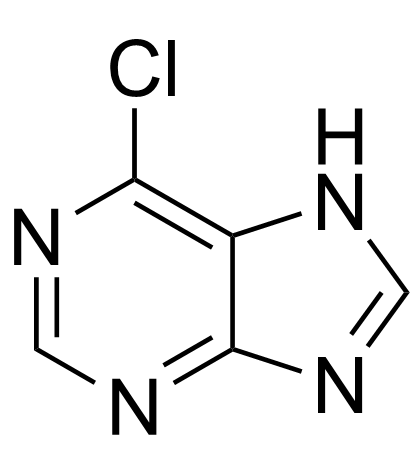 CAS#:87-42-3
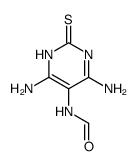 CAS#:753502-74-8
 CAS#:77287-34-4
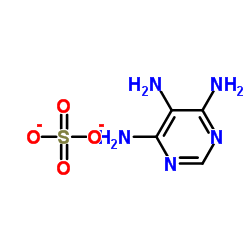 CAS#:49721-45-1
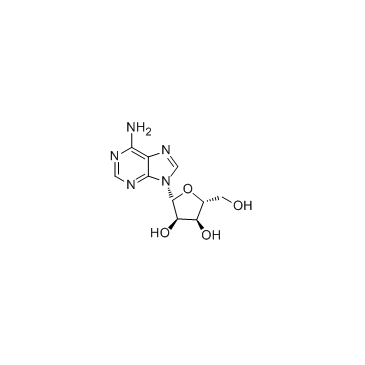 CAS#:58-61-7
 CAS#:4261-14-7
 CAS#:3691-50-7
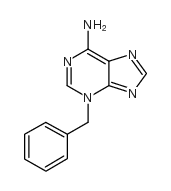 CAS#:7280-81-1
 CAS#:22917-81-3
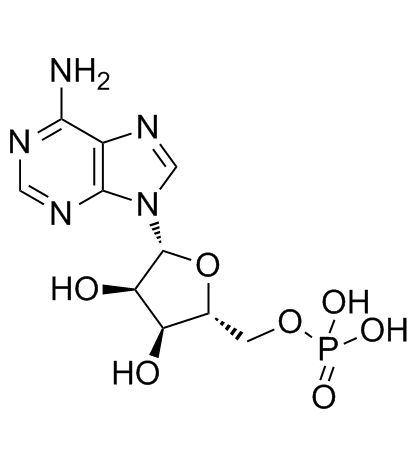 CAS#:61-19-8
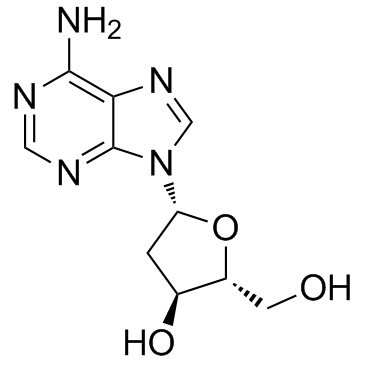 CAS#:958-09-8
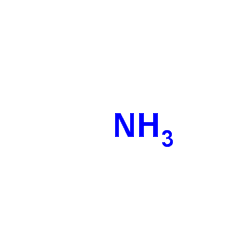 CAS#:7664-41-7
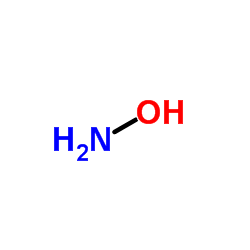 CAS#:7803-49-8
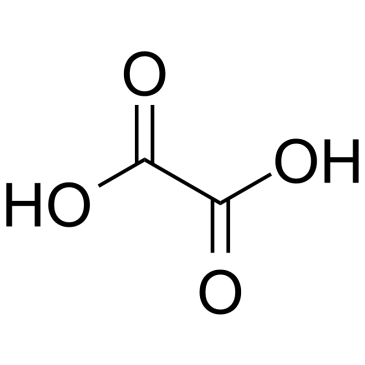 CAS#:144-62-7
This table shows customs‑related data including HS‑code, tariff and regulatory conditions for import and export.
| HS Code | 2933990090 |
|---|---|
| Summary | 2933990090. heterocyclic compounds with nitrogen hetero-atom(s) only. VAT:17.0%. Tax rebate rate:13.0%. . MFN tariff:6.5%. General tariff:20.0% |
This table lists relevant public references with title, journal and publication metadata for this compound.
|
Multifactorial analysis of conditional reprogramming of human keratinocytes.
PLoS ONE 10(2) , e0116755, (2015) Co-culture of human primary epithelial cells with irradiated 3T3 fibroblast feeder cells (J2 cells) and the Rho kinase inhibitor Y-27632 (Y) allows for the unrestricted growth of cells of epithelial o... |
|
|
Vegetables' juice influences polyol pathway by multiple mechanisms in favour of reducing development of oxidative stress and resultant diabetic complications.
Pharmacogn. Mag. 10(Suppl 2) , S383-91, (2014) Hyperglycemia induced generation of free radicals and consequent development of oxidative stress by polyol pathway is one of the crucial mechanisms stirring up development of diabetic complications. W... |
|
|
Dynamic switching of active promoter and enhancer domains regulates Tet1 and Tet2 expression during cell state transitions between pluripotency and differentiation.
Mol. Cell. Biol. 35(6) , 1026-42, (2015) The Tet 5-methylcytosine dioxygenases catalyze DNA demethylation by producing 5-hydroxymethylcytosine and further oxidized products. Tet1 and Tet2 are highly expressed in mouse pluripotent cells and d... |
This table collects all English aliases, systematic names and CAS‑related synonyms of the compound.
| 7(9)H-purin-6-ylamine |
| Ade |
| 1H-Purine-6-amine |
| Vitamin- B4 |
| Adenin |
| 1,9-Dihydro-6H-purin-6-imine |
| 9H-Purine-6-amine |
| EINECS 200-796-1 |
| adensoine |
| Crytidine |
| 1H-Purin-6-amine |
| 9H-Purin-6-yl-amin |
| 9H-Purin-6-amin |
| 9H-Adenine |
| T56 BM DN FN HNJ IZ |
| Leuco-4 |
| 9H-Purin-6-amine |
| MFCD00041790 |
| Adenine |
| ADENINE(P) |
| usafcb-18 |
| 6-aminopurine |
| 6-amino-Purine |
| Vitamin B4 |
This section contains frequently‑asked‑questions about this compound, including basic parameters, properties, storage conditions and corresponding answers.
| Q: What is the molecular weight of adenine? |
| A: Molecular weight of adenine is 135.127. |
| Q: What is the polar surface area (PSA) of adenine? |
| A: Polar surface area (PSA) of adenine is 80.48000. |
| Q: What is the InChIKey of adenine? |
| A: InChIKey of adenine is GFFGJBXGBJISGV-UHFFFAOYSA-N. |
| Q: What is the CAS number of adenine? |
| A: CAS number of adenine is 73-24-5. |
| Q: What English synonyms does adenine have? |
| A: English synonyms of adenine: 7(9)H-purin-6-ylamine, Ade, 1H-Purine-6-amine, Vitamin- B4, Adenin, 1,9-Dihydro-6H-purin-6-imine, 9H-Purine-6-amine, EINECS 200-796-1, adensoine, Crytidine, 1H-Purin-6-amine, 9H-Purin-6-yl-amin, 9H-Purin-6-amin, 9H-Adenine, T56 BM DN FN HNJ IZ, Leuco-4, 9H-Purin-6-amine, MFCD00041790, Adenine, ADENINE(P), usafcb-18, 6-aminopurine, 6-amino-Purine, Vitamin B4. |
| Q: What is the melting point of adenine? |
| A: Melting point of adenine is 360-365ºC. |
| Q: What are the downstream products of adenine? |
| A: Related downstream products(CAS) of adenine: 4261-14-7;3691-50-7;7280-81-1;22917-81-3;61-19-8;958-09-8;7664-41-7;7803-49-8;144-62-7. |
| Q: What are the upstream materials of adenine? |
| A: Related upstream materials(CAS) of adenine: 5667-20-9;65758-94-3;122-51-0;1198-83-0;3647-48-1;87-42-3;753502-74-8;77287-34-4;49721-45-1;58-61-7. |
| Q: What is the SMILES notation of adenine? |
| A: SMILES notation of adenine is Nc1ncnc2nc[nH]c12. |
| Q: What is the safety information for adenine? |
| A: Safety information for adenine: S26-S36. |
This table lists manufacturers and suppliers of this compound, including vendor names and product supply reference information.
| Shanghai Nianxing Industrial Co., Ltd |
| BioBioPha |
| Dayang Chem (Hangzhou) Co., Ltd. |
| Henan Tianfu Chemical Co., Ltd. |