UNII:E9μ425FIB
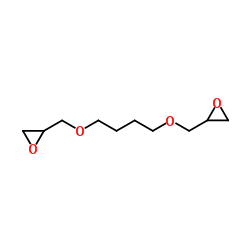
UNII:E9μ425FIB structure
|
Common Name | UNII:E9μ425FIB | ||
|---|---|---|---|---|
| CAS Number | 2425-79-8 | Molecular Weight | 202.247 | |
| Density | 1.1±0.1 g/cm3 | Boiling Point | 266.0±0.0 °C at 760 mmHg | |
| Molecular Formula | C10H18O4 | Melting Point | N/A | |
| MSDS | Chinese USA | Flash Point | 122.1±30.0 °C | |
| Symbol |

GHS07 |
Signal Word | Warning | |
|
A review of the metabolism of 1,4-butanediol diglycidyl ether-crosslinked hyaluronic acid dermal fillers.
Dermatol. Surg. 39(12) , 1758-66, (2013) Cosmetic procedures are growing ever more common, and the use of soft tissue fillers is increasing. Practicing physicians need to be aware of the biological behavior of these products in tissue to enable them to respond to any safety concerns that their patie... |
|
|
An attempt to improve diagnostics of contact allergy due to epoxy resin systems. First results of the multicentre study EPOX 2002.
Contact Dermatitis 51(5-6) , 263-72, (2004) Epoxy resin systems (ERSs) are a frequent cause of occupational allergic contact dermatitis. Sensitization occurs not only to the resins, but also to hardeners and reactive diluents. However, only a fraction of the ERS components currently in use are availabl... |
|
|
Chemical mutagenesis testing in Drosophila. IX. Results of 50 coded compounds tested for the National Toxicology Program.
Environ. Mol. Mutagen. 23(1) , 51-63, (1994) Fifty chemicals were tested for mutagenic activity in post-meiotic and meiotic germ cells of male Drosophila melanogaster using the sex-linked recessive lethal (SLRL) assay. As in the previous studies in this series, feeding was chosen as the first route of a... |
|
|
Influence of the morphology of poly(EGDMA-co-HEMA) on the chemical modifications and retention of O-phosphothreonine.
J. Biochem. Biophys. Methods 55(1) , 23-36, (2003) The influence of the morphology of ethylene glycol dimethacrylate-hydroxyethyl methacrylate copolymer [poly(EGDMA-co-HEMA)] base support to obtain different Fe(3+)-containing sorbents and their properties in retention of O-phosphothreonine [Thre(P)] is examin... |
|
|
1,4-Butanediol diglycidyl ether (BDE)-crosslinked PEI-g-imidazole nanoparticles as nucleic acid-carriers in vitro and in vivo.
Mol. Biosyst. 7(6) , 2055-65, (2011) Previously reported 1,4-butanediol diglycidyl ether (BDE) crosslinked PEI (branched polyethylenimine, 25 k) nanoparticles (A. Swami, R. Kurupati, A. Pathak, Y. Singh, P. Kumar and K. C. Gupta, A unique and highly efficient non-viral DNA/siRNA delivery system ... |
|
|
Effects of different crosslinking conditions on the chemical-physical properties of a novel bio-inspired composite scaffold stabilised with 1,4-butanediol diglycidyl ether (BDDGE).
J. Mater. Sci. Mater. Med. 24(1) , 17-35, (2013) Serious cartilage lesions (Outerbridge III, IV) may be successfully treated with a three-layered gradient scaffold made by magnesium-doped hydroxyapatite and type I collagen, manufactured through a bio-inspired process and stabilised by a reactive bis-epoxy (... |
|
|
Immobilized cofactor derivatives for kinetic-based enzyme capture strategies: direct coupling of NAD(P)+.
Anal. Biochem. 335(2) , 316-25, (2004) This study reevaluates the potential for direct coupling of NAD(P)(+) to a carboxylate-terminating spacer arm using carbodiimide-promoted coupling in an attempt to develop a greatly simplified synthetic method for cofactor immobilization that would support th... |
|
|
Polyvinyl alcohol-coated perfluorocarbon supports for metal chelating affinity separation of a monoclonal antibody.
J. Mol. Recognit. 9(5-6) , 394-400, (1996) The preparation, characterisation and testing of stable non-porous coated perfluorocarbon supports functionalised with the metal chelate, iminodiacetic acid (IDA) is described. Polyvinyl alcohol (PVA), a neutral hydrophilic polymer was esterified with perfluo... |
|
|
Oriented immobilization of restriction endonuclease EcoRI.
J. Mol. Recognit. 9(5-6) , 683-90, (1996) Two activated matrices have been developed to determine whether immobilization chemistry can be used to orient proteins on a support. Restriction endonuclease EcoRI from Escherichia coli RY13 (E.C.3.1.23.13) was used as a model in these studies. Thiol-activat... |
|
|
Enhanced dermal regeneration using modified collagen scaffolds: experimental porcine study.
Int. J. Artif. Organs 29(12) , 1167-73, (2006) Ongoing research has achieved much progress towards the development of new artificial skin substitute products. However, effective implant material for correcting full-thickness defects (such as those arising from extensive burns, tumor resection, hereditary ... |