2-Acetamidofluorene
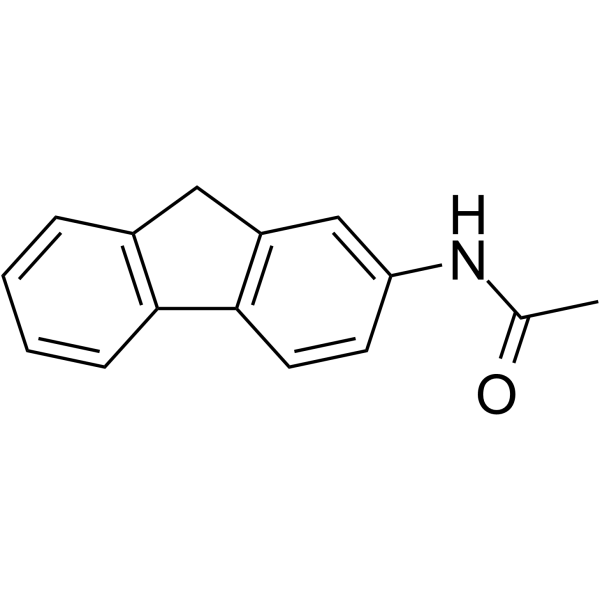
2-Acetamidofluorene structure
|
Common Name | 2-Acetamidofluorene | ||
|---|---|---|---|---|
| CAS Number | 53-96-3 | Molecular Weight | 223.270 | |
| Density | 1.2±0.1 g/cm3 | Boiling Point | 463.1±24.0 °C at 760 mmHg | |
| Molecular Formula | C15H13NO | Melting Point | 192-196 °C(lit.) | |
| MSDS | Chinese USA | Flash Point | 277.2±7.8 °C | |
| Symbol |


GHS07, GHS08 |
Signal Word | Danger | |
|
Translating clinical findings into knowledge in drug safety evaluation--drug induced liver injury prediction system (DILIps).
J. Sci. Ind. Res. 65(10) , 808, (2006) Drug-induced liver injury (DILI) is a significant concern in drug development due to the poor concordance between preclinical and clinical findings of liver toxicity. We hypothesized that the DILI types (hepatotoxic side effects) seen in the clinic can be tra... |
|
|
The Japanese toxicogenomics project: application of toxicogenomics.
Mol. Nutr. Food. Res. 54 , 218-27, (2010) Biotechnology advances have provided novel methods for the risk assessment of chemicals. The application of microarray technologies to toxicology, known as toxicogenomics, is becoming an accepted approach for identifying chemicals with potential safety proble... |
|
|
Developing structure-activity relationships for the prediction of hepatotoxicity.
Chem. Res. Toxicol. 23 , 1215-22, (2010) Drug-induced liver injury is a major issue of concern and has led to the withdrawal of a significant number of marketed drugs. An understanding of structure-activity relationships (SARs) of chemicals can make a significant contribution to the identification o... |
|
|
Induction of an altered lipid phenotype by two cancer promoting treatments in rat liver.
Food Chem. Toxicol. 78 , 96-104, (2015) Changes in lipid metabolism have been associated with tumor promotion in rat liver. Similarities and differences of lipid parameters were investigated using the mycotoxin fumonisin B1 (FB1) and the 2-acetylaminofluorene/partial hepatectomy (AAF/PH) treatments... |
|
|
18-β Glycyrrhetinic acid alleviates 2-acetylaminofluorene-induced hepatotoxicity in Wistar rats: Role in hyperproliferation, inflammation and oxidative stress.
Hum. Exp. Toxicol. 34 , 628-41, (2015) 2-Acetylaminofluorene (2-AAF) is a known hepatic carcinogen which leads to tumour formation in rodents. 18-β Glycyrrhetinic acid (18β-GA) derived from liquorice plant has various pharmacological properties such as anti-ulcer, anti-inflammatory, antiviral, hep... |
|
|
Immunomodulatory effect of diethylcarbamazine citrate plus filarial excretory-secretory product on rat hepatocarcinogenesis.
Int. Immunopharmacol. 24(2) , 173-81, (2015) Diethylcarbamazine citrate (DEC) had a significance in anti-filarial chemotherapy, while excretory-secretory product (ES) is released from adult filarial females. The target of the current study was to examine the immunomodulatory effect of DEC, Setaria equin... |
|
|
Oxidative changes and apoptosis induced by 1800-MHz electromagnetic radiation in NIH/3T3 cells.
Electromagn. Biol. Med. 34(1) , 85-92, (2015) To investigate the potential adverse effects of mobile phone radiation, we studied reactive oxygen species (ROS), DNA damage and apoptosis in mouse embryonic fibroblasts (NIH/3T3) after intermittent exposure (5 min on/10 min off, for various durations from 0.... |
|
|
Hepatic stellate cells contribute to progenitor cells and liver regeneration.
J. Clin. Invest. 124(12) , 5503-15, (2014) Retinoid-storing hepatic stellate cells (HSCs) have recently been described as a liver-resident mesenchymal stem cell (MSC) population; however, it is not clear whether these cells contribute to liver regeneration or serve as a progenitor cell population with... |
|
|
Antimutagenic evaluation of vitamins B1, B6 and B12 in vitro and in vivo, with the Ames test.
Food Chem. Toxicol. 53 , 228-34, (2013) The aim of this work is to evaluate vitamins B antimutagenic effect against alkylatings methyl-N-nitro-N-nitrosoguanidine (MNNG), ethyl-N-nitro-N'- nitrosoguanidine (ENNG), frameshift mutagens 2-aminoanthracene (2AA) and 2-acetyl-amino-fluorene (2AF) and ROS-... |
|
|
JaCVAM-organized international validation study of the in vivo rodent alkaline comet assay for detection of genotoxic carcinogens: II. Summary of definitive validation study results.
Mutat. Res. Genet. Toxicol. Environ. Mutagen. 786-788 , 45-76, (2015) The in vivo rodent alkaline comet assay (comet assay) is used internationally to investigate the in vivo genotoxic potential of test chemicals. This assay, however, has not previously been formally validated. The Japanese Center for the Validation of Alternat... |