Electromagnetic Biology and Medicine 2015-03-01

Oxidative changes and apoptosis induced by 1800-MHz electromagnetic radiation in NIH/3T3 cells.

Qingxia Hou, Minglian Wang, Shuicai Wu, Xuemei Ma, Guangzhou An, Huan Liu, Fei Xie

Index: Electromagn. Biol. Med. 34(1) , 85-92, (2015)

Full Text: HTML

Abstract

To investigate the potential adverse effects of mobile phone radiation, we studied reactive oxygen species (ROS), DNA damage and apoptosis in mouse embryonic fibroblasts (NIH/3T3) after intermittent exposure (5 min on/10 min off, for various durations from 0.5 to 8 h) to an 1800-MHz GSM-talk mode electromagnetic radiation (EMR) at an average specific absorption rate of 2 W/kg. A 2',7'-dichlorofluorescin diacetate fluorescence probe was used to detect intracellular ROS levels, immunofluorescence was used to detect γH2AX foci as a marker for DNA damage, and flow cytometry was used to measure apoptosis. Our results showed a significant increase in intracellular ROS levels after EMR exposure and it reached the highest level at an exposure time of 1 h (p < 0.05) followed by a slight decrease when the exposure continued for as long as 8 h. No significant effect on the number of γH2AX was detected after EMR exposure. The percentage of late-apoptotic cells in the EMR-exposed group was significantly higher than that in the sham-exposed groups (p < 0.05). These results indicate that an 1800-MHz EMR enhances ROS formation and promotes apoptosis in NIH/3T3 cells.

Related Compounds

Structure Name/CAS No. Articles
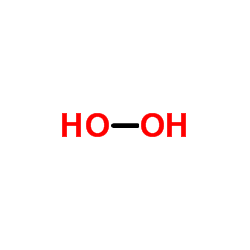
Hydrogen peroxide Structure Hydrogen peroxide
CAS:7722-84-1
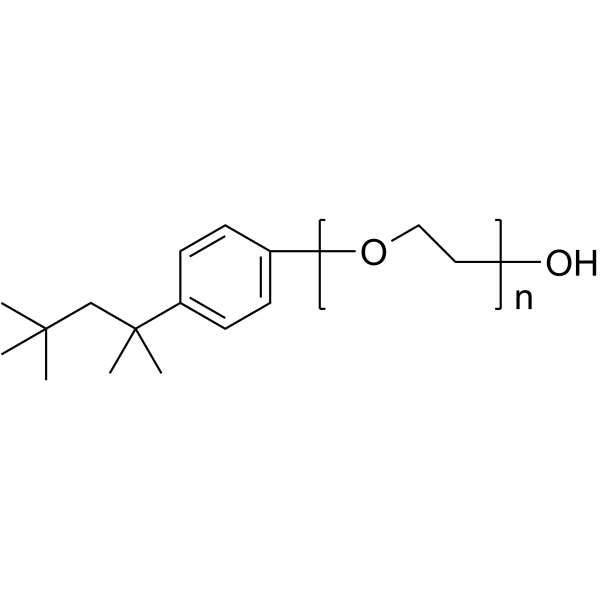
Triton X-100 Structure Triton X-100
CAS:9002-93-1
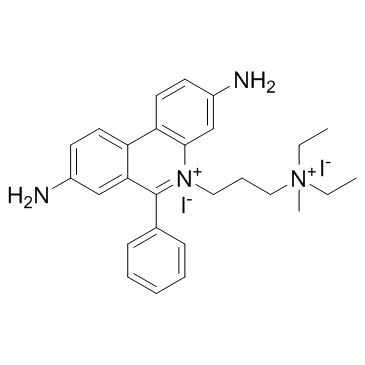
Propidium Iodide Structure Propidium Iodide
CAS:25535-16-4
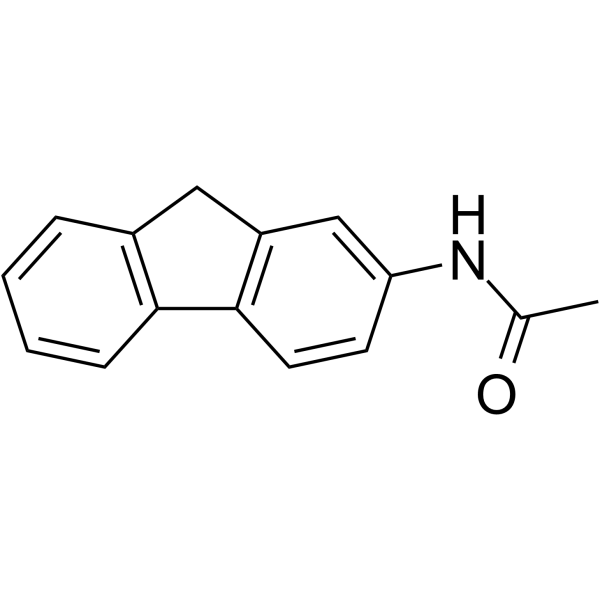
2-Acetamidofluorene Structure 2-Acetamidofluorene
CAS:53-96-3