o-nitroaniline
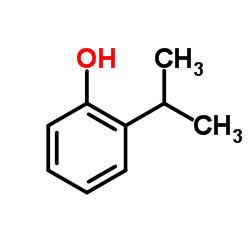
o-nitroaniline structure
|
Common Name | o-nitroaniline | ||
|---|---|---|---|---|
| CAS Number | 88-69-7 | Molecular Weight | 136.191 | |
| Density | 1.0±0.1 g/cm3 | Boiling Point | 213.5±0.0 °C at 760 mmHg | |
| Molecular Formula | C9H12O | Melting Point | 12-16 °C(lit.) | |
| MSDS | Chinese USA | Flash Point | 88.9±0.0 °C | |
| Symbol |


GHS05, GHS07 |
Signal Word | Danger | |
|
Calculating virtual log P in the alkane/water system (log P(N)(alk)) and its derived parameters deltalog P(N)(oct-alk) and log D(pH)(alk).
J. Med. Chem. 48 , 3269-79, (2005) Growing interest in the use of both the logarithm of the partition coefficient of the neutral species in the alkane/water system (log P(N)(alk)) and the difference between log P(N)(oct) (the logarithm of the partition coefficient of the neutral species in the... |
|
|
Cellular apoptosis and cytotoxicity of phenolic compounds: a quantitative structure-activity relationship study.
J. Med. Chem. 48 , 7234-42, (2005) In this comprehensive study on the caspase-mediated apoptosis-inducing effect of 51 substituted phenols in a murine leukemia cell line (L1210), we determined the concentrations needed to induce caspase activity by 50% (I50) and utilized these data to develop ... |
|
|
Importance of solvent association in the estimation of antioxidant properties of phenolic compounds by DPPH method.
J. Food Sci. Technol. 52 , 4523-9, (2015) The presented paper shows the influence of temperature increase in the range typically used during antioxidant measurements (15-35 °C) on the estimation of antioxidant properties of phenolic compounds (caffeic acid, ferulic acid, gallic acid, trolox, butylhyd... |
|
|
Characterization of anticancer properties of 2,6-diisopropylphenol-docosahexaenoate and analogues in breast cancer cells.
Bioorg. Med. Chem. 18 , 1866-74, (2010) The present study describes the characterization and evaluation of novel anticancer conjugates, 2,6-diisopropylphenol-docosahexaenoate (PP-DHA), and its analogues including 2,4-diisopropylphenol-docosahexaenoate (DIPP-DHA), 2-isopropylphenol-docosahexaenoate ... |
|
|
Structure-based shape pharmacophore modeling for the discovery of novel anesthetic compounds.
Bioorg. Med. Chem. 17 , 5133-8, (2009) Current anesthetics, especially the inhaled ones, have troublesome side effects and may be associated with durable changes in cognition. It is therefore highly desirable to develop novel chemical entities that reduce these effects while preserving or enhancin... |
|
|
Fluorescence spectrometric study on the interactions of Isoprocarb and sodium 2-isopropylphenate with bovine serum albumin
Talanta 76(3) , 513-21, (2008) The binding interaction of the pesticide Isoprocarb and its degradation product, sodium 2-isopropylphenate, with bovine serum albumin (BSA) was studied by spectrofluorimetry under simulated physiological conditions. Both Isoprocarb and sodium 2-isopropylphena... |
|
|
Pseudomonas sp. strain HBP1 Prp degrades 2-isopropylphenol (ortho-cumenol) via meta cleavage.
Appl. Environ. Microbiol. 60(12) , 4587-91, (1994) Pseudomonas sp. strain HBP1 Prp grew on 2-isopropylphenol as the sole carbon and energy source with a maximal specific growth rate of 0.14 h-1 and transient accumulation of isobutyric acid. Oxygen uptake experiments with resting cells and enzyme assays with c... |
|
|
Molecular actions of propofol on human 5-HT3A receptors: enhancement as well as inhibition by closely related phenol derivatives.
Anesth. Analg. 106(3) , 846-57, table of contents, (2008) 5-Hydroxytryptamine type 3 (5-HT3) receptors are excitatory ligand-gated ion channels which are involved in postoperative nausea and vomiting. They are depressed by the anesthetic propofol, which, in contrast, enhances the activity of inhibitory ligand-gated ... |
|
|
In vitro profiling of endocrine disrupting effects of phenols.
Toxicol. In Vitro 24(1) , 201-7, (2010) Some phenols have been suspected to modulate the endocrine systems of wildlife and humans, but less is known about their interactions with different types of nuclear receptors. In this study, the ability of 2-tert-butylphenol, 2-isopropylphenol, 4-tert-octylp... |