3-Chlorophenol
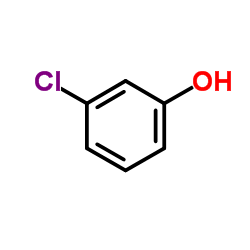
3-Chlorophenol structure
|
Common Name | 3-Chlorophenol | ||
|---|---|---|---|---|
| CAS Number | 108-43-0 | Molecular Weight | 128.556 | |
| Density | 1.3±0.1 g/cm3 | Boiling Point | 214.0±0.0 °C at 760 mmHg | |
| Molecular Formula | C6H5ClO | Melting Point | 31-34 °C(lit.) | |
| MSDS | USA | Flash Point | 76.9±19.8 °C | |
| Symbol |


GHS07, GHS09 |
Signal Word | Warning | |
|
Convenient QSAR model for predicting the complexation of structurally diverse compounds with β-cyclodextrins
Bioorg. Med. Chem. 17 , 896-904, (2009) This paper reports a QSAR study for predicting the complexation of a large and heterogeneous variety of substances (233 organic compounds) with beta-cyclodextrins (beta-CDs). Several different theoretical molecular descriptors, calculated solely from the mole... |
|
|
Calculating virtual log P in the alkane/water system (log P(N)(alk)) and its derived parameters deltalog P(N)(oct-alk) and log D(pH)(alk).
J. Med. Chem. 48 , 3269-79, (2005) Growing interest in the use of both the logarithm of the partition coefficient of the neutral species in the alkane/water system (log P(N)(alk)) and the difference between log P(N)(oct) (the logarithm of the partition coefficient of the neutral species in the... |
|
|
Cellular apoptosis and cytotoxicity of phenolic compounds: a quantitative structure-activity relationship study.
J. Med. Chem. 48 , 7234-42, (2005) In this comprehensive study on the caspase-mediated apoptosis-inducing effect of 51 substituted phenols in a murine leukemia cell line (L1210), we determined the concentrations needed to induce caspase activity by 50% (I50) and utilized these data to develop ... |
|
|
Impact of induced fit on ligand binding to the androgen receptor: a multidimensional QSAR study to predict endocrine-disrupting effects of environmental chemicals.
J. Med. Chem. 48 , 5666-74, (2005) We investigated the influence of induced fit of the androgen receptor binding pocket on free energies of ligand binding. On the basis of a novel alignment procedure using flexible docking, molecular dynamics simulations, and linear-interaction energy analysis... |
|
|
Enhancement of MHC-I antigen presentation via architectural control of pH-responsive, endosomolytic polymer nanoparticles.
AAPS J. 17(2) , 358-69, (2015) Protein-based vaccines offer a number of important advantages over organism-based vaccines but generally elicit poor CD8(+) T cell responses. We have previously demonstrated that pH-responsive, endosomolytic polymers can enhance protein antigen delivery to ma... |
|
|
Decoys for docking.
J. Med. Chem. 48 , 3714-28, (2005) Molecular docking is widely used to predict novel lead compounds for drug discovery. Success depends on the quality of the docking scoring function, among other factors. An imperfect scoring function can mislead by predicting incorrect ligand geometries or by... |
|
|
Predicting mixture toxicity of seven phenolic compounds with similar and dissimilar action mechanisms to Vibrio qinghaiensis sp.nov.Q67.
Ecotoxicol. Environ. Saf. 74(6) , 1600-6, (2011) The predictions of mixture toxicity for chemicals are commonly based on two models: concentration addition (CA) and independent action (IA). Whether the CA and IA can predict mixture toxicity of phenolic compounds with similar and dissimilar action mechanisms... |
|
|
Determination of log D via automated microfluidic liquid-liquid extraction.
J. Med. Chem. 51 , 5140-2, (2008) A method for log D (pH 7.4) measurement was developed using microfluidic liquid-liquid extraction. Values were determined for 26 compounds and compared to results obtained via shake-flask methods. Excellent correlation between the values obtained via both met... |
|
|
The pentachlorophenol-dehalogenating Desulfitobacterium hafniense strain PCP-1.
Philos. Trans. R. Soc. Lond., B, Biol. Sci. 368(1616) , 20120319, (2013) In this report, a complete description of Desulfitobacterium hafniense strain PCP-1 is presented. The D. hafniense strain PCP-1 was isolated from a methanogenic consortium for its capacity to dehalogenate pentachlorophenol (PCP) into 3-chlorophenol. This stra... |
|
|
Long-term anaerobic mineralization of pentachlorophenol in a continuous-flow system using only lactate as an external nutrient.
Environ. Sci. Technol. 47(3) , 1534-41, (2013) A simple anaerobic upflow column system (15 cm long, 5 cm inner diameter) for complete pentachlorophenol (PCP) mineralization has been established using a microbial consortium requiring only lactate as the external nutrient. With lactate as an electron donor,... |