三氯化钛(III)溶液
一般危化品
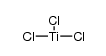
三氯化钛(III)溶液结构式
|
常用名 | 三氯化钛(III)溶液 | 英文名 | Titanous chloride |
|---|---|---|---|---|
| CAS号 | 7705-07-9 | 分子量 | 154.22600 | |
| 密度 | 1.192 g/mL at 25 °C | 沸点 | 100 °C | |
| 分子式 | Cl3Ti | 熔点 | 440 °C (dec.)(lit.) | |
| MSDS | 中文版 美版 | 闪点 | N/A | |
| 符号 |


GHS02, GHS05 |
信号词 | Danger |
|
Environmental fate of the next generation refrigerant 2,3,3,3-tetrafluoropropene (HFO-1234yf).
Environ. Sci. Technol. 48(22) , 13181-7, (2014) The hydrofluoroolefin 2,3,3,3-tetrafluoropropene (HFO-1234yf) has been introduced to replace 1,1,1,2-tetrafluoroethane (HFC-134a) as refrigerant in mobile, including vehicle, air conditioning systems because of its lower global warming potential. HFO-1234yf i... |
|
|
SnCl2/TiCl3-mediated deoximation of oximes in an aqueous solvent.
Molecules 17(3) , 2464-73, (2012) A simple procedure for SnCl(2)/TiCl(3)-mediated deoximation of ketoximes in an aqueous solvent is reported. Under the conditions developed in this effort, various ketones and aldehydes are produced in good to excellent yields. |
|
|
[Studies on "Fast Green FCF Standard" for the dye standard on the National Institute of Health Sciences].
Eisei Shikenjo Hokoku. (114) , 136-7, (1996) The raw material for Fast Green FCF was tested for preparation of the "Fast Green FCF Standard (C.I. 42053)". Analytical data obtained were as follows: paper chromatography, only one spot is observed; arsenic content, 0.38 microgram/g; chloride content, 0.11%... |
|
|
H135A controls the redox activity of the Sco copper center. Kinetic and spectroscopic studies of the His135Ala variant of Bacillus subtilis Sco.
Biochemistry 48(51) , 12133-44, (2009) Sco-like proteins contain copper bound by two cysteines and a histidine residue. Although their function is still incompletely understood, there is a clear involvement with the assembly of cytochrome oxidases that contain the Cu(A) center in subunit 2, possib... |
|
|
Investigation into the effectiveness of surface treatment on poly(methyl methacrylate) when exposed in the mouth.
J. Prosthet. Dent. 59(3) , 368-73, (1988)
|
|
|
The reduction of aliphatic and aromatic N-oxides to the corresponding amines with titanium(III) chloride.
Anal. Biochem. 138(1) , 238-41, (1984) Amine N-oxides have been observed to be reduced by titanium(III) chloride. To study this reaction, 24 model amine N-oxides were reacted with titanium(III) chloride. The products of these reactions were shown by melting (boiling) points, mixed melting points, ... |
|
|
4,5-Dimethylthiazole-N-oxide-S-oxide: a metabolite of chlormethiazole in man.
Xenobiotica 15(6) , 503-11, (1985) The metabolic fate of chlormethiazole in healthy male subjects has been investigated following the oral administration of a single dose of chlormethiazole edisylate. Five urinary C-oxidation metabolites were identified and shown to be identical with previousl... |
|
|
Evaluation of in vitro antimicrobial and in vivo cytotoxic properties of some novel titanium-based coordination complexes.
Biol. Pharm. Bull. 27(5) , 710-3, (2004) The aim of the present study was to determine the antimicrobial and cytotoxic activities of eight novel titanium(III) based coordination complexes [Ti(Pht)(2)(DL-serine)(2), S(1)], [Ti(Pht)(2)(glycine)(2), S(2))], [Ti(Pht)(2)(cystine)(2), S(3)], [Ti(Pht)(2)(D... |
|
|
Multianalyte quantification of five sesqui- and ethyl ether oxy-mustard metabolites in human urine by liquid chromatography-atmospheric pressure chemical ionization-tandem mass spectrometry.
J. Anal. Toxicol. 32(1) , 44-50, (2008) Sesqui- and oxy-mustards pose a significant threat to military forces and civilians because they are potent vesicants. We have developed an isotope-dilution high-performance liquid chromatography-atmospheric pressure chemical ionization-tandem mass spectromet... |
|
|
The reduction of hydroxamic acids with titanium(III) chloride: a tool for the characterization of siderophores.
Anal. Biochem. 133(1) , 116-9, (1983) Hydroxamic acid siderophores were observed to be inactivated by exposure to titanium(III) chloride. To study the reaction, a series of eight model hydroxamic acids were prepared and reacted with titanium(III) chloride. The products were shown by ir and NMR co... |