4-Chloro-1-butanol
Modify Date: 2025-08-20 18:13:20
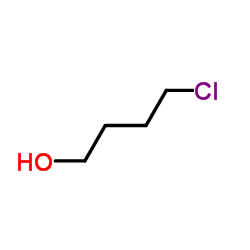
4-Chloro-1-butanol structure
|
Common Name | 4-Chloro-1-butanol | ||
|---|---|---|---|---|
| CAS Number | 928-51-8 | Molecular Weight | 108.567 | |
| Density | 1.0±0.1 g/cm3 | Boiling Point | 178.5±0.0 °C at 760 mmHg | |
| Molecular Formula | C4H9ClO | Melting Point | N/A | |
| MSDS | Chinese USA | Flash Point | 77.2±18.0 °C | |
| Symbol |


GHS02, GHS05, GHS07, GHS08 |
Signal Word | Warning | |
| Name | 4-chlorobutanol |
|---|---|
| Synonym | More Synonyms |
| Density | 1.0±0.1 g/cm3 |
|---|---|
| Boiling Point | 178.5±0.0 °C at 760 mmHg |
| Molecular Formula | C4H9ClO |
| Molecular Weight | 108.567 |
| Flash Point | 77.2±18.0 °C |
| Exact Mass | 108.034195 |
| PSA | 20.23000 |
| LogP | 0.85 |
| Vapour Pressure | 0.3±0.7 mmHg at 25°C |
| Index of Refraction | 1.434 |
| InChIKey | HXHGULXINZUGJX-UHFFFAOYSA-N |
| SMILES | OCCCCCl |
CHEMICAL IDENTIFICATION
HEALTH HAZARD DATAACUTE TOXICITY DATA
|
| Symbol |
GHS02, GHS05, GHS07, GHS08 |
|---|---|
| Signal Word | Warning |
| Hazard Statements | H226-H290-H302-H315-H319-H335-H351 |
| Precautionary Statements | P210-P280-P301 + P312 + P330-P305 + P351 + P338-P370 + P378 |
| Personal Protective Equipment | Faceshields;full-face respirator (US);Gloves;Goggles;multi-purpose combination respirator cartridge (US);type ABEK (EN14387) respirator filter |
| Hazard Codes | Xn:Harmful; |
| Risk Phrases | R10;R20/21/22;R36/37/38 |
| Safety Phrases | S23-S24/25-S36/37/39-S26-S16 |
| RIDADR | UN 2920 8/PG 2 |
| WGK Germany | 3 |
| RTECS | EL1325000 |
| Packaging Group | III |
| Hazard Class | 3.2 |
| HS Code | 29055910 |
| Precursor 10 | |
|---|---|
| DownStream 10 | |
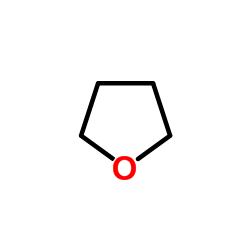 CAS#:109-99-9
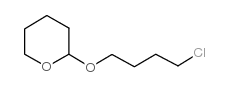 CAS#:41302-05-0
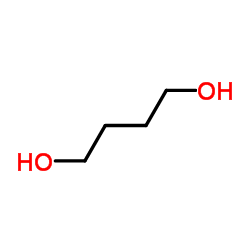 CAS#:110-63-4
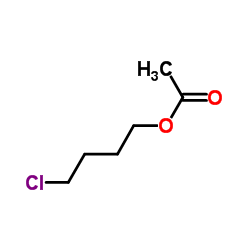 CAS#:6962-92-1
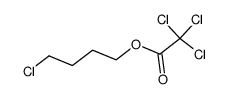 CAS#:84273-54-1
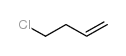 CAS#:927-73-1
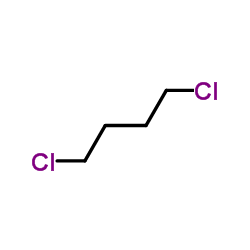 CAS#:110-56-5
 CAS#:75-21-8
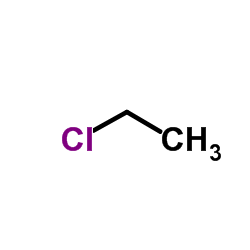 CAS#:75-00-3
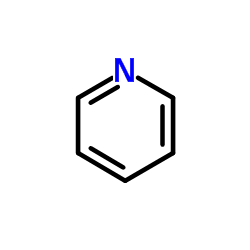 CAS#:110-86-1
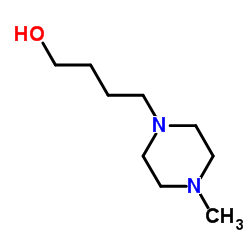 CAS#:56323-03-6
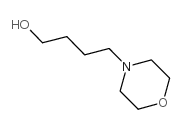 CAS#:5835-79-0
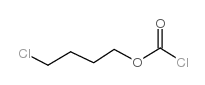 CAS#:37693-18-8
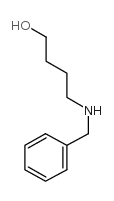 CAS#:59578-63-1
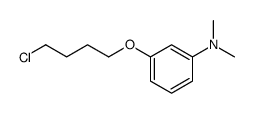 CAS#:143916-45-4
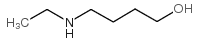 CAS#:39216-86-9
 CAS#:4543-95-7
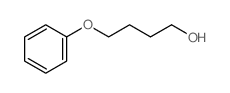 CAS#:1927-71-5
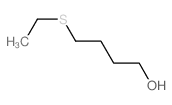 CAS#:18721-62-5
| HS Code | 2905590090 |
|---|---|
| Summary | 2905590090 other halogenated, sulphonated, nitrated or nitrosated derivatives of acyclic alcohols。Supervision conditions:None。VAT:17.0%。Tax rebate rate:9.0%。MFN tariff:5.5%。General tariff:30.0% |
|
Reichardt's dye and its reactions with the alkylating agents 4-chloro-1-butanol, ethyl methanesulfonate, 1-bromobutane and Fast Red B - a potentially useful reagent for the detection of genotoxic impurities in pharmaceuticals.
J. Pharm. Pharmacol. 61(4) , 533-7, (2009) Alkylating agents are potentially genotoxic impurities that may be present in drug products. These impurities occur in pharmaceuticals as by-products from the synthetic steps involved in drug producti... |
|
|
Development and validation of a sensitive GC-MS method for the determination of alkylating agent, 4-chloro-1-butanol, in active pharmaceutical ingredients.
Chem. Pharm. Bull. 62(4) , 395-8, (2014) The analysis of genotoxic impurities (GTIs) in active pharmaceutical ingredients (APIs) is a challenging task. The target detection limit (DL) in an API is typically around 1 ppm (1 µg/g API). Therefo... |
| 4-CHLOROBUTANOL |
| 4-Chloro-1-butanol |
| 1-Butanol,4-chloro |
| MFCD00002967 |
| 4-Choro-1-bytanol |
| 4-Chlorobutane-1-ol |
| EINECS 213-175-5 |
| 4-Chlorolbutanol |
| 1-chlorobutanol |
| tetramethylene chlorohydrin |
| 4-Chlorobutan-1-ol |
| 4-CHLOROBUTANOL-1 |
| 4-Chlorbutan-1-ol |
| 1-Butanol, 4-chloro- |
| hydroxypropyl methyl chloride |
| 4-chloro-1-butano |
| 4-hydroxybutyl chloride |
The content on this webpage is sourced from various professional data sources. If you have any questions or concerns regarding the content, please feel free to contact service1@chemsrc.com.
- Shanghai Nianxing Industrial Co., Ltd
- China
- Product Name: 4-Chloro-1-butanol
- Price: Check
- Purity: 90.0%
- Delivery: 10 Day
- Contact: Yang
- Email: sales@echemcloud.com
- Shanghai Jizhi Biochemical Technology Co., Ltd
- China
- Product Name: 4-Chloro-1-butanol
- Price: ¥118.0/25g ¥328.0/100g
- Purity: 97.0%
- Delivery: Inquiry
- Contact: Liu jia


- Email: 2130147988@qq.com
- Dayang Chem (Hangzhou) Co., Ltd.
- China
- Product Name: 4-Chloro-1-butanol
- Price: $Inquiry/100g $Inquiry/1kg $Inquiry/100kg $Inquiry/1000kg
- Purity: 98.0%
- Delivery: Inquiry
- Contact: Ms Wang
- Email: enquiry@dycnchem.com
Get all suppliers and price by the below link: