DL-Arginine
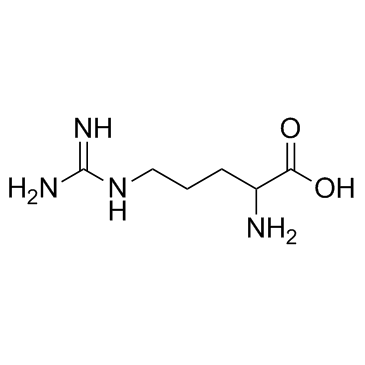
DL-Arginine structure
|
Common Name | DL-Arginine | ||
|---|---|---|---|---|
| CAS Number | 7200-25-1 | Molecular Weight | 174.201 | |
| Density | 1.5±0.1 g/cm3 | Boiling Point | 367.6±52.0 °C at 760 mmHg | |
| Molecular Formula | C6H14N4O2 | Melting Point | 228-232ºC | |
| MSDS | Chinese USA | Flash Point | 176.1±30.7 °C | |
| Symbol |

GHS07 |
Signal Word | Warning | |
Use of DL-ArginineDL-Arginine is used in physicochemical analysis of amino acid complexation dynamics and crystal structure formations. |
| Name | arginine |
|---|---|
| Synonym | More Synonyms |
| Description | DL-Arginine is used in physicochemical analysis of amino acid complexation dynamics and crystal structure formations. |
|---|---|
| Related Catalog |
| Density | 1.5±0.1 g/cm3 |
|---|---|
| Boiling Point | 367.6±52.0 °C at 760 mmHg |
| Melting Point | 228-232ºC |
| Molecular Formula | C6H14N4O2 |
| Molecular Weight | 174.201 |
| Flash Point | 176.1±30.7 °C |
| Exact Mass | 174.111679 |
| PSA | 125.22000 |
| LogP | -1.79 |
| Vapour Pressure | 0.0±1.8 mmHg at 25°C |
| Index of Refraction | 1.601 |
| Water Solubility | 155 g/L (20 ºC) |
| Symbol |
GHS07 |
|---|---|
| Signal Word | Warning |
| Hazard Statements | H319 |
| Precautionary Statements | P305 + P351 + P338 |
| Personal Protective Equipment | dust mask type N95 (US);Eyeshields;Gloves |
| Hazard Codes | Xi:Irritant; |
| Risk Phrases | R36 |
| Safety Phrases | S26-S39 |
| RIDADR | NONH for all modes of transport |
| WGK Germany | 3 |
| HS Code | 29252000 |
| Precursor 10 | |
|---|---|
| DownStream 8 | |
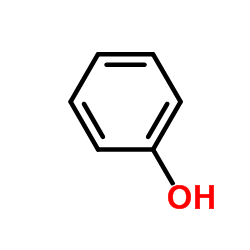 CAS#:108-95-2
 CAS#:123-91-1
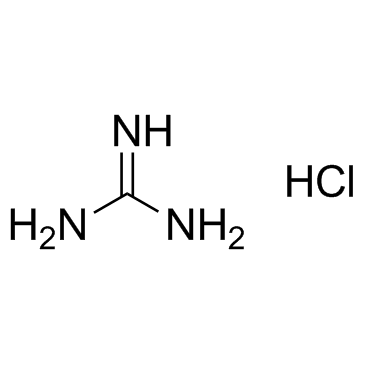 CAS#:50-01-1
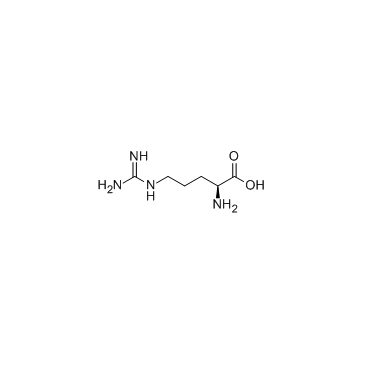 CAS#:74-79-3
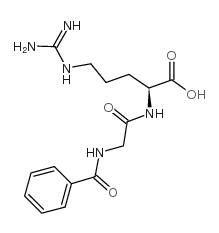 CAS#:744-46-7
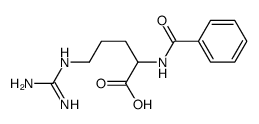 CAS#:6453-58-3
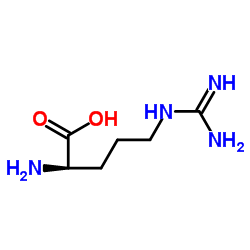 CAS#:157-06-2
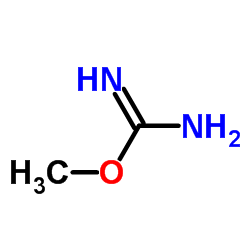 CAS#:2440-60-0
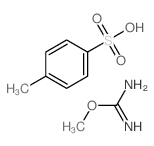 CAS#:7356-58-3
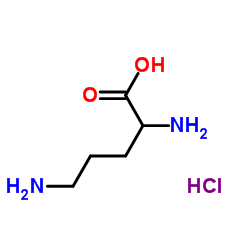 CAS#:1069-31-4
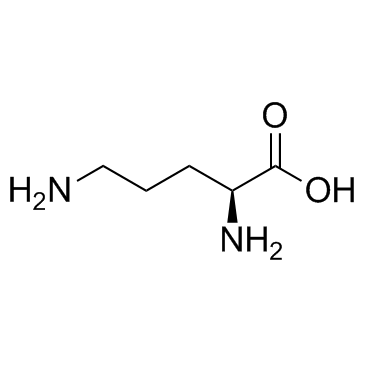 CAS#:70-26-8
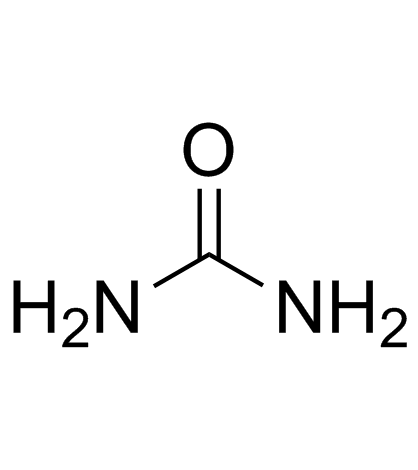 CAS#:57-13-6
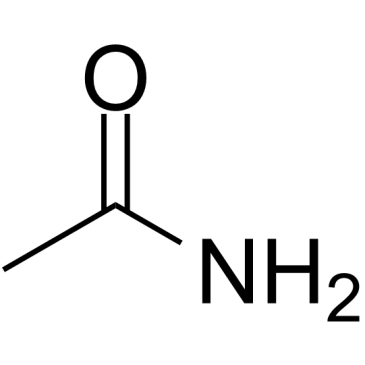 CAS#:60-35-5
 CAS#:14049-14-0
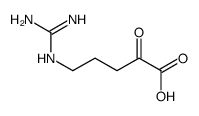 CAS#:3715-10-4
 CAS#:66508-53-0
| HS Code | 2925290090 |
|---|---|
| Summary | 2925290090 other imines and their derivatives; salts thereof。Supervision conditions:None。VAT:17.0%。Tax rebate rate:9.0%。MFN tariff:6.5%。General tariff:30.0% |
|
Influence of the lipid membrane environment on structure and activity of the outer membrane protein Ail from Yersinia pestis.
Biochim. Biophys. Acta 1848(2) , 712-20, (2014) The surrounding environment has significant consequences for the structural and functional properties of membrane proteins. While native structure and function can be reconstituted in lipid bilayer me... |
|
|
Blockage of GSK3β-mediated Drp1 phosphorylation provides neuroprotection in neuronal and mouse models of Alzheimer's disease.
Neurobiol. Aging 36(1) , 211-27, (2014) It is well established that mitochondrial fragmentation plays a key role in the pathogenesis of Alzheimer's disease (AD). Mitochondrial fission is mediated by dynamin-related protein 1 (Drp1), which i... |
|
|
Acetyltransferase p300/CBP associated Factor (PCAF) regulates crosstalk-dependent acetylation of histone H3 by distal site recognition.
ACS Chem. Biol. 10(1) , 157-64, (2015) Epigenetic regulation is directed, in part, by the correlated placement of histone post-translational modifications, but the mechanisms controlling correlated modifications are incompletely understood... |
| Ornithine, N5-(aminoiminomethyl)- |
| 2-amino-5-guanidino-valeric acid |
| Arctin |
| Arctigenin-4-glucoside |
| 2-amino-5-carbamimidamidopentanoic acid |
| Arctlin |
| (-)-ARCTIIN |
| H-DL-Arg-OH |
| EINECS 230-571-3 |
| (±)-Arginine |
| DL-Arginine |
| arginine |
| Norvaline, 5-[(aminoiminomethyl)amino]- |
| ARCTIIN(P) |
| ornithine, N-(diaminomethylene)- |
| N-(diaminomethylidene)ornithine |
| methyl]dihydro-,(3R,4R) |
| (-)-Arctin,Arctiumlappa |
| Great Burdock Root Extract |
| MFCD00063117 |
| DL-2-Amino-5-guanidinopentanoic acid |
The content on this webpage is sourced from various professional data sources. If you have any questions or concerns regarding the content, please feel free to contact service1@chemsrc.com.
- Shanghai Nianxing Industrial Co., Ltd
- China
- Product Name: DL-Arginine
- Price: Check
- Purity: 98.0%
- Delivery: 10 Day
- Contact: Yang
- Email: sales@echemcloud.com
- Shanghai Jizhi Biochemical Technology Co., Ltd
- China
- Product Name: DL-Arginine
- Price: ¥218.0/25g ¥78.0/5g ¥58.0/200mg
- Purity: 98.0%
- Delivery: 1 Day
- Contact: Liu jia


- Email: 2130147988@qq.com
- Dayang Chem (Hangzhou) Co., Ltd.
- China
- Product Name: DL-Arginine
- Price: $Inquiry/100g $Inquiry/1kg $Inquiry/100kg $Inquiry/1000kg
- Purity: 98.0%
- Delivery: Inquiry
- Contact: Ms Wang
- Email: enquiry@dycnchem.com
- Henan Tianfu Chemical Co., Ltd.
- China
- Product Name: DL-Arginine
- Price: $Inquiry/1kg $Inquiry/25kg $Inquiry/1000kg $Inquiry/10ton
- Purity: 99.0%
- Delivery: Inquiry
- Contact: Anson
- Email: info@tianfuchem.com
Get all suppliers and price by the below link:
Reference only. check more DL-Arginine price