Cytisine
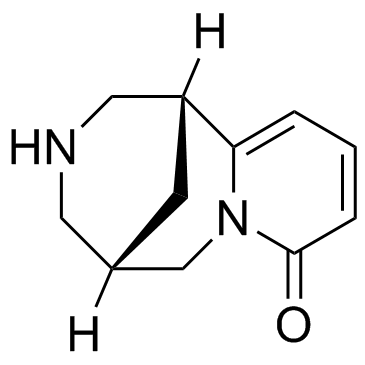
Cytisine structure
|
Common Name | Cytisine | ||
|---|---|---|---|---|
| CAS Number | 485-35-8 | Molecular Weight | 190.242 | |
| Density | 1.2±0.1 g/cm3 | Boiling Point | 413.0±34.0 °C at 760 mmHg | |
| Molecular Formula | C11H14N2O | Melting Point | 154-156ºC | |
| MSDS | Chinese USA | Flash Point | 203.6±25.7 °C | |
| Symbol |

GHS06 |
Signal Word | Danger | |
Use of CytisineCytisine is an alkaloid that occurs naturally in several plant genera, such as Laburnum and Cytisus. Cytisine is a partial agonist of α4β2 nAChRs[1], and partial to full agonist at β4 containing receptors and α7 receptors[2]. has been used medically to help with smoking cessation[3]. |
This table lists Chinese names, IUPAC names and various aliases of this chemical substance.
| Name | cytisine |
|---|---|
| Synonym | More Synonyms |
This table contains bioactivity, target information and biological‑assay experimental data of this compound.
| Description | Cytisine is an alkaloid that occurs naturally in several plant genera, such as Laburnum and Cytisus. Cytisine is a partial agonist of α4β2 nAChRs[1], and partial to full agonist at β4 containing receptors and α7 receptors[2]. has been used medically to help with smoking cessation[3]. |
|---|---|
| Related Catalog | |
| Target |
α4β2 nAChRs[1]. |
| In Vitro | Cytisine (2.5, 5 and 10 mM) is capable of inducing apoptosis in HepG2 cells[4]. Treatment with Cytisine increases the percentage of cells in the sub-G1 phase (P<0.01). The preincubation of HepG2 cells with Cytisine (2.5, 5 and 10 mM) significantly increases the sub-G1 cell population[4]. |
| In Vivo | Cytisine (5 mg/kg, i.p.) eat less and gain less weight than those that receive the vehicle[2]. Total pellet intake increases during Cytisine substitution relative to nicotine and animals self-administered Cytisine significantly less than nicotine[2]. |
| References |
This table shows physicochemical parameters including melting point, boiling point, density, solubility and optical rotation. Missing data is marked as N/A.
| Density | 1.2±0.1 g/cm3 |
|---|---|
| Boiling Point | 413.0±34.0 °C at 760 mmHg |
| Melting Point | 154-156ºC |
| Molecular Formula | C11H14N2O |
| Molecular Weight | 190.242 |
| Flash Point | 203.6±25.7 °C |
| Exact Mass | 190.110611 |
| PSA | 34.03000 |
| LogP | 0.07 |
| Vapour Pressure | 0.0±1.0 mmHg at 25°C |
| Index of Refraction | 1.623 |
| InChIKey | ANJTVLIZGCUXLD-DTWKUNHWSA-N |
| SMILES | O=c1cccc2n1CC1CNCC2C1 |
This table provides MSDS information including hazard classification, first‑aid, fire‑fighting, spill handling, operation and storage instructions.
This table summarizes toxicological test data, acute & chronic toxicity and ecological hazard parameters for this chemical.
CHEMICAL IDENTIFICATION
HEALTH HAZARD DATAACUTE TOXICITY DATA
|
This table covers safety warnings, protective measures, incompatible substances and disposal guidelines for this compound.
| Symbol |
GHS06 |
|---|---|
| Signal Word | Danger |
| Hazard Statements | H301-H315-H319-H335 |
| Precautionary Statements | P305 + P351 + P338 |
| Personal Protective Equipment | Eyeshields;Faceshields;Gloves;type P2 (EN 143) respirator cartridges |
| Hazard Codes | T:Toxic |
| Risk Phrases | R25;R36/37/38 |
| Safety Phrases | S26-S28-S36/37-S45 |
| RIDADR | UN 2811 |
| WGK Germany | 3 |
| RTECS | HA4025000 |
| Packaging Group | III |
| Hazard Class | 6.1(b) |
| HS Code | 2933990090 |
This table presents publicly reported synthetic routes, reaction conditions, reactants and product information of the compound.
This table lists upstream starting materials and downstream derivative products related to this chemical.
| Precursor 9 | |
|---|---|
| DownStream 3 | |
 CAS#:667940-15-0
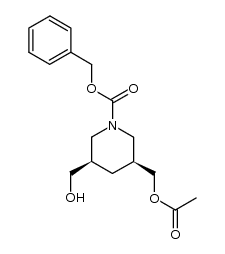 CAS#:206761-38-8
 CAS#:667940-16-1
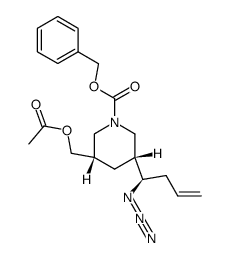 CAS#:667940-11-6
 CAS#:667940-18-3
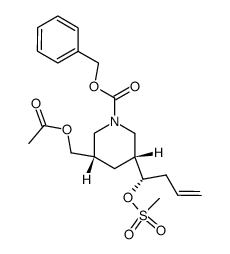 CAS#:667940-10-5
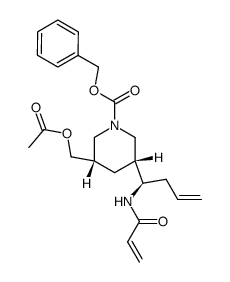 CAS#:667940-08-1
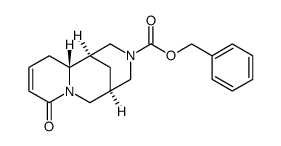 CAS#:667940-14-9
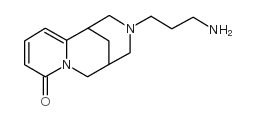 CAS#:29047-52-7
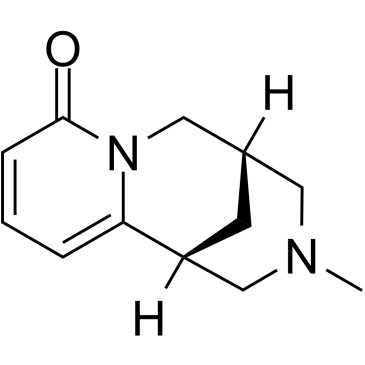 CAS#:486-86-2
This table shows customs‑related data including HS‑code, tariff and regulatory conditions for import and export.
| HS Code | 2933990090 |
|---|---|
| Summary | 2933990090. heterocyclic compounds with nitrogen hetero-atom(s) only. VAT:17.0%. Tax rebate rate:13.0%. . MFN tariff:6.5%. General tariff:20.0% |
This table lists relevant public references with title, journal and publication metadata for this compound.
|
Differential expression of the beta4 neuronal nicotinic receptor subunit affects tolerance development and nicotinic binding sites following chronic nicotine treatment.
Pharmacol. Biochem. Behav. 130 , 1-8, (2015) The role of neuronal nicotinic acetylcholine receptors (nAChR) containing the β4 subunit in tolerance development and nicotinic binding site levels following chronic nicotine treatment was investigate... |
|
|
Pharmacokinetics of cytisine, an α4 β2 nicotinic receptor partial agonist, in healthy smokers following a single dose.
Drug Test. Anal. , doi:10.1002/dta.1707, (2014) Cytisine, an α4 β2 nicotinic receptor partial agonist, is a plant alkaloid that is commercially extracted for use as a smoking cessation medication. Despite its long history of use, there is very litt... |
|
|
Synthesis and pharmacological evaluation of novel 9- and 10-substituted cytisine derivatives. Nicotinic ligands of enhanced subtype selectivity.
J. Med. Chem. 49 , 2673-2676, (2006) We report the synthesis and pharmacological properties of several cytisine derivatives. Among them, two 10-substituted derivatives showed much higher selectivities for the alpha4beta2 nAChR subtype in... |
This table collects all English aliases, systematic names and CAS‑related synonyms of the compound.
| CYTISINE |
| (1R,9S)-7,11-Diazatricyclo[7.3.1.0]trideca-2,4-dien-6-one |
| Cytitone |
| (1R)-1,2,3,4,5,6-Hexahydro-1,5-methano-8H-pyrido-[1,2-a][1,5]diazocin-8-one |
| (1R,5S)-3,4,5,6-Tetrahydro-1H-1,5-methanopyrido[1,2-a][1,5]diazocin-8(2H)-one |
| MFCD00136048 |
| Sophorin |
| Sophorin (VAN) |
| Ulexin |
| Cytisine (-) |
| Tabex |
| Tsitafat;Lupinidine |
| EINECS 207-616-0 |
| Baptitoxin |
| (1R,5S)-1,2,3,4,5,6-hexahydro-8H-1,5-methanopyrido[1,2-a][1,5]diazocin-8-one |
| Tsitafat |
| (-)-Cytisine |
| Ulexine |
| Cytiton |
| Sophorine |
| Cytisin |
| Baptitoxine |
| Laburnin |
This section contains frequently‑asked‑questions about this compound, including basic parameters, properties, storage conditions and corresponding answers.
| Q: What are the upstream materials of cytisine? |
| A: Related upstream materials(CAS) of cytisine: 667940-15-0;206761-38-8;667940-16-1;667940-11-6;667940-18-3;667940-10-5;667940-08-1;485-35-8;667940-14-9. |
| Q: What is the polar surface area (PSA) of cytisine? |
| A: Polar surface area (PSA) of cytisine is 34.03000. |
| Q: What are the uses of cytisine? |
| A: Main uses of cytisine: Cytisine is an alkaloid that occurs naturally in several plant genera, such as Laburnum and Cytisus. Cytisine is a partial agonist of α4β2 nAChRs[1], and partial to full agonist at β4 containing receptors and α7 receptors[2]. has been used medically to help with smoking cessation[3]. |
| Q: What is the melting point of cytisine? |
| A: Melting point of cytisine is 154-156ºC. |
| Q: What is the boiling point of cytisine? |
| A: Boiling point of cytisine is 413.0±34.0 °C at 760 mmHg. |
| Q: What is the InChIKey of cytisine? |
| A: InChIKey of cytisine is ANJTVLIZGCUXLD-DTWKUNHWSA-N. |
| Q: What are the downstream products of cytisine? |
| A: Related downstream products(CAS) of cytisine: 29047-52-7;485-35-8;486-86-2. |
| Q: What is the molecular weight of cytisine? |
| A: Molecular weight of cytisine is 190.242. |
| Q: What is the SMILES notation of cytisine? |
| A: SMILES notation of cytisine is O=c1cccc2n1CC1CNCC2C1. |
| Q: What is the LogP of cytisine? |
| A: LogP of cytisine is 0.07. |
This table lists manufacturers and suppliers of this compound, including vendor names and product supply reference information.
| Shanghai Nianxing Industrial Co., Ltd |
| BioBioPha |
| naturewill |
| Henan Tianfu Chemical Co., Ltd. |