Lupeol
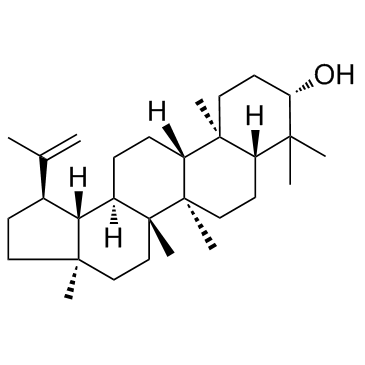
Lupeol structure
|
Common Name | Lupeol | ||
|---|---|---|---|---|
| CAS Number | 545-47-1 | Molecular Weight | 426.717 | |
| Density | 1.0±0.1 g/cm3 | Boiling Point | 488.1±14.0 °C at 760 mmHg | |
| Molecular Formula | C30H50O | Melting Point | 215-216ºC | |
| MSDS | Chinese USA | Flash Point | 216.9±12.4 °C | |
Use of LupeolLupeol is a novel androgen receptor inhibitor. |
| Name | Lupeol |
|---|---|
| Synonym | More Synonyms |
| Description | Lupeol is a novel androgen receptor inhibitor. |
|---|---|
| Related Catalog | |
| Target |
Androgen receptor[1] |
| In Vitro | Lupeol, an effective AR inhibitor, can be developed as a potential agent to treat human prostate cancer (CaP). Lupeol (10–50 μM) treatment for 48 h results in a dose-dependent growth inhibition of androgen-dependent phenotype (ADPC) cells viz., LAPC4 and LNCaP cells with an IC50 of 15.9 and 17.3 μM, respectively. Lupeol also inhibits the growth of 22Rν_1 with an IC50 of 19.1 μM. Further, Lupeol inhibits the growth of C4-2b cells with an IC50 of 25 μM. Lupeol has the potential to inhibit the growth of CaP cells of both ADPC and CRPC phenotype. Androgens by activating AR are known to drive the growth of CaP cells[1]. |
| In Vivo | Lupeol is an effective agent that has the potential to inhibit the tumorigenicity of CaP cells in vivo. At the conclusion of the study on day 56, the total circulating serum-PSA levels (secreted by the implanted tumor cells) are measured. At 56thday post-implantation, PSA levels are observed between 11.95-12.79 ng/mL in control animals with LNCaP-tumors and C4-2b-tumors, respectively. However, Lupeol-treated counterpart animals exhibits reduced serum-PSA levels in a range of 4.25-7.09 ng/mL. Tumor tissues of animals receiving Lupeol treatment exhibits reduced serum-PSA levels as compared to control[1]. |
| Cell Assay | LAPC4 (wild-functional AR/ADPC); LNCaP (mutant-functional AR/ADPC); 22Rν1 (mutant-functional AR/androgen-independent but responsive); C4-2b cells (mutant-functional AR/CRPC) and PC-3 and DU-145 (lack of endogenous AR) are grown under standard cell culture conditions at 37°C and 5% CO2 environment. The cells (60-70% confluent) are treated with Lupeol (10-50 μM) for 48 h in complete growth medium. For combination set of experiments, cells are treated with either agonistic androgen-analogue R1881 (1 nM), or antagonist Bicalutamide (10 μM), and/or combination (R1881+Lupeol) for 48 h. After incubation for specified times at 37°C, MTT assay is performed. For sensitization studies, hormone refractory C4-2b cells are treated with Lupeol for 24 h. After 24 h, cells are incubated with Bicalutamide (10 μM) for further 24 h. Cells are assessed for viability[1]. |
| Animal Admin | Mice[1] Tumor studies are conducted in athymic nude mice and two cohorts of animals are created. 3×10⁶ of cells are injected subcutaneously in the right flanks of each mouse. Each cohort receive a specific cell type either LNCaP or C4-2b. One week post-implantation, twenty mice (with visible tumors) in each cohort are randomly divided into two groups, with 10 animals in each group. The first group of animals receive intraperitoneal (i.p.) administration of corn oil (100 μL) and served as control. The second group of animals receive i.p. administration of Lupeol (40 mg/kg in 100 μL of corn oil) three times/week. Body weights and tumor volumes are recorded. All animals of group 1 and group 2 are sacrificed when tumors cross a pre-set endpoint volume of 1,000 mm3. |
| References |
| Density | 1.0±0.1 g/cm3 |
|---|---|
| Boiling Point | 488.1±14.0 °C at 760 mmHg |
| Melting Point | 215-216ºC |
| Molecular Formula | C30H50O |
| Molecular Weight | 426.717 |
| Flash Point | 216.9±12.4 °C |
| Exact Mass | 426.386169 |
| PSA | 20.23000 |
| LogP | 10.98 |
| Vapour Pressure | 0.0±2.8 mmHg at 25°C |
| Index of Refraction | 1.516 |
| InChIKey | MQYXUWHLBZFQQO-QGTGJCAVSA-N |
| SMILES | C=C(C)C1CCC2(C)CCC3(C)C(CCC4C5(C)CCC(O)C(C)(C)C5CCC43C)C12 |
| Storage condition | 2-8°C |
| Personal Protective Equipment | Eyeshields;Gloves;type N95 (US);type P1 (EN143) respirator filter |
|---|---|
| Hazard Codes | Xi |
| RIDADR | NONH for all modes of transport |
| WGK Germany | 2 |
| RTECS | OK5763000 |
| Precursor 7 | |
|---|---|
| DownStream 7 | |
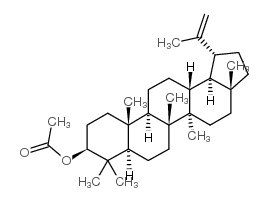 CAS#:1617-68-1
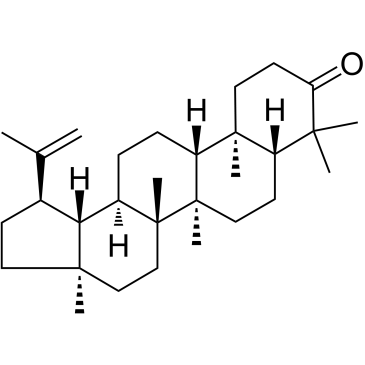 CAS#:1617-70-5
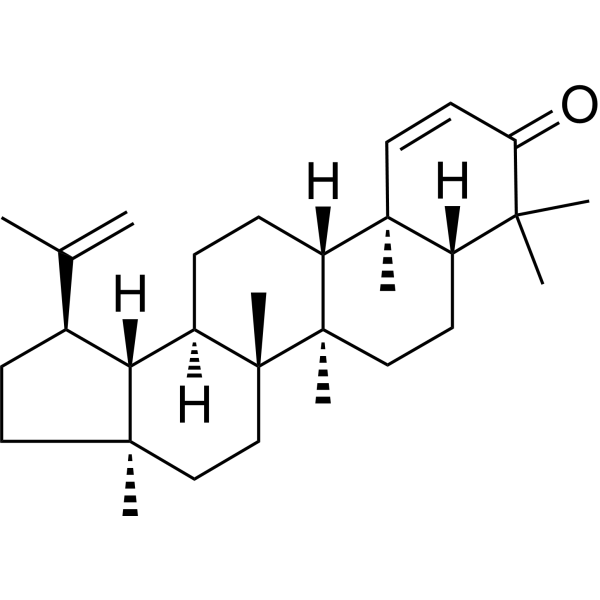 CAS#:6610-55-5
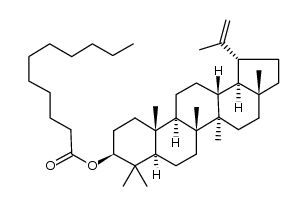 CAS#:1375064-00-8
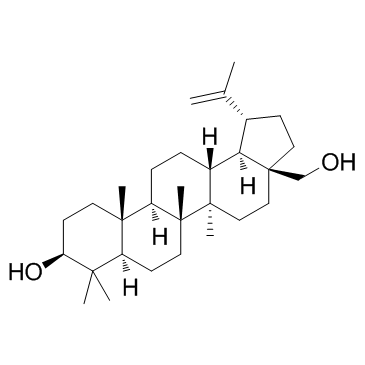 CAS#:473-98-3
 CAS#:27570-20-3
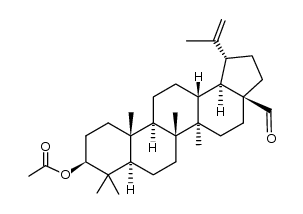 CAS#:27570-21-4
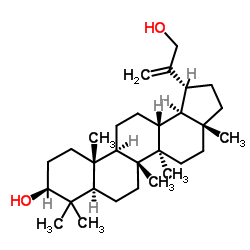 CAS#:20065-99-0
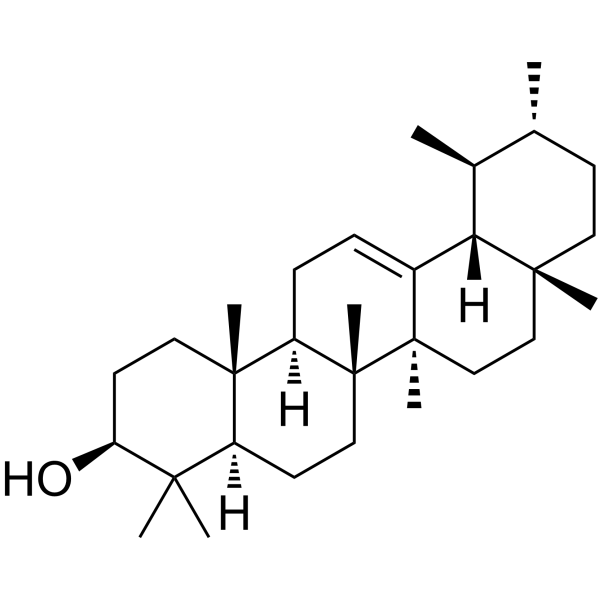 CAS#:638-95-9
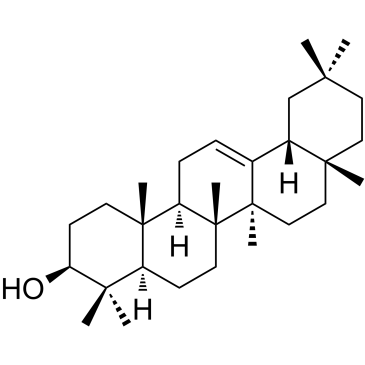 CAS#:559-70-6
 CAS#:464-98-2
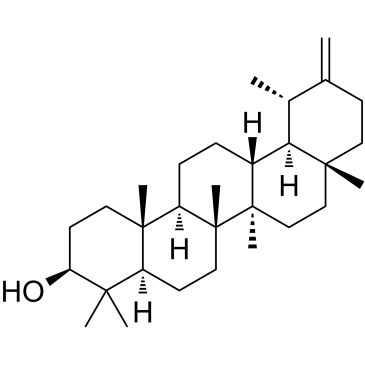 CAS#:1059-14-9
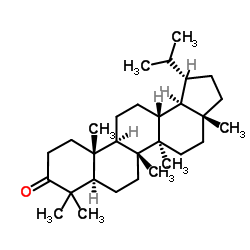 CAS#:3186-72-9
|
Analysis of triterpenoids and phytosterols in vegetables by thin-layer chromatography coupled to tandem mass spectrometry.
J. Chromatogr. A. 1381 , 229-38, (2015) Three TLC methods were used for an initial screening of some common plant triterpenoids and phytosterols in cuticular wax extracts of different vegetables (zucchini, eggplant, tomato, red pepper, mang... |
|
|
Multi-target spectral moment QSAR versus ANN for antiparasitic drugs against different parasite species.
Bioorg. Med. Chem. 18 , 2225-31, (2010) There are many of pathogen parasite species with different susceptibility profile to antiparasitic drugs. Unfortunately, almost QSAR models predict the biological activity of drugs against only one pa... |
|
|
Negative regulation of signal transducer and activator of transcription-3 signalling cascade by lupeol inhibits growth and induces apoptosis in hepatocellular carcinoma cells.
Br. J. Cancer 111(7) , 1327-37, (2014) Constitutive activation of signal transducer and activator of transcription signalling 3 (STAT3) has been linked with survival, proliferation and angiogenesis in a wide variety of malignancies includi... |
|
Name: Cytotoxicity against human NCI-H187 cells at 10 ug/mL
Source: ChEMBL
Target: NCI-H187
External Id: CHEMBL928073
|
|
Name: Inhibition of human topoisomerase 1 assessed as relaxation of supercoiled pBR322 DNA ...
Source: ChEMBL
Target: DNA topoisomerase 1
External Id: CHEMBL951647
|
|
Name: Inhibition of 1 unit human topoisomerase 2alpha catalytic activity assessed as relaxa...
Source: ChEMBL
Target: DNA topoisomerase 2-alpha
External Id: CHEMBL938784
|
|
Name: Inhibition of human 1 unit topoisomerase 2alpha catalytic activity assessed as relaxa...
Source: ChEMBL
Target: DNA topoisomerase 2-alpha
External Id: CHEMBL951649
|
|
Name: Cytotoxicity against human breast cancer cells at 10 ug/mL
Source: ChEMBL
Target: NON-PROTEIN TARGET
External Id: CHEMBL933624
|
|
Name: Cytotoxicity against human A2780 cells
Source: ChEMBL
Target: A2780
External Id: CHEMBL1005243
|
|
Name: Inhibition of 1 unit human topoisomerase 2-alpha catalytic activity assessed as relax...
Source: ChEMBL
Target: DNA topoisomerase 2-alpha
External Id: CHEMBL938786
|
|
Name: Inhibition of 1 unit human topoisomerase 2-alpha catalytic activity assessed as relax...
Source: ChEMBL
Target: DNA topoisomerase 2-alpha
External Id: CHEMBL938785
|
|
Name: Inhibition of 2 to 5 units human topoisomerase 2alpha catalytic activity assessed as ...
Source: ChEMBL
Target: DNA topoisomerase 2-alpha
External Id: CHEMBL938787
|
|
Name: Induction of CYP3A4 in human HepG2 cells at 10 uM after 24 hrs by luciferase reporter...
Source: ChEMBL
Target: Cytochrome P450 3A4
External Id: CHEMBL3389160
|
| Cautchicol |
| Fagarsterol |
| MFCD00017351 |
| Fagarasterol |
| monogynolb |
| Clerodol |
| Lup-20(29)-en-3β-ol (8CI) |
| Lupeol |
| b-viscol |
| MONOGYNOL |
| (3b)-Lup-20(29)-en-3-ol |
| Monogynol B |
| (1R,3aR,5aR,5bR,7aR,9S,11aR,11bR,13aR,13bR)-1-Isopropenyl-3a,5a,5b,8,8,11a-hexamethylicosahydro-1H-cyclopenta[a]chrysen-9-ol |
| Lup-20(29)-en-3b-ol |
| (3β)-Lup-20(29)-en-3-ol |
| β-Viscol |
| Lupenol |
| EINECS 208-889-9 |
| (1R,3aR,5aR,5bR,7aR,9S,11aR,11bR,13aR,13bR)-3a,5a,5b,8,8,11a-Hexaméthyl-1-(1-propèn-2-yl)icosahydro-1H-cyclopenta[a]chrysén-9-ol |
| Lup-20(29)-en-3-β-ol (8CI) |