EMBO Journal 2015-05-12

Cockayne syndrome group B protein regulates DNA double-strand break repair and checkpoint activation.

Nicole L Batenburg, Elizabeth L Thompson, Eric A Hendrickson, Xu-Dong Zhu

Index: EMBO J. 34 , 1399-416, (2015)

Full Text: HTML

Abstract

Mutations of CSB account for the majority of Cockayne syndrome (CS), a devastating hereditary disorder characterized by physical impairment, neurological degeneration and segmental premature aging. Here we report the generation of a human CSB-knockout cell line. We find that CSB facilitates HR and represses NHEJ. Loss of CSB or a CS-associated CSB mutation abrogating its ATPase activity impairs the recruitment of BRCA1, RPA and Rad51 proteins to damaged chromatin but promotes the formation of 53BP1-Rif1 damage foci in S and G2 cells. Depletion of 53BP1 rescues the formation of BRCA1 damage foci in CSB-knockout cells. In addition, knockout of CSB impairs the ATM- and Chk2-mediated DNA damage responses, promoting a premature entry into mitosis. Furthermore, we show that CSB accumulates at sites of DNA double-strand breaks (DSBs) in a transcription-dependent manner. The kinetics of DSB-induced chromatin association of CSB is distinct from that of its UV-induced chromatin association. These results reveal novel, important functions of CSB in regulating the DNA DSB repair pathway choice as well as G2/M checkpoint activation. © 2015 The Authors.

Related Compounds

Structure Name/CAS No. Articles
Ethanol Structure Ethanol
CAS:64-17-5
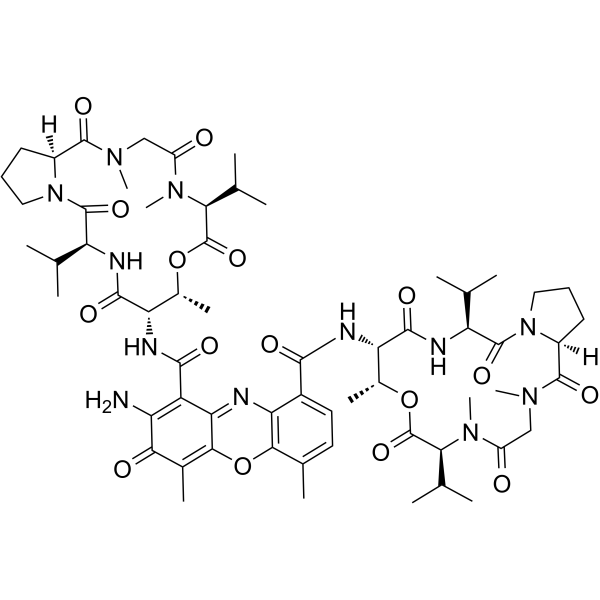
Actinomycin D Structure Actinomycin D
CAS:50-76-0
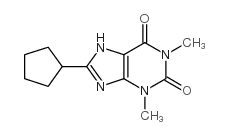
8-Cyclopentyl-1,3-dimethylxanthine Structure 8-Cyclopentyl-1,3-dimethylxanthine
CAS:35873-49-5
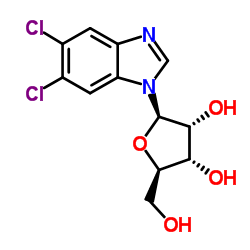
5,6-Dichlorobenzimidazole riboside Structure 5,6-Dichlorobenzimidazole riboside
CAS:53-85-0