2-Aminoethyl methacrylate hydrochloride
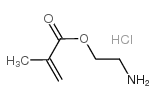
2-Aminoethyl methacrylate hydrochloride structure
|
Common Name | 2-Aminoethyl methacrylate hydrochloride | ||
|---|---|---|---|---|
| CAS Number | 2420-94-2 | Molecular Weight | 165.61800 | |
| Density | N/A | Boiling Point | 192.1ºC at 760 mmHg | |
| Molecular Formula | C6H12ClNO2 | Melting Point | 102-110 °C(lit.) | |
| MSDS | Chinese USA | Flash Point | 63.5ºC | |
| Symbol |

GHS07 |
Signal Word | Warning | |
|
Preparation of Highly Monodisperse Monopatch Particles with Orthogonal Click-Type Functionalization and Biorecognition.
Small 11 , 4540-8, (2015) Patchy particles are next generation colloidal building blocks for self-assembly and find further use as (bio) sensors. Progress in this direction crucially depends on developing straightforward preparation pathways able to provide patchy particles with highe... |
|
|
Protein corona of nanoparticles: distinct proteins regulate the cellular uptake.
Biomacromolecules 16(4) , 1311-21, (2015) Understanding nanoparticle-protein interactions is a crucial issue in the development of targeted nanomaterial delivery. Besides unraveling the composition of the nanoparticle's protein coronas, distinct proteins thereof could control nanoparticle uptake into... |
|
|
Anion-Responsive Metallopolymer Hydrogels for Healthcare Applications.
Sci. Rep. 5 , 11914, (2015) Metallopolymers combine a processable, versatile organic polymeric skeleton with functional metals, providing multiple functions and methodologies in materials science. Taking advantage of cationic cobaltocenium as the key building block, organogels could be ... |
|
|
Injectable cryogel-based whole-cell cancer vaccines.
Nat. Commun. 6 , 7556, (2015) A biomaterial-based vaccination system that uses minimal extracorporeal manipulation could provide in situ enhancement of dendritic cell (DC) numbers, a physical space where DCs interface with transplanted tumour cells, and an immunogenic context. Here we enc... |
|
|
Anions make the difference: insights from the interaction of big cations and anions with poly(N-isopropylacrylamide) chains and microgels.
Soft Matter 11 , 5077-86, (2015) Minute concentrations of big hydrophobic ions have the ability to induce substantial effects in soft matter systems, including novel phases in lipid layers, giant charge inversion in colloids and nanostructuration in polymer surfaces in contact with water. Th... |
|
|
Nanoprobing the acidification process during intracellular uptake and trafficking.
Nanomedicine: Nanotechnology, Biology, and Medicine 11 , 1585-96, (2015) Many nanoparticular drug delivery approaches rely on a detailed knowledge of the acidification process during intracellular trafficking of endocytosed nanoparticles (NPs). Therefore we produced a nanoparticular pH sensor composed of the fluorescent pH-sensiti... |
|
|
Tumor Presence Induces Global Immune Changes and Enhances Nanoparticle Clearance.
ACS Nano 10 , 861-70, (2016) Long-circulating nanoparticles are essential for increasing tumor accumulation to provide therapeutic efficacy. While it is known that tumor presence can alter the immune system, very few studies have explored this impact on nanoparticle circulation. In this ... |