PCB 2
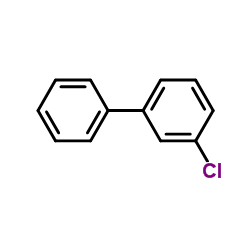
PCB 2 structure
|
Common Name | PCB 2 | ||
|---|---|---|---|---|
| CAS Number | 2051-61-8 | Molecular Weight | 188.653 | |
| Density | 1.1±0.1 g/cm3 | Boiling Point | 284.5±0.0 °C at 760 mmHg | |
| Molecular Formula | C12H9Cl | Melting Point | 89℃ | |
| MSDS | Chinese USA | Flash Point | 129.5±8.6 °C | |
| Symbol |


GHS08, GHS09 |
Signal Word | Warning | |
|
Degradation of 3-chlorobiphenyl by in vivo constructed hybrid pseudomonads.
FEMS Microbiol. Lett. 59(1-2) , 179-85, (1990) 3-Chlorobiphenyl-degrading bacteria were obtained from the mating between Pseudomonas putida strain BN10 and Pseudomonas sp. strain B13. Strains such as BN210 resulted from the transfer of the genes coding the enzyme sequence for the degradation of chlorocate... |
|
|
Total degradation of various chlorobiphenyls by cocultures and in vivo constructed hybrid pseudomonads.
FEMS Microbiol. Lett. 62(2-3) , 163-9, (1991) Cocultures consisting of strains converting chlorobiphenyls to the respective benzoates or catechols and of chlorobenzoate degraders were investigated for the mineralization of chlorobiphenyls. Stable mixed cultures were obtained with 4-chlorobiphenyl, while ... |
|
|
Pathways and products of the degradation of PCBs by the sodium dispersion method.
Chemosphere 68(5) , 871-9, (2007) Nine polychlorinated biphenyl (PCB) congeners (2-chlorobiphenyl, 3-chlorobiphenyl, 4-chlorobiphenyl, 2,3,4-trichlorobiphenyl, 2,2',5,5'-tetrachlorobiphenyl, 2,3',4,4',5-pentachlorobiphenyl, 3,3',4,4',5-pentachlorobiphenyl, 2,2',4,4',5,5'-hexachlorobiphenyl, a... |
|
|
Influence of chlorobenzoates on the utilisation of chlorobiphenyls and chlorobenzoate mixtures by chlorobiphenyl/chlorobenzoate-mineralising hybrid bacterial strains.
Arch. Microbiol. 165(3) , 213-8, (1996) Chlorobenzoates (CBA) arise as intermediates during the degradation of polychlorinated biphenyls (PCBs) and some chlorinated herbicides. Since PCBs were produced as complex mixtures, a range of mono-, di-, and possibly trichloro-substituted benzoates would be... |
|
|
Degradation and mineralization of 2-chloro-, 3-chloro- and 4-chlorobiphenyl by a newly characterized natural bacterial strain isolated from an electrical transformer fluid-contaminated soil.
J. Environ. Sci. (China) 20(10) , 1250-7, (2008) A bacterium classified as Achromobacter xylosoxidans strain IR08 by phenotypic typing coupled with 16S rRNA gene analysis was isolated from a soil contaminated with electrical transformer fluid for over sixty years using Aroclor 1221 as an enrichment substrat... |
|
|
Insight into pollutant bioavailability and toxicity using Raman confocal microscopy.
J. Microbiol. Methods 60(3) , 417-22, (2005) Raman confocal microscopy was used to discriminate between cultures of Burkholderia xenovorans LB400 exposed to four different common environmental pollutants: phenanthrene, dodecane, 3-chlorobiphenyl and pentachlorophenol. Evidence is presented for the appli... |
|
|
Role of commensal relationships on the spatial structure of a surface-attached microbial consortium.
Environ. Microbiol. 2(1) , 59-68, (2000) A flow cell-grown model consortium consisting of two organisms, Burkholderia sp. LB400 and Pseudomonas sp. B13(FR1), was studied. These bacteria have the potential to interact metabolically because Pseudomonas sp. B13(FR1) can metabolize chlorobenzoate produc... |
|
|
Effects of quartz addition on the mechanochemical dechlorination of chlorobiphenyl by using CaO.
Environ. Sci. Technol. 35(24) , 4933-5, (2001) Grinding a mixture of 3-chlorobiphenyl (BP-Cl) and CaO with or without the addition of quartz was conducted in air by a planetary ball mill to investigate the mechanochemical dechlorination of BP-Cl. The dechlorinating reaction proceeds with an increase in gr... |
|
|
Dependence of mechanochemically induced decomposition of mono-chlorobiphenyl on the occurrence of radicals.
Chemosphere 60(7) , 939-43, (2005) Mechanochemically induced dechlorination of mono-chlorobiphenyl (BP-Cl) on the surfaces of metal oxides was compared with that on metal hydroxides, using the three metals of Mg, Al, and La as examples. The metal oxides, such as gamma-alumina (gamma-Al2O3), ma... |
|
|
Involvement of a chlorobenzoate-catabolic transposon, Tn5271, in community adaptation to chlorobiphenyl, chloroaniline, and 2,4-dichlorophenoxyacetic acid in a freshwater ecosystem.
Appl. Environ. Microbiol. 58(1) , 314-25, (1992) A chlorobenzoate-catabolic transposon (Tn5271) was introduced on a conjugative plasmid (pBRC60) in the natural host, Alcaligenes sp. strain BR60, into lake water and sediment flowthrough microcosms. Experimental microcosms were exposed to micromolar levels of... |