2-Picolinic acid
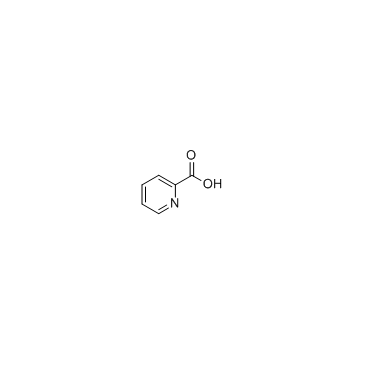
2-Picolinic acid structure
|
Common Name | 2-Picolinic acid | ||
|---|---|---|---|---|
| CAS Number | 98-98-6 | Molecular Weight | 123.109 | |
| Density | 1.3±0.1 g/cm3 | Boiling Point | 292.5±13.0 °C at 760 mmHg | |
| Molecular Formula | C6H5NO2 | Melting Point | 139-142 °C(lit.) | |
| MSDS | Chinese USA | Flash Point | 130.7±19.8 °C | |
| Symbol |

GHS07 |
Signal Word | Warning | |
Use of 2-Picolinic acidPCL 016 is a topical antiviral agent, which inhibits adenovirus replication in rabbit. |
| Name | picolinic acid |
|---|---|
| Synonym | More Synonyms |
| Description | PCL 016 is a topical antiviral agent, which inhibits adenovirus replication in rabbit. |
|---|---|
| Related Catalog | |
| Target |
Human Endogenous Metabolite |
| In Vivo | Topical 1.5% PCL, 0.8% PCL, 0.369% PCL (pH7), 0.369% PCL (pH4) and 0.5% CDV are significantly more effective than the Control in reducing Ad Positive Cultures/Total (Days 1-14) and the Duration of Ad Shedding in the Ad5/NZW rabbit ocular model. Although not statistically significant, there appears to be a trend toward concentration-dependent efficacy of PCL 016 on the Duration of Ad Shedding. There is no apparent ocular toxicity associated with PCL 016 concentrations[1]. |
| Animal Admin | Rabbits[1] 25 NZW rabbits are topically inoculated in both eyes, following corneal scarification, with 1.5 x 10⁶ pfu/eye of Ad5. On day 1, the rabbits are divided into 6 topical treatment groups: I - 1.5% PCL 016 pH 7.0 (n=4); II - 0.8% PCL 016 pH 7.0 (n=4); III - 0.369% PCL 016 pH 7.0 (n=4); IV - 0.369% PCL 016 pH 4.0 (n=4); V - 0.5% Cidofovir (CDV) (n=4); VI - Control (saline) (n=5). PCL 016 and control rabbits are treated in both eyes 4 times daily for 7 days, while CDV rabbits are treated in both eyes twice daily for 7 days. All eyes are cultured for virus on days 0, 1, 3, 4, 5, 7, 9, 11, and 14[1]. |
| References |
| Density | 1.3±0.1 g/cm3 |
|---|---|
| Boiling Point | 292.5±13.0 °C at 760 mmHg |
| Melting Point | 139-142 °C(lit.) |
| Molecular Formula | C6H5NO2 |
| Molecular Weight | 123.109 |
| Flash Point | 130.7±19.8 °C |
| Exact Mass | 123.032028 |
| PSA | 50.19000 |
| LogP | -0.10 |
| Vapour Pressure | 0.0±0.6 mmHg at 25°C |
| Index of Refraction | 1.571 |
| InChIKey | SIOXPEMLGUPBBT-UHFFFAOYSA-N |
| SMILES | O=C(O)c1ccccn1 |
| Storage condition | Store at RT. |
| Water Solubility | 887 g/L (20 ºC) |
CHEMICAL IDENTIFICATION
HEALTH HAZARD DATAACUTE TOXICITY DATA
|
| Symbol |
GHS07 |
|---|---|
| Signal Word | Warning |
| Hazard Statements | H302-H319 |
| Precautionary Statements | P305 + P351 + P338 |
| Personal Protective Equipment | dust mask type N95 (US);Eyeshields;Gloves |
| Hazard Codes | Xn,Xi |
| Risk Phrases | R22:Harmful if swallowed. R36:Irritating to the eyes. R36/37/38:Irritating to eyes, respiratory system and skin . |
| Safety Phrases | S26-S36-S33-S24/25 |
| RIDADR | NONH for all modes of transport |
| WGK Germany | 3 |
| RTECS | TJ7344000 |
| HS Code | 29333999 |
| Precursor 8 | |
|---|---|
| DownStream 9 | |
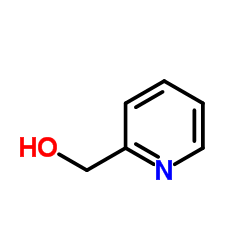 CAS#:586-98-1
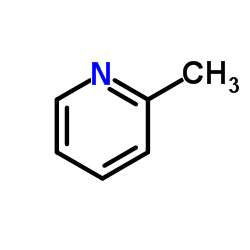 CAS#:109-06-8
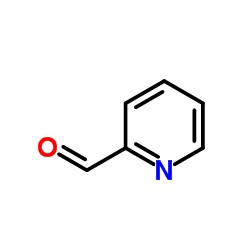 CAS#:1121-60-4
 CAS#:524-38-9
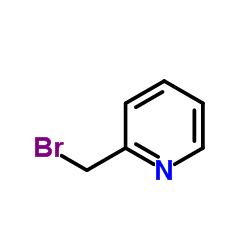 CAS#:55401-97-3
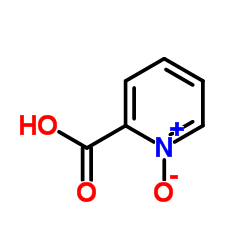 CAS#:824-40-8
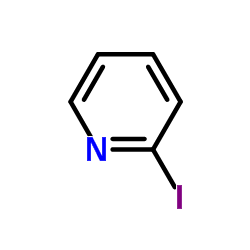 CAS#:5029-67-4
 CAS#:201230-82-2
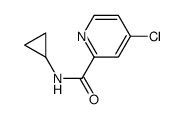 CAS#:1090815-16-9
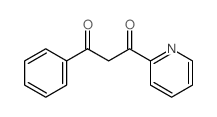 CAS#:10472-94-3
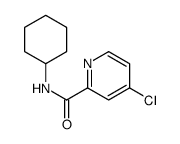 CAS#:1094332-66-7
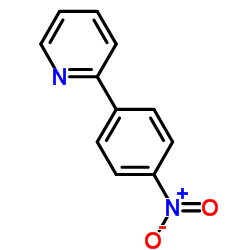 CAS#:4282-47-7
 CAS#:53750-66-6
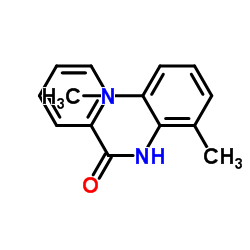 CAS#:39627-98-0
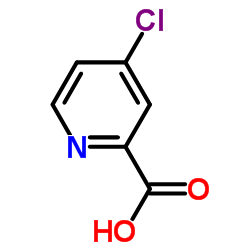 CAS#:5470-22-4
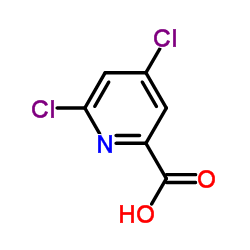 CAS#:88912-25-8
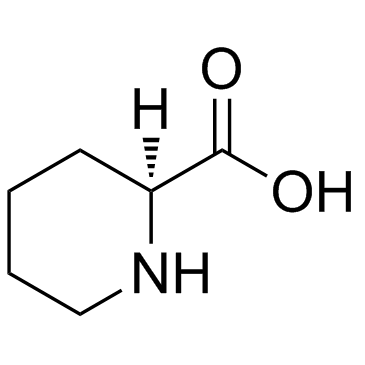 CAS#:3105-95-1
| HS Code | 29333999 |
|---|
|
Metabolomic profiles delineate potential role for sarcosine in prostate cancer progression.
Nature 457(7231) , 910-4, (2009) Multiple, complex molecular events characterize cancer development and progression. Deciphering the molecular networks that distinguish organ-confined disease from metastatic disease may lead to the i... |
|
|
Interaction of vanadium(IV) with human serum apo-transferrin.
J. Inorg. Biochem. 121 , 187-95, (2013) The interaction of V(IV)O-salts as well as of a few V(IV)O(carrier)n complexes with human serum transferrin (hTF) is studied focusing on the determination of the nature and stoichiometry of the bindin... |
|
|
Identifying chelators for metalloprotein inhibitors using a fragment-based approach.
J. Med. Chem. 54 , 591-602, (2011) Fragment-based lead design (FBLD) has been used to identify new metal-binding groups for metalloenzyme inhibitors. When screened at 1 mM, a chelator fragment library (CFL-1.1) of 96 compounds produced... |
| 2-pyridinecarboxylic acid |
| Picolinic acid |
| pyridine-2-carboxylic acid |
| acidepicolique |
| EINECS 202-719-7 |
| 2-Carboxypyridine |
| MFCD00006293 |
| 2-acid pyridine |
| 2-Picolinic acid |
| Sorafenib Impurity 18 |
| PCL 016 |
The content on this webpage is sourced from various professional data sources. If you have any questions or concerns regarding the content, please feel free to contact service1@chemsrc.com.
- Shanghai Nianxing Industrial Co., Ltd
- China
- Product Name: 2-Picolinic acid
- Price: Check
- Purity: 98.0%
- Delivery: 10 Day
- Contact: Yang
- Email: sales@echemcloud.com
- Shanghai Jizhi Biochemical Technology Co., Ltd
- China
- Product Name: 2-Picolinic acid
- Price: ¥128.0/100g ¥458.0/500g
- Purity: 98.0%
- Delivery: Inquiry
- Contact: Liu jia


- Email: 2130147988@qq.com
- Dayang Chem (Hangzhou) Co., Ltd.
- China
- Product Name: Picolinic acid
- Price: $Inquiry/100g $Inquiry/1kg $Inquiry/100kg $Inquiry/1000kg
- Purity: 98.0%
- Delivery: Inquiry
- Contact: Ms Wang
- Email: enquiry@dycnchem.com
- Henan Tianfu Chemical Co., Ltd.
- China
- Product Name: picolinic acid
- Price: $Inquiry/1kg $Inquiry/25kg $Inquiry/1000kg $Inquiry/10ton
- Purity: 99.0%
- Delivery: Inquiry
- Contact: Anson
- Email: info@tianfuchem.com
- Zhongshan Xingrui Chemical Co. , Ltd.
- China
- Product Name: 2-Picolinic acid
- Price: ¥Inquiry/25kg
- Purity: 99.0%
- Delivery: Inquiry
- Contact: Wang Jie
- Email: 3096638339@qq.com
Get all suppliers and price by the below link:
Reference only. check more 2-Picolinic acid price