TCN 201
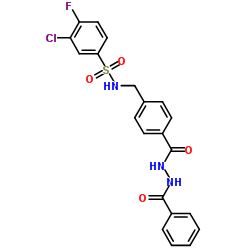
TCN 201 structure
|
Common Name | TCN 201 | ||
|---|---|---|---|---|
| CAS Number | 852918-02-6 | Molecular Weight | 461.894 | |
| Density | 1.4±0.1 g/cm3 | Boiling Point | N/A | |
| Molecular Formula | C21H17ClFN3O4S | Melting Point | N/A | |
| MSDS | USA | Flash Point | N/A | |
| Symbol |

GHS07 |
Signal Word | Warning | |
Use of TCN 201TCN 201 is a potent, selective and non-competitive antagonist of GluN1/GluN2A NMDAR. TCN 201 antagonism is dependent on the GluN1-agonist concentration. TCN 201 allows pharmacological identification of native GluN2A-containing NMDAR populations[1]. |
| Name | N-[[4-(benzamidocarbamoyl)phenyl]methyl]-3-chloro-4-fluorobenzenesulfonamide |
|---|---|
| Synonym | More Synonyms |
| Description | TCN 201 is a potent, selective and non-competitive antagonist of GluN1/GluN2A NMDAR. TCN 201 antagonism is dependent on the GluN1-agonist concentration. TCN 201 allows pharmacological identification of native GluN2A-containing NMDAR populations[1]. |
|---|---|
| Related Catalog | |
| Target |
NMDAR[1] |
| In Vitro | TCN 201 (10 μM) produces only slight inhibition of GluN1/GluN2B NMDAR-mediated currents in oocytes[1]. TCN 201 (10-30 μM) antagonism of NMDAR-mediated responses is both subtype- and glycine-dependent and more potent than TCN 213 in oocytes[1]. TCN 201 (0.1-100 μM) does not produce complete block of NMDAR-mediated responses in oocytes[1]. TCN 201 (10 μM) antagonism of NMDAR-mediated currents shows a negative correlation with their ifenprodil sensitivity in rat cortical neurons[1]. TCN 201 (1-9 μM) suppresses cortical spreading depression (CSD) in chick retina[2]. |
| In Vivo | TCN-201 (10 mg/kg; i.p.) is ineffective in CSD g blood-oxygen level-dependent (BOLD) response in rats[3]. |
| References |
| Density | 1.4±0.1 g/cm3 |
|---|---|
| Molecular Formula | C21H17ClFN3O4S |
| Molecular Weight | 461.894 |
| Exact Mass | 461.061218 |
| PSA | 116.24000 |
| LogP | 4.13 |
| Index of Refraction | 1.625 |
| Storage condition | 2-8°C |
| Symbol |
GHS07 |
|---|---|
| Signal Word | Warning |
| Hazard Statements | H315-H319-H335 |
| Precautionary Statements | P261-P305 + P351 + P338 |
| Hazard Codes | Xi |
| Risk Phrases | 22-36/37/38 |
| Safety Phrases | 26-36/37/39 |
| RIDADR | NONH for all modes of transport |
|
Sensitivity of N-methyl-D-aspartate receptor-mediated excitatory postsynaptic potentials and synaptic plasticity to TCN 201 and TCN 213 in rat hippocampal slices.
J. Pharmacol. Exp. Ther. 352(2) , 267-73, (2014) Whereas ifenprodil has been used as a selective GluN1/GluN2B (NR1/NR2B, B-type) receptor antagonist to distinguish between GluN2B (NR2B) and GluN2A (NR2A)-containing N-methyl-d-aspartate receptors (NM... |
|
|
PAR1-activated astrocytes in the nucleus of the solitary tract stimulate adjacent neurons via NMDA receptors.
J. Neurosci. 35(2) , 776-85, (2015) Severe autonomic dysfunction, including the loss of control of the cardiovascular, respiratory, and gastrointestinal systems, is a common comorbidity of stroke and other bleeding head injuries. Previo... |
|
|
Extrasynaptic glutamate release through cystine/glutamate antiporter contributes to ischemic damage.
J. Clin. Invest. 124(8) , 3645-55, (2014) During brain ischemia, an excessive release of glutamate triggers neuronal death through the overactivation of NMDA receptors (NMDARs); however, the underlying pathways that alter glutamate homeostasi... |
| Benzoic acid, 4-[[[(3-chloro-4-fluorophenyl)sulfonyl]amino]methyl]-, 2-benzoylhydrazide |
| tcn 201 |
| qcr-22 |
| N-{4-[(2-Benzoylhydrazino)carbonyl]benzyl}-3-chloro-4-fluorobenzenesulfonamide |