Methoctramine tetrahydrochloride
Modify Date: 2025-08-25 15:58:50
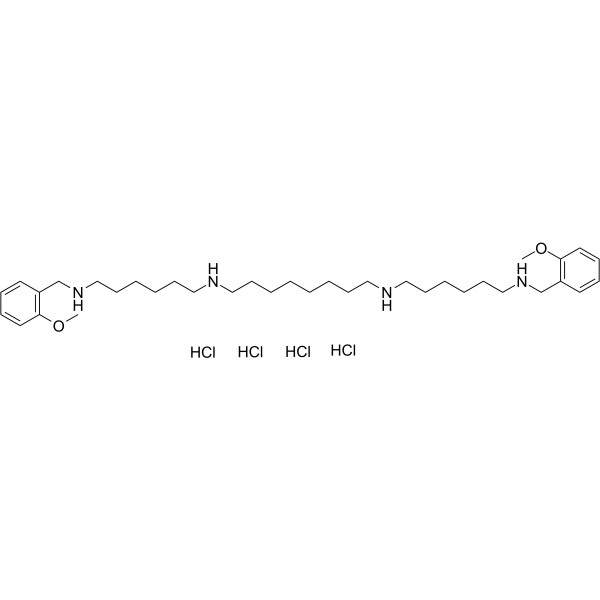
Methoctramine tetrahydrochloride structure
|
Common Name | Methoctramine tetrahydrochloride | ||
|---|---|---|---|---|
| CAS Number | 104807-46-7 | Molecular Weight | 728.74700 | |
| Density | N/A | Boiling Point | 681.9ºC at 760mmHg | |
| Molecular Formula | C36H66Cl4N4O2 | Melting Point | N/A | |
| MSDS | Chinese USA | Flash Point | 316.7ºC | |
Use of Methoctramine tetrahydrochlorideMethoctramine tetrahydrochloride is a potent and cardioselectivity antagonist of M2 muscarinic receptor. Methoctramine tetrahydrochloride can inhibit Muscarine-induced bradycardia in vivo[1][2][3]. |
| Name | Methoctramine hydrate |
|---|---|
| Synonym | More Synonyms |
| Description | Methoctramine tetrahydrochloride is a potent and cardioselectivity antagonist of M2 muscarinic receptor. Methoctramine tetrahydrochloride can inhibit Muscarine-induced bradycardia in vivo[1][2][3]. |
|---|---|
| Related Catalog | |
| Target |
M2 muscarinic receptor[1] |
| In Vitro | Methoctramine tetrahydrochloride attenuates Acetylcholine (ACh)- and Arecaidine propargyl ester (APE)-induced increases in PG synthesis in a concentration-dependent manner[1]. Methoctramine (0.01-1 μM) tetrahydrochloride causes facilitation of contractions induced by both pre- and postganglionic nerve stimulation in the guinea-pig isolated, innervated tracheal tube preparation[2]. Methoctramine (≥10 μM) tetrahydrochloride reduces responses to both nerve stimulation and exogenous ACh[2]. |
| In Vivo | Methoctramine (300 µg/kg; i.v.) tetrahydrochloride strongly inhibits the Methacholine- and Muscarine-induced bradycardia in the anaesthetized rat, respectively[3]. |
| References |
| Boiling Point | 681.9ºC at 760mmHg |
|---|---|
| Molecular Formula | C36H66Cl4N4O2 |
| Molecular Weight | 728.74700 |
| Flash Point | 316.7ºC |
| Exact Mass | 726.39400 |
| PSA | 66.58000 |
| LogP | 11.99540 |
| Vapour Pressure | 1.89E-18mmHg at 25°C |
| Storage condition | 2-8°C |
| N,N'-bis[6-[(2-methoxyphenyl)methylamino]hexyl]octane-1,8-diamine,tetrahydrochloride |