Gly-His

Gly-His structure
|
Common Name | Gly-His | ||
|---|---|---|---|---|
| CAS Number | 2489-13-6 | Molecular Weight | 212.20600 | |
| Density | 1.56g/cm3 | Boiling Point | N/A | |
| Molecular Formula | C8H12N4O3 | Melting Point | N/A | |
| MSDS | Chinese USA | Flash Point | N/A | |
Use of Gly-His(S)-2-(2-Aminoacetamido)-3-(1H-imidazol-4-yl)propanoic acid is a histidine derivative[1]. |
This table lists Chinese names, IUPAC names and various aliases of this chemical substance.
| Name | h-gly-his-oh |
|---|---|
| Synonym | More Synonyms |
This table contains bioactivity, target information and biological‑assay experimental data of this compound.
| Description | (S)-2-(2-Aminoacetamido)-3-(1H-imidazol-4-yl)propanoic acid is a histidine derivative[1]. |
|---|---|
| Related Catalog | |
| In Vitro | Amino acids and amino acid derivatives have been commercially used as ergogenic supplements. They influence the secretion of anabolic hormones, supply of fuel during exercise, mental performance during stress related tasks and prevent exercise induced muscle damage. They are recognized to be beneficial as ergogenic dietary substances[1]. |
| References |
This table shows physicochemical parameters including melting point, boiling point, density, solubility and optical rotation. Missing data is marked as N/A.
| Density | 1.56g/cm3 |
|---|---|
| Molecular Formula | C8H12N4O3 |
| Molecular Weight | 212.20600 |
| Exact Mass | 212.09100 |
| PSA | 121.10000 |
| Vapour Pressure | 3.33E-18mmHg at 25°C |
| Index of Refraction | 1.604 |
| InChIKey | YIWFXZNIBQBFHR-LURJTMIESA-N |
| SMILES | NCC(=O)NC(Cc1cnc[nH]1)C(=O)O |
| Storage condition | -20°C |
This table provides MSDS information including hazard classification, first‑aid, fire‑fighting, spill handling, operation and storage instructions.
This table covers safety warnings, protective measures, incompatible substances and disposal guidelines for this compound.
| Personal Protective Equipment | Eyeshields;Gloves;type N95 (US);type P1 (EN143) respirator filter |
|---|---|
| Hazard Codes | Xi |
| RIDADR | NONH for all modes of transport |
| WGK Germany | 1 |
| HS Code | 2933290090 |
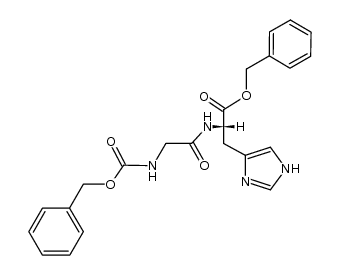
This table presents publicly reported synthetic routes, reaction conditions, reactants and product information of the compound.
|
~82%
Gly-His CAS#:2489-13-6 |
| Literature: Chemische Berichte, , vol. 128, # 6 p. 541 - 550 |
|
~%
Gly-His CAS#:2489-13-6 |
| Literature: Journal of the American Chemical Society, , vol. 75, p. 2388 |
|
~%
Gly-His CAS#:2489-13-6 |
| Literature: Journal of the American Chemical Society, , vol. 75, p. 2388 |
|
~%
Gly-His CAS#:2489-13-6 |
| Literature: Chemistry - A European Journal, , vol. 14, # 8 p. 2536 - 2541 |
|
~%
Gly-His CAS#:2489-13-6 |
| Literature: Hoppe-Seyler's Zeitschrift fuer Physiologische Chemie, , vol. 307, p. 23,31 |
![ethyl 1-(4-methoxyphenyl)-7-oxo-6-(4-(2-oxopyridin-1(2H)-yl)phenyl)-4,5,6,7-tetrahydro-1H-pyrazolo[3,4-c]pyridine-3-carboxylate structure](https://image.chemsrc.com/caspic/495/503622-97-7.png)
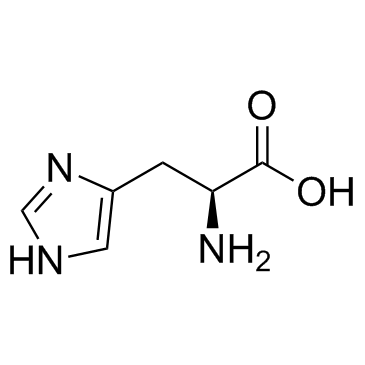
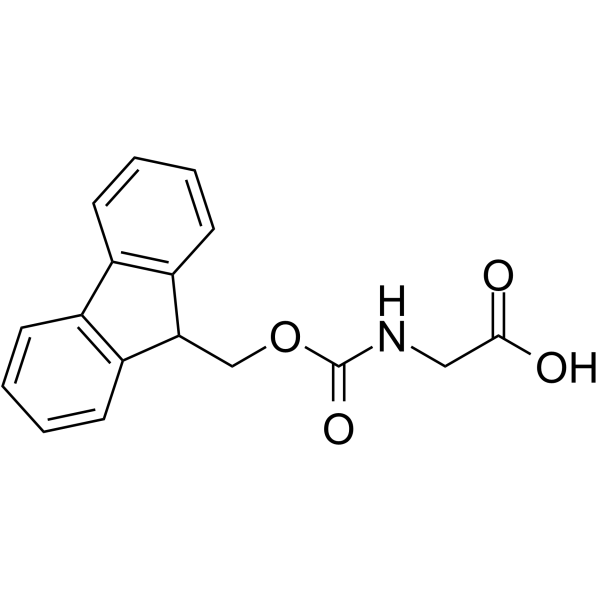

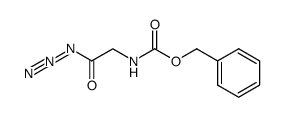

This table lists upstream starting materials and downstream derivative products related to this chemical.
| Precursor 7 | |
|---|---|
| DownStream 2 | |
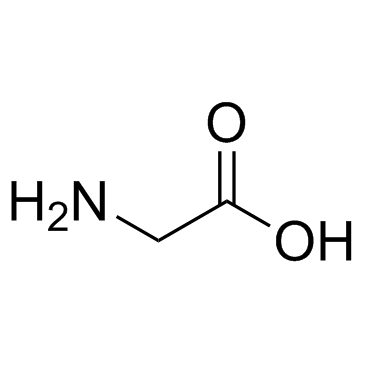 CAS#:56-40-6
This table shows customs‑related data including HS‑code, tariff and regulatory conditions for import and export.
| HS Code | 2933290090 |
|---|---|
| Summary | 2933290090. other compounds containing an unfused imidazole ring (whether or not hydrogenated) in the structure. VAT:17.0%. Tax rebate rate:13.0%. . MFN tariff:6.5%. General tariff:20.0% |
This table lists relevant public references with title, journal and publication metadata for this compound.
|
Effect of carnosine and related compounds on the inactivation of human Cu,Zn-superoxide dismutase by modification of fructose and glycolaldehyde.
Biosci. Biotechnol. Biochem. 66 , 36-43, (2002) Glycolaldehyde, an intermediate of the Maillard reaction, and fructose, which is mainly derived from the polyol pathway, rapidly inactivate human Cu,Zn-superoxide dismutase (SOD) at the physiological ... |
|
|
Reduction of vanadium(V) to vanadium(IV) by NADPH, and vanadium(IV) to vanadium(III) by cysteine methyl ester in the presence of biologically relevant ligands.
Biochim. Biophys. Acta 1770(8) , 1212-8, (2007) To better understand the mechanism of vanadium reduction in ascidians, we examined the reduction of vanadium(V) to vanadium(IV) by NADPH and the reduction of vanadium(IV) to vanadium(III) by L-cystein... |
|
|
A comparative study of complex formation in the reactions of gold(III) with Gly-Gly, Gly-L-Ala and Gly-L-His dipeptides.
Bioorg. Chem. 38(4) , 144-8, (2010) Proton NMR spectroscopy was applied to study the reactions of the dipeptides glycyl-glycine (Gly-Gly) and glycyl-L-alanine (Gly-L-Ala) with hydrogen tetrachloridoaurate(III) (H[AuCl(4)]). All reaction... |
This table contains target information, in‑vitro & in‑vivo assay data for this compound.
|
Name: Selectivity ratio of antioxidant activity assessed as HNE quenching to antioxidant ac...
Source: ChEMBL
Target: N/A
External Id: CHEMBL2410135
|
|
Name: Activation of human PEPT1 expressed in MDCK cells
Source: ChEMBL
Target: Solute carrier family 15 member 1
External Id: CHEMBL863210
|
|
Name: Activation of human PEPT1 expressed in MDCK cells relative to Gly-Sar
Source: ChEMBL
Target: Solute carrier family 15 member 1
External Id: CHEMBL863211
|
|
Name: Antioxidant activity assessed as PYR quenching after 180 mins by HPLC analysis
Source: ChEMBL
Target: NON-PROTEIN TARGET
External Id: CHEMBL2410138
|
|
Name: Binding affinity to human PepT2 in SKTP cells
Source: ChEMBL
Target: Solute carrier family 15 member 2
External Id: CHEMBL1817008
|
|
Name: Inhibition constant (Ki) for human intestinal peptide carrier
Source: ChEMBL
Target: Solute carrier family 15 member 1
External Id: CHEMBL699705
|
|
Name: Antioxidant activity assessed as HNE quenching at 1 mM after 180 mins by HPLC analysi...
Source: ChEMBL
Target: NON-PROTEIN TARGET
External Id: CHEMBL2410137
|
|
Name: Binding affinity against membrane transport protein PEPT1 in human Caco-2 cells
Source: ChEMBL
Target: Solute carrier family 15 member 1
External Id: CHEMBL841787
|
|
Name: Ratio of %GSmax to EC50 for human PEPT1 activation
Source: ChEMBL
Target: Solute carrier family 15 member 1
External Id: CHEMBL863212
|
|
Name: Binding affinity to human PEPT1 assessed as inhibition of [14C]Gly-Sar uptake in MDCK...
Source: ChEMBL
Target: Solute carrier family 15 member 1
External Id: CHEMBL863213
|
This table collects all English aliases, systematic names and CAS‑related synonyms of the compound.
| GLY-HIS |
| N-Glycyl-L-histidine |
| Gly-L-His-L-Lis-OH |
| L-Gly-L-His-OH |
| Gly-L-His-OH |
| gly-his free base |
| glycylhistidine |
| Gly-His-OH |
| (2S)-2-(glycylamino)-3-(4H-imidazol-4-yl)propionic acid |
| glycyl-L-histidine |
This section contains frequently‑asked‑questions about this compound, including basic parameters, properties, storage conditions and corresponding answers.
| Q: What are the downstream products of h-gly-his-oh? |
| A: Related downstream products(CAS) of h-gly-his-oh: 56-40-6;71-00-1. |
| Q: What is the CAS number of h-gly-his-oh? |
| A: CAS number of h-gly-his-oh is 2489-13-6. |
| Q: What English synonyms does h-gly-his-oh have? |
| A: English synonyms of h-gly-his-oh: GLY-HIS, N-Glycyl-L-histidine, Gly-L-His-L-Lis-OH, L-Gly-L-His-OH, Gly-L-His-OH, gly-his free base, glycylhistidine, Gly-His-OH, (2S)-2-(glycylamino)-3-(4H-imidazol-4-yl)propionic acid, glycyl-L-histidine. |
| Q: What is the polar surface area (PSA) of h-gly-his-oh? |
| A: Polar surface area (PSA) of h-gly-his-oh is 121.10000. |
| Q: What are the upstream materials of h-gly-his-oh? |
| A: Related upstream materials(CAS) of h-gly-his-oh: 31321-63-8;503622-97-7;71-00-1;29022-11-5;116611-64-4;50622-95-2;1499-46-3. |
| Q: What is the SMILES notation of h-gly-his-oh? |
| A: SMILES notation of h-gly-his-oh is NCC(=O)NC(Cc1cnc[nH]1)C(=O)O. |
| Q: What is the English name of h-gly-his-oh? |
| A: The English name of h-gly-his-oh is h-gly-his-oh. |
| Q: What are the uses of h-gly-his-oh? |
| A: Main uses of h-gly-his-oh: (S)-2-(2-Aminoacetamido)-3-(1H-imidazol-4-yl)propanoic acid is a histidine derivative[1]. |
| Q: What is the InChIKey of h-gly-his-oh? |
| A: InChIKey of h-gly-his-oh is YIWFXZNIBQBFHR-LURJTMIESA-N. |
| Q: What is the molecular formula of h-gly-his-oh? |
| A: Molecular formula of h-gly-his-oh is C8H12N4O3. |
This table lists manufacturers and suppliers of this compound, including vendor names and product supply reference information.
| Shanghai Nianxing Industrial Co., Ltd |
| Dayang Chem (Hangzhou) Co., Ltd. |