THIORIDAZINE
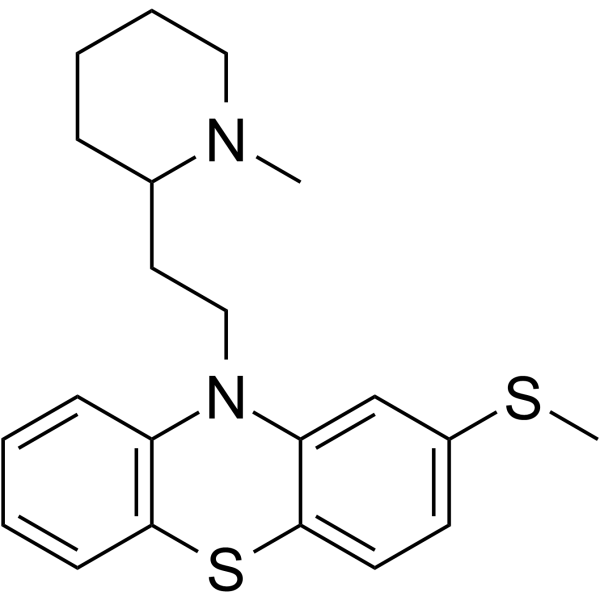
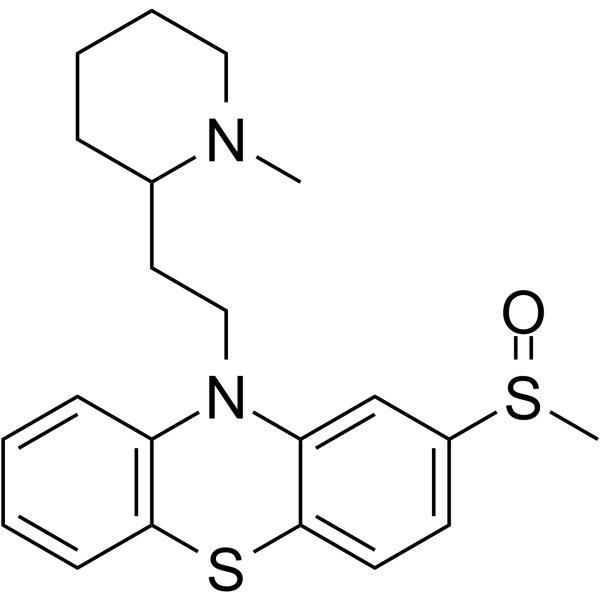
THIORIDAZINE structure
|
Common Name | THIORIDAZINE | ||
|---|---|---|---|---|
| CAS Number | 50-52-2 | Molecular Weight | 370.574 | |
| Density | 1.2±0.1 g/cm3 | Boiling Point | 515.7±50.0 °C at 760 mmHg | |
| Molecular Formula | C21H26N2S2 | Melting Point | 72-74° | |
| MSDS | N/A | Flash Point | 265.7±30.1 °C | |
| Symbol |


GHS02, GHS06, GHS08 |
Signal Word | Danger | |
Use of THIORIDAZINEThioridazine, an antagonist of the dopamine receptor D2 family proteins, exhibits potent anti-psychotic and anti-anxiety activities. Thioridazine is also a potent inhibitor of PI3K-Akt-mTOR signaling pathways with anti-angiogenic effect. Thioridazine shows antiproliferative and apoptosis induction effects in various types of cancer cells, with specificity on targeting cancer stem cells (CSCs)[1][2][3][4]. |
This table lists Chinese names, IUPAC names and various aliases of this chemical substance.
| Name | thioridazine |
|---|---|
| Synonym | More Synonyms |
This table contains bioactivity, target information and biological‑assay experimental data of this compound.
| Description | Thioridazine, an antagonist of the dopamine receptor D2 family proteins, exhibits potent anti-psychotic and anti-anxiety activities. Thioridazine is also a potent inhibitor of PI3K-Akt-mTOR signaling pathways with anti-angiogenic effect. Thioridazine shows antiproliferative and apoptosis induction effects in various types of cancer cells, with specificity on targeting cancer stem cells (CSCs)[1][2][3][4]. |
|---|---|
| Related Catalog | |
| In Vitro | Thioridazine (0.01-100 μM; 48 h) reduces the cell viability of NCI-N87 and AGS cells in a concentration-dependent manner[2]. Thioridazine (15 μM; 24 h) reduces cell viability of the cervical (HeLa, Caski and C33A) and endometrial (HEC-1-A and KLE) cancer cells[4]. Thioridazine (1-15 μM; 24-48 h) induces gastric cancer cell death via the mitochondrial apoptosis pathway and mitochondrial pathway[2]. Thioridazine (15 μM; 24 h) modulates the regulation of cell cycle progression by interfering with the PI3K/Akt pathway and induces G1 cell cycle arrest in cervical and endometrial cancer cells [4]. Thioridazine inhibits the growth of antibiotic-sensitive and multidrug-resistant strains of A. baumannii[3]. Cell Viability Assay[1] Cell Line: NCI-N87 and AGS cells. Concentration: 0.01, 0.1, 0.5, 1, 5, 10, 20, 50, 100 μM. Incubation Time: 48 hours. Result: Exhibited cytotoxicity in gastric cancer cells. Western Blot Analysis[1] Cell Line: NCI-N87 and AGS cells Concentration: 1, 5, 10, 15 μM. Incubation Time: 24, 48 hours. Result: Downregulated the precursors of caspase-9, caspase-8 and caspase-3. |
| In Vivo | Thioridazine (25 mg/kg; i.p. every 3 days for 3 weeks) extends the survival of tumor-bearing mice and reduces the number of pluripotent embryonal carcinoma (EC) cells within tumors[5]. Thioridazine (1.0-5.0 mg/kg; s.c.) reduces oral behavior and selectively blocks repetitive head bobbing[1]. Animal Model: Nude and Rag2KO mice were injected with iPS cells or NT2D1 cells[5] Dosage: 25 mg/kg. Administration: I.p. every 3 days for 3 weeks. Result: Reduced the number of OCT4-expressing cells within malignant teratocarcinomas and extended the survival of tumor-bearing mice. With no effect on fertility. |
| References |
This table shows physicochemical parameters including melting point, boiling point, density, solubility and optical rotation. Missing data is marked as N/A.
| Density | 1.2±0.1 g/cm3 |
|---|---|
| Boiling Point | 515.7±50.0 °C at 760 mmHg |
| Melting Point | 72-74° |
| Molecular Formula | C21H26N2S2 |
| Molecular Weight | 370.574 |
| Flash Point | 265.7±30.1 °C |
| Exact Mass | 370.153748 |
| PSA | 57.08000 |
| LogP | 6.13 |
| Vapour Pressure | 0.0±1.3 mmHg at 25°C |
| Index of Refraction | 1.677 |
| InChIKey | KLBQZWRITKRQQV-UHFFFAOYSA-N |
| SMILES | CSc1ccc2c(c1)N(CCC1CCCCN1C)c1ccccc1S2 |
| Storage condition | ?20°C |
| Water Solubility | Practically insoluble in water, very soluble in methylene chloride, freely soluble in methanol, soluble in ethanol (96 per cent). |
This table summarizes toxicological test data, acute & chronic toxicity and ecological hazard parameters for this chemical.
CHEMICAL IDENTIFICATION
HEALTH HAZARD DATAACUTE TOXICITY DATA
MUTATION DATA
|
This table covers safety warnings, protective measures, incompatible substances and disposal guidelines for this compound.
| Symbol |
GHS02, GHS06, GHS08 |
|---|---|
| Signal Word | Danger |
| Hazard Statements | H225-H301 + H311 + H331-H370-H412 |
| Precautionary Statements | P210-P260-P273-P280-P301 + P310-P311 |
| Hazard Codes | F,T |
| Risk Phrases | 11-23/24/25-39/23/24/25-52/53 |
| Safety Phrases | 16-36/37-45-61 |
| RIDADR | UN1230 - class 3 - PG 2 - Methanol, solution |
This table presents publicly reported synthetic routes, reaction conditions, reactants and product information of the compound.
|
~%
THIORIDAZINE CAS#:50-52-2 |
| Literature: Bourquin et al. Helvetica Chimica Acta, 1958 , vol. 41, p. 1072,1080 |
|
~%
THIORIDAZINE CAS#:50-52-2 |
| Literature: Bourquin et al. Helvetica Chimica Acta, 1958 , vol. 41, p. 1072,1080 |
|
~%
THIORIDAZINE CAS#:50-52-2 |
| Literature: Bourquin et al. Helvetica Chimica Acta, 1958 , vol. 41, p. 1072,1080 |
|
~%
THIORIDAZINE CAS#:50-52-2 |
| Literature: Bourquin et al. Helvetica Chimica Acta, 1958 , vol. 41, p. 1072,1080 |
|
~%
THIORIDAZINE CAS#:50-52-2 |
| Literature: Bourquin et al. Helvetica Chimica Acta, 1958 , vol. 41, p. 1072,1080 |
|
~%
THIORIDAZINE CAS#:50-52-2 |
| Literature: Bourquin et al. Helvetica Chimica Acta, 1958 , vol. 41, p. 1072,1080 |
|
~%
THIORIDAZINE CAS#:50-52-2 |
| Literature: Bourquin et al. Helvetica Chimica Acta, 1958 , vol. 41, p. 1072,1080 |
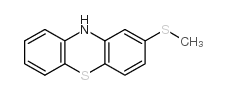
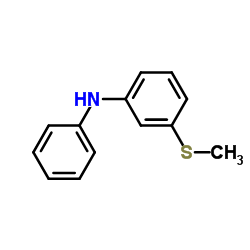
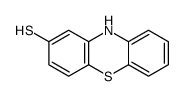
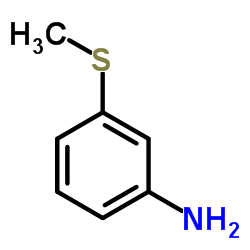
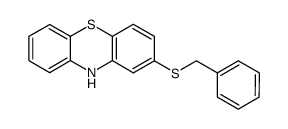
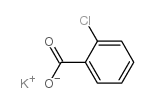
![benzoic acid, 2-{[3-(methylthio)phenyl]amino} structure](https://image.chemsrc.com/caspic/285/18902-93-7.png)
This table lists upstream starting materials and downstream derivative products related to this chemical.
| Precursor 6 | |
|---|---|
| DownStream 3 | |
 CAS#:5588-33-0
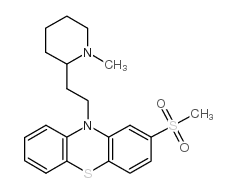 CAS#:14759-06-9
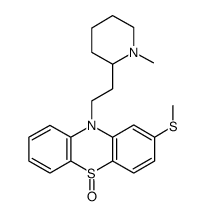 CAS#:7776-05-8
This table lists relevant public references with title, journal and publication metadata for this compound.
|
[Simultaneous determination of 10 unapproved sedative drugs in feeds by ultra-performance liquid chromatography-quadrupole-time-of-flight mass spectrometry].
Se Pu 30(5) , 457-62, (2012) A new analytical method using ultra-performance liquid chromatography-quadrupole-time-of-flight mass spectrometry (UPLC-Q-TOF-MS) was developed for screening and confirmation of 10 unapproved sedative... |
|
|
A repurposing approach identifies off-patent drugs with fungicidal cryptococcal activity, a common structural chemotype, and pharmacological properties relevant to the treatment of cryptococcosis.
Eukaryotic Cell 12(2) , 278-87, (2013) New, more accessible therapies for cryptococcosis represent an unmet clinical need of global importance. We took a repurposing approach to identify previously developed drugs with fungicidal activity ... |
|
|
Why and how thioridazine in combination with antibiotics to which the infective strain is resistant will cure totally drug-resistant tuberculosis.
Expert Rev. Anti. Infect. Ther. 10(8) , 869-73, (2012) Over a period of 14 years, the authors have studied thioridazine, an old neuroleptic, that has been shown to have in vitro activity against intracellular Mycobacterium tuberculosis, regardless of its ... |
This table collects all English aliases, systematic names and CAS‑related synonyms of the compound.
| 3-Methylmercapto-N-[2'-(N'-methyl-2-piperidyl)ethyl]phenothiazine |
| EINECS 200-044-2 |
| MFCD00242875 |
| 2-Methylmercapto-10-[2-(N-methyl-2-piperidyl)ethyl]phenothiazine |
| 10-[2-(1-methylpiperidin-2-yl)ethyl]-2-methylsulfanylphenothiazine |
| 10-[2-(1-methylpiperidin-2-yl)ethyl]-2-(methylthio)-10H-phenothiazine |
| THIORIDAZINE |
| 10-[2-(1-Methyl-2-piperidinyl)ethyl]-2-(methylsulfanyl)-10H-phenothiazine |
| 10-[2-(1-Methyl-2-piperidinyl)ethyl]-2-(methylthio)-10H-phenothiazine |
| 10-[2-(1-Methylpiperidin-2-yl)ethyl]-2-(methylsulfanyl)-10H-phenothiazine |
| UNII:N3D6TG58NI |
This section contains frequently‑asked‑questions about this compound, including basic parameters, properties, storage conditions and corresponding answers.
| Q: What is the boiling point of thioridazine? |
| A: Boiling point of thioridazine is 515.7±50.0 °C at 760 mmHg. |
| Q: What is the molecular weight of thioridazine? |
| A: Molecular weight of thioridazine is 370.574. |
| Q: What are the storage conditions for thioridazine? |
| A: Storage conditions for thioridazine: ?20°C. |
| Q: What is the LogP of thioridazine? |
| A: LogP of thioridazine is 6.13. |
| Q: How is the water solubility of thioridazine? |
| A: Water solubility of thioridazine: Practically insoluble in water, very soluble in methylene chloride, freely soluble in methanol, soluble in ethanol (96 per cent). |
| Q: What is the English name of thioridazine? |
| A: The English name of thioridazine is thioridazine. |
| Q: What are the upstream materials of thioridazine? |
| A: Related upstream materials(CAS) of thioridazine: 7643-08-5;13313-45-6;99970-41-9;1783-81-9;18902-93-7;16463-38-0. |
| Q: What is the molecular formula of thioridazine? |
| A: Molecular formula of thioridazine is C21H26N2S2. |
| Q: What is the polar surface area (PSA) of thioridazine? |
| A: Polar surface area (PSA) of thioridazine is 57.08000. |
| Q: What are the uses of thioridazine? |
| A: Main uses of thioridazine: Thioridazine, an antagonist of the dopamine receptor D2 family proteins, exhibits potent anti-psychotic and anti-anxiety activities. Thioridazine is also a potent inhibitor of PI3K-Akt-mTOR signaling pathways with anti-angiogenic effect. Thioridazine shows antiproliferative and apoptosis induction effects in various types of cancer cells, with specificity on targeting cancer stem cells (CSCs)[1][2][3][4]. |
This table lists manufacturers and suppliers of this compound, including vendor names and product supply reference information.
| Shanghai Nianxing Industrial Co., Ltd |
| Dayang Chem (Hangzhou) Co., Ltd. |