Flumazenil
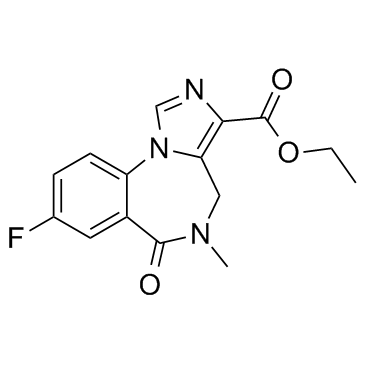
Flumazenil structure
|
Common Name | Flumazenil | ||
|---|---|---|---|---|
| CAS Number | 78755-81-4 | Molecular Weight | 303.288 | |
| Density | 1.4±0.1 g/cm3 | Boiling Point | 528.0±50.0 °C at 760 mmHg | |
| Molecular Formula | C15H14FN3O3 | Melting Point | 201-203°C | |
| MSDS | Chinese USA | Flash Point | 273.1±30.1 °C | |
Use of FlumazenilFlumazenil is a competitive GABAA receptor antagonist, used in the treatment of benzodiazepine overdoses. |
This table lists Chinese names, IUPAC names and various aliases of this chemical substance.
| Name | flumazenil |
|---|---|
| Synonym | More Synonyms |
This table contains bioactivity, target information and biological‑assay experimental data of this compound.
| Description | Flumazenil is a competitive GABAA receptor antagonist, used in the treatment of benzodiazepine overdoses. |
|---|---|
| Related Catalog | |
| In Vivo | Flumazenil interacts at the central benzodiazepine receptor to antagonize or reverse the behavioral, neurologic, and electrophysiologic effects of benzodiazepine agonists and inverse agonists. Flumazenil is of some benefit in hepatic encephalopathy, but until well-designed clinical trials are conducted, hepatic encephalopathy must be considered an investigational indication for flumazenil. Flumazenil has been shown to reverse sedation caused by intoxication with benzodiazepines alone or benzodiazepines in combination with other agents, but it should not be used when cyclic antidepressant intoxication is suspected[1]. Flumazenil (1 mg/kg) induces a strong anxiolytic effect in BALB/c mice tested in the elevated plus maze and light/dark test[2]. Flumazenil (10 mg/kg) effectively prevents the reduction produced by allopregnanolone in rats[3]. Flumazenil (5-20 mg/kg) antagonizes the anticonvulsant and adverse effects of diazepam but not GYKI 52466 in mice. Flumazenil slightly reduces the anticonvulsant activity of NBQX in the MES model but not in the PTZ test[4]. Flumazenil (3.0 mg/kg) blocks the changes withdrawal from chronic ethanol treatment, which leads to a decrease in open arm time and percent open arm entries[5]. |
| Animal Admin | Flumazenil is administered intraperitoneally in a volume of 10 mL/kg body weight 20 min before experimental testing. Two polyvinylchloride boxes (20×20×14 cm) covered with Plexiglas are connected by an opaque plastic tunnel (5×7×10 cm). One of these boxes is darkened. A light from a 100-W desk lamp 40 cm above the other box provided the only room illumination. This light level (300 lux) is chosen in order to avoid strain differences to be detected on time in the lit box (a measure of anxiety behaviour) in control animals. Indeed, in previous experiments, the BALB/c mice differ from C57BL/6 only in the high light condition. The subjects are individually tested in 5-min sessions between 1400 and 1700 hours. Mice are placed in the lit box to start the test session. The time spent in the lit box and the number of transitions from the dark box to the lit one are recorded after the first entry in the tunnel. |
| References |
This table shows physicochemical parameters including melting point, boiling point, density, solubility and optical rotation. Missing data is marked as N/A.
| Density | 1.4±0.1 g/cm3 |
|---|---|
| Boiling Point | 528.0±50.0 °C at 760 mmHg |
| Melting Point | 201-203°C |
| Molecular Formula | C15H14FN3O3 |
| Molecular Weight | 303.288 |
| Flash Point | 273.1±30.1 °C |
| Exact Mass | 303.101929 |
| PSA | 64.43000 |
| LogP | 0.67 |
| Appearance of Characters | solid | white |
| Vapour Pressure | 0.0±1.4 mmHg at 25°C |
| Index of Refraction | 1.634 |
| InChIKey | OFBIFZUFASYYRE-UHFFFAOYSA-N |
| SMILES | CCOC(=O)c1ncn2c1CN(C)C(=O)c1cc(F)ccc1-2 |
| Storage condition | 2-8°C |
| Water Solubility | 128 mg/L |
This table summarizes toxicological test data, acute & chronic toxicity and ecological hazard parameters for this chemical.
CHEMICAL IDENTIFICATION
HEALTH HAZARD DATAACUTE TOXICITY DATA
|
This table covers safety warnings, protective measures, incompatible substances and disposal guidelines for this compound.
| Personal Protective Equipment | Eyeshields;Gloves;type N95 (US);type P1 (EN143) respirator filter |
|---|---|
| Hazard Codes | Xi |
| Risk Phrases | R36/37/38:Irritating to eyes, respiratory system and skin . |
| Safety Phrases | S26:In case of contact with eyes, rinse immediately with plenty of water and seek medical advice . S27:Take off immediately all contaminated clothing . S36/37/39:Wear suitable protective clothing, gloves and eye/face protection . |
| RIDADR | NONH for all modes of transport |
| WGK Germany | 2 |
| RTECS | NI2922170 |
| HS Code | 2933990090 |
This table presents publicly reported synthetic routes, reaction conditions, reactants and product information of the compound.
This table lists upstream starting materials and downstream derivative products related to this chemical.
| Precursor 9 | |
|---|---|
| DownStream 2 | |
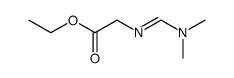 CAS#:428507-28-2
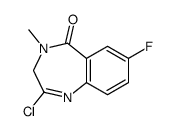 CAS#:193693-31-1
 CAS#:999-97-3
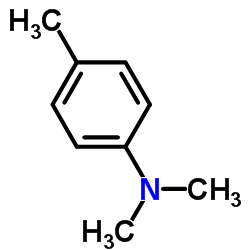 CAS#:99-97-8
 CAS#:3400-09-7
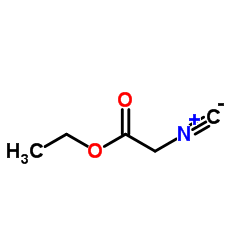 CAS#:2999-46-4
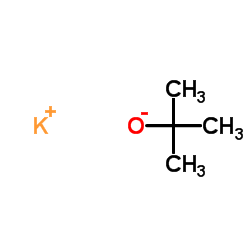 CAS#:865-47-4
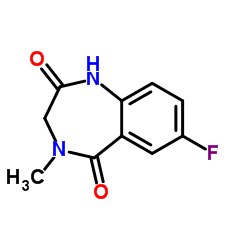 CAS#:78755-80-3
![8-amino-5,6-dihydro-5-methyl-6-oxo-4H-imidazol[1,5-a][1,4]benzodiazepine-3-carboxylic acid ethyl ester Structure](https://image.chemsrc.com/caspic/482/658075-93-5.png) CAS#:658075-93-5
CAS#:658075-93-5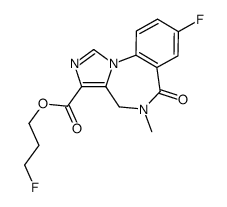 CAS#:133368-73-7
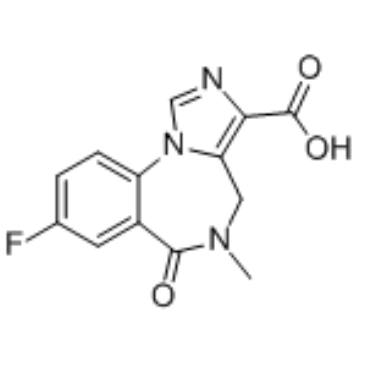 CAS#:84378-44-9
This table shows customs‑related data including HS‑code, tariff and regulatory conditions for import and export.
| HS Code | 2933990090 |
|---|---|
| Summary | 2933990090. heterocyclic compounds with nitrogen hetero-atom(s) only. VAT:17.0%. Tax rebate rate:13.0%. . MFN tariff:6.5%. General tariff:20.0% |
This table lists relevant public references with title, journal and publication metadata for this compound.
|
Tonic current through GABAA receptors and hyperpolarization-activated cyclic nucleotide-gated channels modulate resonance properties of rat subicular pyramidal neurons.
Eur. J. Neurosci. 40(1) , 2241-54, (2014) The subiculum, considered to be the output structure of the hippocampus, modulates information flow from the hippocampus to various cortical and sub-cortical areas such as the nucleus accumbens, later... |
|
|
Mild Staphylococcus aureus Skin Infection Improves the Course of Subsequent Endogenous S. aureus Bacteremia in Mice.
PLoS ONE 10 , e0129150, (2015) Staphylococcus aureus carriers with S. aureus bacteremia may have a reduced mortality risk compared to non-carriers. A role for the immune system is suggested. Here, we study in mice the effect of mil... |
|
|
PET molecular imaging to investigate higher brain dysfunction in patients with neurotrauma.
Acta Neurochir. Suppl. 118 , 251-4, (2013) Many neurotrauma patients suffer from higher brain dysfunction even when focal brain damage is not detected with MRI. We performed functional imaging with positron emission tomography (PET) to clarify... |
This table contains target information, in‑vitro & in‑vivo assay data for this compound.
This table collects all English aliases, systematic names and CAS‑related synonyms of the compound.
| Romazicon |
| Lanexat |
| Anexate |
| Ethyl 8-fluoro-5-methyl-6-oxo-5,6-dihydro-4H-benzo[f]imidazo[1,5-a][1,4]diazepine-3-carboxylate |
| Ro-15-1788 |
| Ro 15-1788 |
| YM-684 |
| Ro 1722 |
| Ethyl 8-fluoro-5-methyl-6-oxo-5,6-dihydro-4H-imidazo[1,5-a][1,4]benzodiazepine-3-carboxylate |
| 4H-Imidazo[1,5-a][1,4]benzodiazepine-3-carboxylic acid, 8-fluoro-5,6-dihydro-5-methyl-6-oxo-, ethyl ester |
| Mazicon |
| Flumazenil |
| FMZ |
| Flumazepil |
| 8-Fluoro-5,6-dihydro-5-methyl-6-oxo-4H-imidazo[1,5-a][1,4]benzodiazepine-3-carboxylic acid ethyl ester |
| Ethyl-8-fluoro-5,6-dihydro-5-methyl-6-oxo-4H-imidazo[1,5-a][1,4]benzodiazepine-3-carboxylate |
| 4H-Imidazo(1,5-a)(1,4)benzodiazepine-3-carboxylic acid, 8-fluoro-5,6-dihydro-5-methyl-6-oxo-, ethyl ester |
| MFCD00242764 |
This section contains frequently‑asked‑questions about this compound, including basic parameters, properties, storage conditions and corresponding answers.
| Q: What are the storage conditions for flumazenil? |
| A: Storage conditions for flumazenil: 2-8°C. |
| Q: What is the LogP of flumazenil? |
| A: LogP of flumazenil is 0.67. |
| Q: What are the downstream products of flumazenil? |
| A: Related downstream products(CAS) of flumazenil: 133368-73-7;84378-44-9. |
| Q: What is the safety information for flumazenil? |
| A: Safety information for flumazenil: S26:In case of contact with eyes, rinse immediately with plenty of water and seek medical advice . S27:Take off immediately all contaminated clothing . S36/37/39:Wear suitable protective clothing, gloves and eye/face protection . |
| Q: How is the water solubility of flumazenil? |
| A: Water solubility of flumazenil: 128 mg/L. |
| Q: What is the molecular weight of flumazenil? |
| A: Molecular weight of flumazenil is 303.288. |
| Q: What is the physical appearance of flumazenil? |
| A: flumazenil appears as solid | white. |
| Q: What are the uses of flumazenil? |
| A: Main uses of flumazenil: Flumazenil is a competitive GABAA receptor antagonist, used in the treatment of benzodiazepine overdoses. |
| Q: What are the upstream materials of flumazenil? |
| A: Related upstream materials(CAS) of flumazenil: 428507-28-2;193693-31-1;999-97-3;99-97-8;3400-09-7;2999-46-4;865-47-4;78755-80-3;658075-93-5. |
| Q: What is the CAS number of flumazenil? |
| A: CAS number of flumazenil is 78755-81-4. |
This table lists manufacturers and suppliers of this compound, including vendor names and product supply reference information.
| Shanghai Nianxing Industrial Co., Ltd |
| Henan Tianfu Chemical Co., Ltd. |