L-(-)-Malic acid
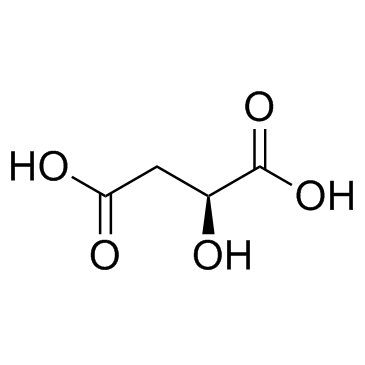
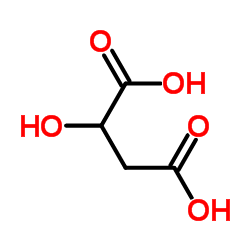
L-(-)-Malic acid structure
|
Common Name | L-(-)-Malic acid | ||
|---|---|---|---|---|
| CAS Number | 97-67-6 | Molecular Weight | 134.087 | |
| Density | 1.6±0.1 g/cm3 | Boiling Point | 306.4±27.0 °C at 760 mmHg | |
| Molecular Formula | C4H6O5 | Melting Point | 101-103 °C(lit.) | |
| MSDS | Chinese USA | Flash Point | 153.4±20.2 °C | |
| Symbol |

GHS07 |
Signal Word | Warning | |
Use of L-(-)-Malic acid(S)-2-Hydroxysuccinic acid is a dicarboxylic acid in naturally occurring form, contributes to the pleasantly sour taste of fruits and is used as a food additive. |
This table lists Chinese names, IUPAC names and various aliases of this chemical substance.
| Name | (S)-malic acid |
|---|---|
| Synonym | More Synonyms |
This table contains bioactivity, target information and biological‑assay experimental data of this compound.
| Description | (S)-2-Hydroxysuccinic acid is a dicarboxylic acid in naturally occurring form, contributes to the pleasantly sour taste of fruits and is used as a food additive. |
|---|---|
| Related Catalog | |
| Target |
Human Endogenous Metabolite |
| In Vitro | It is showed that ME is essential for (S)-2-Hydroxysuccinic acid (L-malic acid) utilization in L. casei. Furthermore, deletion of either the gene encoding the histidine kinase or the response regulator of the TC system resulted in the loss of the ability to grow on (S)-2-Hydroxysuccinic acid, thus indicating that the cognate TC system regulates and is essential for the expression of ME. Transcriptional analyses shows that expression of maeE is induced in the presence of (S)-2-Hydroxysuccinic acid and repressed by glucose, whereas TC system expression is induced by (S)-2-Hydroxysuccinic acid and is not repressed by glucose[1]. |
| References |
This table shows physicochemical parameters including melting point, boiling point, density, solubility and optical rotation. Missing data is marked as N/A.
| Density | 1.6±0.1 g/cm3 |
|---|---|
| Boiling Point | 306.4±27.0 °C at 760 mmHg |
| Melting Point | 101-103 °C(lit.) |
| Molecular Formula | C4H6O5 |
| Molecular Weight | 134.087 |
| Flash Point | 153.4±20.2 °C |
| Exact Mass | 134.021530 |
| PSA | 94.83000 |
| LogP | -1.26 |
| Vapour Pressure | 0.0±1.5 mmHg at 25°C |
| Index of Refraction | 1.529 |
| InChIKey | BJEPYKJPYRNKOW-REOHCLBHSA-N |
| SMILES | O=C(O)CC(O)C(=O)O |
| Water Solubility | soluble |
This table provides MSDS information including hazard classification, first‑aid, fire‑fighting, spill handling, operation and storage instructions.
This table covers safety warnings, protective measures, incompatible substances and disposal guidelines for this compound.
| Symbol |
GHS07 |
|---|---|
| Signal Word | Warning |
| Hazard Statements | H315-H319-H335 |
| Precautionary Statements | P261-P305 + P351 + P338 |
| Personal Protective Equipment | dust mask type N95 (US);Eyeshields;Gloves |
| Hazard Codes | Xi:Irritant |
| Risk Phrases | R36/37/38 |
| Safety Phrases | S26-S36-S37/39 |
| RIDADR | NONH for all modes of transport |
| WGK Germany | 3 |
| RTECS | ON7175000 |
| HS Code | 2918199090 |
This table presents publicly reported synthetic routes, reaction conditions, reactants and product information of the compound.
This table lists upstream starting materials and downstream derivative products related to this chemical.
| Precursor 9 | |
|---|---|
| DownStream 10 | |
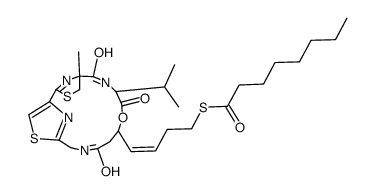 CAS#:1009815-87-5
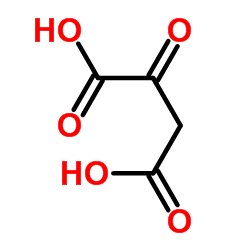 CAS#:328-42-7
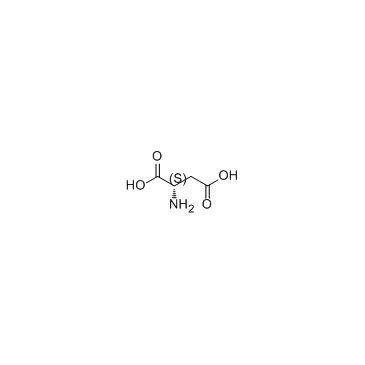 CAS#:56-84-8
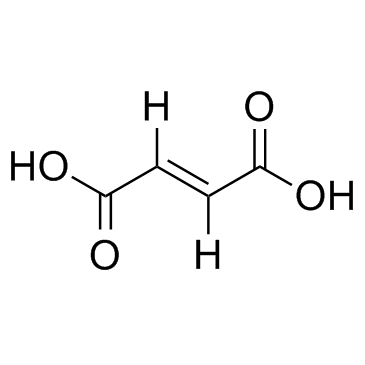 CAS#:110-17-8
 CAS#:298-12-4
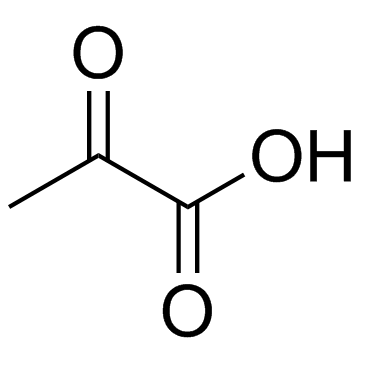 CAS#:127-17-3
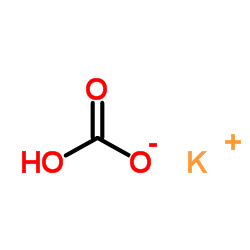 CAS#:298-14-6
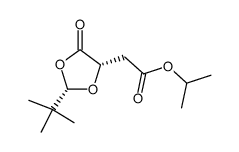 CAS#:514829-23-3
 CAS#:617-48-1
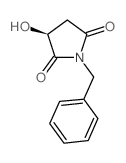 CAS#:101469-91-4
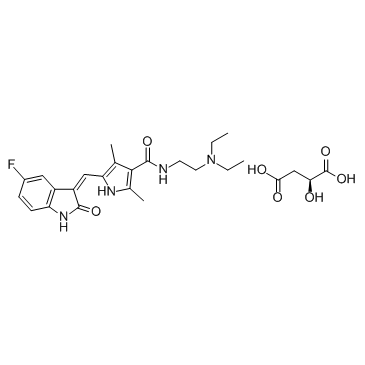 CAS#:341031-54-7
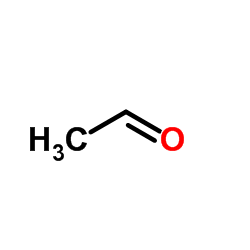 CAS#:75-07-0
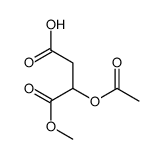 CAS#:39701-84-3
 CAS#:5469-16-9
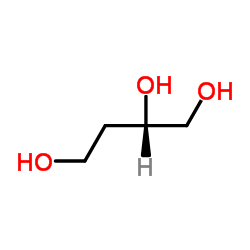 CAS#:42890-76-6
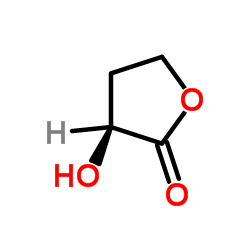 CAS#:52079-23-9
 CAS#:51267-44-8
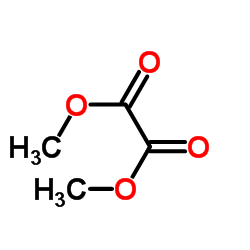 CAS#:553-90-2
This table shows customs‑related data including HS‑code, tariff and regulatory conditions for import and export.
| HS Code | 2918199090 |
|---|---|
| Summary | 2918199090 other carboxylic acids with alcohol function but without other oxygen function, their anhydrides, halides, peroxides, peroxyacids and their derivatives。Supervision conditions:None。VAT:17.0%。Tax rebate rate:9.0%。MFN tariff:6.5%。General tariff:30.0% |
This table lists relevant public references with title, journal and publication metadata for this compound.
|
Physiology and pathophysiology of organic acids in cerebrospinal fluid.
J. Inherit. Metab. Dis. 16(4) , 648-69, (1993) Concentrations of organic acids in cerebrospinal fluid (CSF) appear to be directly dependent upon their rate of production in the brain. There is evidence that the net release of short-chain monocarbo... |
|
|
Age-related reference values for urinary organic acids in a healthy Turkish pediatric population.
Clin. Chem. 40(6) , 862-6, (1994) Organic acid concentrations were quantified by gas chromatography and the individual acids identified by mass spectrometry in urine specimens from a healthy Turkish pediatric population of ages 2 days... |
|
|
Metabolomic profiles delineate potential role for sarcosine in prostate cancer progression.
Nature 457(7231) , 910-4, (2009) Multiple, complex molecular events characterize cancer development and progression. Deciphering the molecular networks that distinguish organ-confined disease from metastatic disease may lead to the i... |
This table collects all English aliases, systematic names and CAS‑related synonyms of the compound.
| hydroxy-butanedioic acid |
| (S)-2-hydroxysuccinic acid |
| Hydroxybutandisaeure |
| MALIC ACID, (DL) |
| EINECS 202-601-5 |
| 2-hydroxybutane-1,4-dioic acid |
| Malic acid |
| DL-MALIC ACID |
| MFCD00064213 |
| 2-Hydroxy-succinic acid |
| DL-Hydroxybutanedioic acid |
| L(-)-Malic Acid |
| R,S(±)-Malic acid |
| alpha-Hydroxysuccinic acid |
| (±)-1-Hydroxy-1,2-ethanedicarboxylic Acid |
| UNII:817L1N4CKP |
| alpha-hydroxysuccinicacid |
| hydroxysuccinic acid |
| DL(+/-)-MALIC ACID |
| R,S-Malic acid |
| 2-hydroxybutanedioic acid |
| 2-Hydroxysuccinic Acid |
| a-Hydroxysuccinic Acid |
| (±)-Malic Acid |
| L-Malic acid |
This section contains frequently‑asked‑questions about this compound, including basic parameters, properties, storage conditions and corresponding answers.
| Q: What are the upstream materials of (S)-malic acid? |
| A: Related upstream materials(CAS) of (S)-malic acid: 1009815-87-5;328-42-7;56-84-8;110-17-8;298-12-4;127-17-3;298-14-6;514829-23-3;617-48-1. |
| Q: What is the safety information for (S)-malic acid? |
| A: Safety information for (S)-malic acid: S26-S36-S37/39. |
| Q: What is the melting point of (S)-malic acid? |
| A: Melting point of (S)-malic acid is 101-103 °C(lit.). |
| Q: What is the molecular weight of (S)-malic acid? |
| A: Molecular weight of (S)-malic acid is 134.087. |
| Q: How is the water solubility of (S)-malic acid? |
| A: Water solubility of (S)-malic acid: soluble. |
| Q: What is the SMILES notation of (S)-malic acid? |
| A: SMILES notation of (S)-malic acid is O=C(O)CC(O)C(=O)O. |
| Q: What is the CAS number of (S)-malic acid? |
| A: CAS number of (S)-malic acid is 97-67-6. |
| Q: What is the boiling point of (S)-malic acid? |
| A: Boiling point of (S)-malic acid is 306.4±27.0 °C at 760 mmHg. |
| Q: What is the English name of (S)-malic acid? |
| A: The English name of (S)-malic acid is (S)-malic acid. |
| Q: What are the downstream products of (S)-malic acid? |
| A: Related downstream products(CAS) of (S)-malic acid: 101469-91-4;341031-54-7;328-42-7;75-07-0;39701-84-3;5469-16-9;42890-76-6;52079-23-9;51267-44-8;553-90-2. |
This table lists manufacturers and suppliers of this compound, including vendor names and product supply reference information.
| Shanghai Nianxing Industrial Co., Ltd |
| Dayang Chem (Hangzhou) Co., Ltd. |
| Henan Tianfu Chemical Co., Ltd. |