Materials Science and Engineering: C 2016-04-01

Prediction of the "in vivo" mechanical behavior of biointegrable acrylic macroporous scaffolds.

L Vikingsson, C M Antolinos-Turpin, J A Gómez-Tejedor, G Gallego Ferrer, J L Gómez Ribelles

Index: Mater. Sci. Eng. C. Mater. Biol. Appl. 61 , 651-8, (2016)

Full Text: HTML

Abstract

This study examines a biocompatible scaffold series of random copolymer networks P(EA-HEA) made of Ethyl Acrylate, EA, and 2-Hydroxyl Ethyl Acrylate, HEA. The P(EA-HEA) scaffolds have been synthesized with varying crosslinking density and filled with a Poly(Vinyl Alcohol), PVA, to mimic the growing cartilaginous tissue during tissue repair. In cartilage regeneration the scaffold needs to have sufficient mechanical properties to sustain the compression in the joint and, at the same time, transmit mechanical signals to the cells for chondrogenic differentiation. Mechanical tests show that the elastic modulus increases with increasing crosslinking density of P(EA-HEA) scaffolds. The water plays an important role in the mechanical behavior of the scaffold, but highly depends on the crosslinking density of the proper polymer. Furthermore, when the scaffold with hydrogel is tested it can be seen that the modulus increases with increasing hydrogel density. Even so, the mechanical properties are inferior than those of the scaffolds with water filling the pores. The hydrogel inside the pores of the scaffolds facilitates the expulsion of water during compression and lowers the mechanical modulus of the scaffold. The P(EA-HEA) with PVA shows to be a good artificial cartilage model with mechanical properties close to native articular cartilage. Copyright © 2015 Elsevier B.V. All rights reserved.

Related Compounds

Structure Name/CAS No. Articles
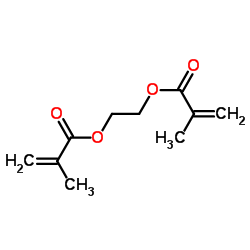
Ethylene methacrylate Structure Ethylene methacrylate
CAS:97-90-5
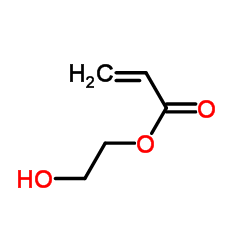
2-Hydroxyethyl acrylate Structure 2-Hydroxyethyl acrylate
CAS:818-61-1