Monosodium PIPES
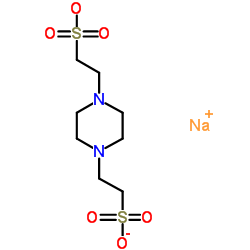
Monosodium PIPES structure
|
Common Name | Monosodium PIPES | ||
|---|---|---|---|---|
| CAS Number | 10010-67-0 | Molecular Weight | 323.343 | |
| Density | N/A | Boiling Point | N/A | |
| Molecular Formula | C8H17N2NaO6S2 | Melting Point | 300 °C | |
| MSDS | USA | Flash Point | N/A | |
|
Simulating conservative tracers in fractured till under realistic timescales.
Ground Water 43(6) , 877-89, (2005) Discrete-fracture and dual-porosity models are infrequently used to simulate solute transport through fractured unconsolidated deposits, despite their more common application in fractured rock where distinct flow regimes are hypothesized. In this study, we ap... |
|
|
In utero exposure to the endocrine disruptor di-(2-ethylhexyl) phthalate promotes local adipose and systemic inflammation in adult male offspring.
Nutr. Diabetes 4 , e115, (2014) Di-(2-ethylhexyl) phthalate (DEHP) is a plasticizer used to increase the flexibility of polyvinyl chloride. DEHP and its active metabolite mono-(2-ethylhexyl) phthalate are detected in many biological fluids during fetal and postnatal life. In rodent models, ... |
|
|
Crystallization and preliminary X-ray crystallographic analysis of NADPH: azodicarbonyl/quinone oxidoreductase, a plant zeta-crystallin.
Biochim. Biophys. Acta 1480(1-2) , 374-6, (2000) Arabidopsis thaliana P1 protein was crystallized using the hanging drop vapor-diffusion method in 0.1 M piperazine-1, 4-bis(2-ethanesulfonic acid) buffer, containing 14% polyethylene glycol 6000 and 0.2 M magnesium acetate at pH 6.5 and 20 degrees C. The crys... |
|
|
Impurity in buffer substances mimics the effects of ATP on soluble 5'-nucleotidase.
Enzyme 45(4) , 194-9, (1991) An impurity, probably an anion, present in some batches of the buffer substances 4-(2-hydroxyethyl) piperazine-1-ethanesulfonic acid (HEPES), 2-morpholinoethane sulfonic acid (Mes) and piperazine-1,4-bis(2-ethane sulfonic acid (Pipes), activates the soluble 5... |
|
|
Reoxidation of reduced uranium with iron(III) (hydr)oxides under sulfate-reducing conditions.
Environ. Sci. Technol. 39(7) , 2059-66, (2005) In cultures of Desulfovibrio desulfuricans 620 the effects of iron(III) (hydr)oxides (hematite, goethite, and ferrihydrite) on microbial reduction and reoxidation of uranium (U) were evaluated under lactate-limited sulfate-reducing conditions. With lactate pr... |
|
|
Direct observation of steady-state microtubule dynamics.
J. Cell Biol. 102(3) , 1007-19, (1986) Different types of unusual dynamic behavior have been reported for steady-state microtubules. While almost all earlier reports relied on kinetic measurements of bulk polymerization, we have directly visualized the steady-state addition of subunits to individu... |
|
|
Mg2+ dependence of guanine nucleotide binding to tubulin.
J. Biol. Chem. 262(36) , 17278-84, (1987) The relationship between the concentration of Mg2+ and the binding of GDP and GTP to tubulin dimers was investigated by measuring the displacement of the nucleotide bound at the exchangeable site (E-site) by radiolabeled GDP and GTP. A wide range of concentra... |
|
|
The adsorption and reaction of adenine nucleotides on montmorillonite.
Orig. Life Evol. Biosph. 17 , 69-84, (1986) The binding of AMP to Zn(2+)-montmorillonite was investigated in the presence of buffers and salts. Good's buffers, piperazine-N,N'-bis(2-ethanesulfonate) [PIPES] and morpholine-N-2-ethanesulfonate [MES], perturbed the exchangeable cations to a lesser extent ... |
|
|
Sulphonate buffers affect the recovery of microtubule-associated proteins MAP1 and MAP2: evidence that MAP1A promotes microtubule assembly.
Cell Motil. Cytoskeleton 25(3) , 234-42, (1993) The influence of two commonly used sulphonate buffers, PIPES and MES, on the in vitro assembly of bovine brain microtubule protein was examined. Microtubule assembly was monitored by turbimetry and, after centrifugation, the polymerised protein was analysed b... |
|
|
Effects of osmolality and ionic strength on secretion from adrenal chromaffin cells permeabilized with digitonin.
J. Neurochem. 46(6) , 1835-42, (1986) Hyperosmotic solutions inhibit exocytosis of catecholamine from adrenal chromaffin cells at a step after Ca2+ entry into the cells. The possibility that the inhibition resulted from an inability of shrunken secretory granules to undergo exocytosis was investi... |