iofetamine hcl
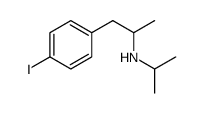
iofetamine hcl structure
|
Common Name | iofetamine hcl | ||
|---|---|---|---|---|
| CAS Number | 95896-48-3 | Molecular Weight | 303.18200 | |
| Density | 1.378±0.06 g/cm3 (20 °C, 760 mmHg) | Boiling Point | 307.6±17.0 °C (760 mmHg) | |
| Molecular Formula | C12H18IN | Melting Point | N/A | |
| MSDS | USA | Flash Point | N/A | |
|
Noninvasive measurement of human brain temperature adjacent to arteriovenous malformation using 3.0T magnetic resonance spectroscopy.
Clin. Neurol. Neurosurg. 115(4) , 445-9, (2013) The brain temperature at rest is determined by the balance between heat produced by cerebral energy turnover, which is identical to cerebral metabolism, and heat that is removed, primarily by cerebral blood flow. The present study investigated whether brain t... |
|
|
Cerebral blood flow and freezing of gait in Parkinson's disease.
Acta Neurol. Scand 126(3) , 210-8, (2012) We investigated the relationship between freezing of gait (FOG) severity in Parkinson's disease (PD) and regional cerebral blood flow (rCBF) using single-photon emission computed tomography (SPECT) and evaluated the effect of selegiline therapy.We evaluated 5... |
|
|
Regional differences in cortical benzodiazepine receptors of Alzheimer, vascular, and mixed dementia patients.
J. Neurol. Sci. 323(1-2) , 71-6, (2012) We examined regional benzodiazepine receptors (rBZR) using single photon emission CT (SPECT) in patients with Alzheimer disease (AD), vascular dementia (VaD), and mixed AD/VaD dementia (MD) and compared the changes in the availability of rBZR with those of re... |
|
|
N-Isopropyl-p-iodoamphetamine hydrochloride Is predominantly metabolized by CYP2C19.
Drug Metab. Dispos. 40(5) , 843-6, (2012) [(123)I]N-Isopropyl-p-iodoamphetamine hydrochloride ([(123)I]IMP) is clinically used to evaluate blood flow in the brain on single photon emission-computed tomography. This is a rare radiopharmaceutical that undergoes metabolism. The first step is reported to... |
|
|
Diagnosis of uveal malignant melanoma by a new semiquantitative assessment of N-isopropyl-p-[123I]-iodoamphetamine.
Jpn. J. Ophthalmol. 55(2) , 148-54, (2011) To semiquantify the uptake of N-isopropyl-p-[(123)I]-iodoamphetamine (I-123 IMP) in patients with uveal malignant melanoma reproducibly and objectively.Fifty-two patients were examined. Twenty-nine patients had malignant melanoma (group A), three were clinica... |
|
|
Efficacy of hippocampal transection for left temporal lobe epilepsy without hippocampal atrophy.
Epilepsy Behav. 21(1) , 94-9, (2011) We describe a case of left temporal lobe epilepsy without hippocampal atrophy. A 31-year-old woman presented with typical symptoms of complex partial seizures. Magnetic resonance imaging demonstrated slightly obscure internal structures in the left hippocampu... |
|
|
Resolution of cranial MRI and SPECT abnormalities in a patient with Wilson's disease following oral zinc monotherapy.
Intern. Med. 51(13) , 1759-63, (2012) A 38-year-old woman with Wilson's disease developed neurological deterioration after 25 years of low-dose penicillamine administration. She showed an akinetic-rigid syndrome and cerebellar motor ataxia. Brain MRI showed increased signal intensity at the bilat... |
|
|
Temporal lobe epilepsy manifesting as alexia with agraphia for kanji.
Epilepsy Behav. 22(3) , 592-5, (2011) Alexia with agraphia results from lesions of the left angular gyrus or the left posteroinferior temporal lobe. In Japanese or Korean persons, lesions of the latter cause alexia with agraphia for ideograms. We describe a case of alexia with agraphia for kanji ... |
|
|
Amitriptyline and lorazepam improved catatonia and occipital hypoperfusion in a patient with DLB.
Intern. Med. 50(4) , 363-6, (2011) A 76-year-old woman presented with catatonia, refusal to eat due to delusion, and visual hallucination. Single photon emission computed tomography showed remarkable occipital hypoperfusion and frontal hyperperfusion. (123)I metaiodobenzyl guanidine myocardial... |
|
|
Relapse of herpes simplex virus encephalitis after surgical treatment for temporal lobe epilepsy: rare complication of epilepsy surgery.
J. Neurol. 260(1) , 318-20, (2013)
|