3-INDOXYL SULFATE POTASSIUM SALT
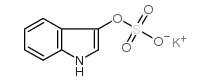
3-INDOXYL SULFATE POTASSIUM SALT structure
|
Common Name | 3-INDOXYL SULFATE POTASSIUM SALT | ||
|---|---|---|---|---|
| CAS Number | 2642-37-7 | Molecular Weight | 251.30100 | |
| Density | N/A | Boiling Point | N/A | |
| Molecular Formula | C8H6KNO4S | Melting Point | 165 °C (dec.)(lit.) | |
| MSDS | Chinese USA | Flash Point | N/A | |
|
Alterations of urinary metabolite profile in model diabetic nephropathy.
Biochem. Biophys. Res. Commun. 456(2) , 610-4, (2015) Countering the diabetes pandemic and consequent complications, such as nephropathy, will require better understanding of disease mechanisms and development of new diagnostic methods. Animal models can be versatile tools in studies of diabetic renal disease wh... |
|
|
Metabolomics Approach Reveals Integrated Metabolic Network Associated with Serotonin Deficiency.
Sci. Rep. 5 , 11864, (2015) Serotonin is an important neurotransmitter that broadly participates in various biological processes. While serotonin deficiency has been associated with multiple pathological conditions such as depression, schizophrenia, Alzheimer's disease and Parkinson's d... |
|
|
Uremic toxin indoxyl 3-sulfate regulates the differentiation of Th2 but not of Th1 cells to lessen allergic asthma.
Toxicol. Lett. 225(1) , 130-8, (2014) Immune system dysfunctions including the increased Th1/Th2 ratio are common in chronic kidney disease (CKD) patients, and a wide variety of skin diseases including Th1-mediated uremic pruritis are associated with CKD. Although there are more than 90 uremic to... |
|
|
Identification of sulfation sites of metabolites and prediction of the compounds' biological effects.
Anal. Bioanal. Chem 386(3) , 666-74, (2006) Characterizing the biological effects of metabolic transformations (or biotransformation) is one of the key steps in developing safe and effective pharmaceuticals. Sulfate conjugation, one of the major phase II biotransformations, is the focus of this study. ... |
|
|
CREB, NF-κB, and NADPH oxidase coordinately upregulate indoxyl sulfate-induced angiotensinogen expression in proximal tubular cells.
Am. J. Physiol. Cell Physiol. 304(7) , C685-92, (2013) In chronic kidney disease (CKD), indoxyl sulfate, a uremic toxin, accumulates in serum, and the expression of angiotensinogen (AGT) is upregulated in renal proximal tubular cells. The present study aimed to determine the relationship between indoxyl sulfate a... |
|
|
An update on uremic toxins.
Int. Urol. Nephrol. 45(1) , 139-50, (2013) In the last decade, uremic toxicity as a potential cause for the excess of cardiovascular disease and mortality observed in chronic kidney disease gained more and more interest. This review focuses on uremic toxins with known cardiovascular effects and their ... |
|
|
Agent Orange and heart disease: is there a connection?
FASEB J. 28(4) , 1531-3, (2014)
|
|
|
Indoxyl 3-sulfate stimulates Th17 differentiation enhancing phosphorylation of c-Src and STAT3 to worsen experimental autoimmune encephalomyelitis.
Toxicol. Lett. 220(2) , 109-17, (2013) Although AhR activation regulates CD4T cell differentiation, how it works has yet to be elucidated. In the present study, using in vitro Th17 differentiation model, we examined effects of AhR activation by indoxyl 3-sulfate (I3S), a uremic toxin, on Th17 diff... |
|
|
Enhanced expression of glucose transporter-1 in vascular smooth muscle cells via the Akt/tuberous sclerosis complex subunit 2 (TSC2)/mammalian target of rapamycin (mTOR)/ribosomal S6 protein kinase (S6K) pathway in experimental renal failure.
J. Vasc. Surg. 57(2) , 475-85, (2013) Chronic renal failure (CRF) is associated with increased cardiovascular mortality, and medial vascular smooth muscle cell (VSMC) hypertrophy, proliferation, and calcification play a pivotal role in uremic vasculopathy. Glucose transporter-1 (GLUT1) facilitate... |
|
|
Mixed matrix hollow fiber membranes for removal of protein-bound toxins from human plasma.
Biomaterials 34(32) , 7819-28, (2013) In end stage renal disease (ESRD) waste solutes accumulate in body fluid. Removal of protein bound solutes using conventional renal replacement therapies is currently very poor while their accumulation is associated with adverse outcomes in ESRD. Here we inve... |