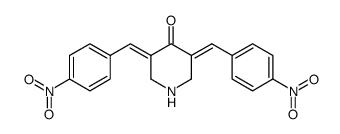
| Description |
RA-9 is a potent and selective proteasome-associated deubiquitinating enzymes (DUBs) inhibitor with favorable toxicity profile and anticancer activity. RA-9 blocks ubiquitin-dependent protein degradation without impacting 20S proteasome proteolytic activity. RA-9 selectively induces onset of apoptosis in ovarian cancer cell lines and primary cultures derived from donors. RA-9 induces endoplasmic reticulum (ER)-stress responses in ovarian cancer cells[1].
|
| Related Catalog |
|
| In Vitro |
RA-9 (10-30 μM; 48 hours) inhibits growth of ovarian cancer cell lines and primary cultures[1]. RA-9 (1.25-5 μM; 18 hours) causes cell cycle arrest and caspase-mediated apoptosis in ovarian cancer cells[1]. RA-9 (5 μM; 0-24 hours) induces ER-stress responses in ovarian cancer cells[1]. RA-9 (5 μM; over 24 hours) treatment results with time-dependent accumulation of the cleaved formed of PARP noticeable as early as 8 hours[1]. Cell Viability Assay[1] Cell Line: Cisplatin-sensitive ovarian cancer cell lines TOV-21G and ES-2, Cisplatin-resistant ovarian cancer cell lines HEY and OVCAR-3, primary ovarian cancer cells Concentration: 10, 20, 30 μM Incubation Time: 48 hours Result: Compromised the viability of ovarian cancer cells in a dose-dependent fashion. Cell Cycle Analysis[1] Cell Line: ES-2 cells Concentration: 1.25, 5 μM Incubation Time: 18 hours Result: Resulted in a dose-dependent increase in the fraction of ES-2 cells in the G2-M cell cycle phase. Western Blot Analysis[1] Cell Line: ES-2, SKOV-3 and TOV-21G ovarian cancer cells Concentration: 5 μM Incubation Time: 0-24 h Result: Caused a time-dependent increase in the steady levels of the early ER-stress marker GRP-78, as well as the late ER-stress markers IRE1-α and Ero1L-α.
|
| In Vivo |
RA-9 (5 mg/kg; i.p; one-day on, two-days off) inhibits human ovarian cancer cell growth in vivo and prolongs survival in a mouse model for ovarian cancer[1]. Animal Model: Six-week-old female immunodeficient (NCr nu/nu) mice[1] Dosage: 5 mg/kg Administration: I.p; one-day on, two-days off Result: Significant reduction in tumor burden at day 12.
|
| References |
[1]. Coughlin K, et al. Small-molecule RA-9 inhibits proteasome-associated DUBs and ovarian cancer in vitro and in vivo via exacerbating unfolded protein responses. Clin Cancer Res. 2014;20(12):3174-3186.
|