N,N,N-Tripentyl-1-pentanaminium bromide
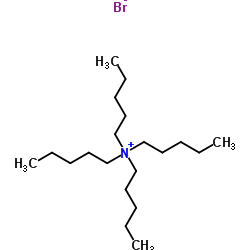
N,N,N-Tripentyl-1-pentanaminium bromide structure
|
Common Name | N,N,N-Tripentyl-1-pentanaminium bromide | ||
|---|---|---|---|---|
| CAS Number | 866-97-7 | Molecular Weight | 378.474 | |
| Density | 0.92333 g/cm3 (35.00℃) | Boiling Point | N/A | |
| Molecular Formula | C20H44BrN | Melting Point | 100-101ºC(lit.) | |
| MSDS | Chinese USA | Flash Point | N/A | |
| Symbol |

GHS07 |
Signal Word | Warning | |
Use of N,N,N-Tripentyl-1-pentanaminium bromideTetrapentylammonium bromide is a biochemical reagent that can be used as a biological material or organic compound for life science related research. |
| Name | tetrapentylammonium bromide |
|---|---|
| Synonym | More Synonyms |
| Description | Tetrapentylammonium bromide is a biochemical reagent that can be used as a biological material or organic compound for life science related research. |
|---|---|
| Related Catalog |
| Density | 0.92333 g/cm3 (35.00℃) |
|---|---|
| Melting Point | 100-101ºC(lit.) |
| Molecular Formula | C20H44BrN |
| Molecular Weight | 378.474 |
| Exact Mass | 377.265717 |
| LogP | 3.56800 |
| Appearance of Characters | Shiny Flakes | White |
| Index of Refraction | 1.5260 (estimate) |
| InChIKey | SPALIFXDWQTXKS-UHFFFAOYSA-M |
| SMILES | CCCCC[N+](CCCCC)(CCCCC)CCCCC.[Br-] |
| Symbol |
GHS07 |
|---|---|
| Signal Word | Warning |
| Hazard Statements | H315-H319-H335 |
| Precautionary Statements | P261-P305 + P351 + P338 |
| Personal Protective Equipment | dust mask type N95 (US);Eyeshields;Gloves |
| Hazard Codes | Xi: Irritant; |
| Risk Phrases | 36/37/38 |
| Safety Phrases | S26 |
| RIDADR | NONH for all modes of transport |
| WGK Germany | 3 |
| HS Code | 2923900090 |
|
~%
N,N,N-Tripentyl... CAS#:866-97-7 |
| Literature: Journal of pharmaceutical sciences, , vol. 55, # 4 p. 414 - 417 |
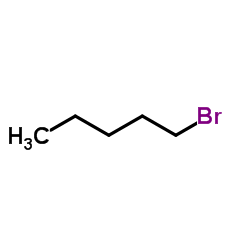
 CAS#:3475-60-3
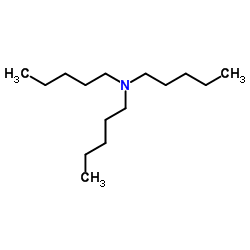
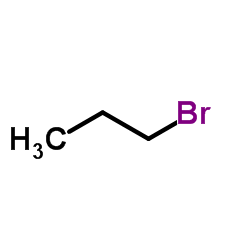 CAS#:106-94-5
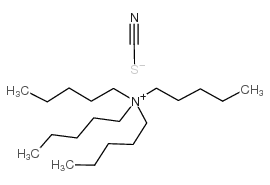
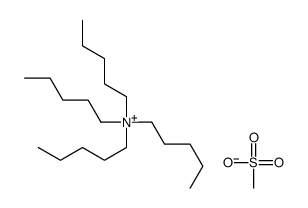 CAS#:113369-05-4
| HS Code | 2923900090 |
|---|---|
| Summary | 2923900090 other quaternary ammonium salts and hydroxides。Supervision conditions:None。VAT:17.0%。Tax rebate rate:9.0%。MFN tariff:6.5%。General tariff:30.0% |
|
KCNE1 reverses the response of the human K+ channel KCNQ1 to cytosolic pH changes and alters its pharmacology and sensitivity to temperature.
Pflugers Arch. 441(2-3) , 368-78, (2000) Previous studies have shown that heteromultimeric KCNQ1/KCNE1 (KvLQT1/minK) channels and homomultimeric KCNQ1 (KvLQT1) channels exhibit different current properties, e.g. distinct kinetics and differe... |
|
|
Early-phase occurrence of K+ and Cl- efflux in addition to Ca 2+ mobilization is a prerequisite to apoptosis in HeLa cells.
Apoptosis 17(8) , 821-31, (2012) Sustained rise in cytosolic Ca(2+) and cell shrinkage mainly caused by K(+) and Cl(-) efflux are known to be prerequisites to apoptotic cell death. Here, we investigated how the efflux of K(+) and Cl(... |
|
|
Frequency dependence of alternating current electrospray ionization mass spectrometry.
Anal. Chem. 83(8) , 3017-23, (2011) The novel effects resulting from the entrainment of low mobility ions during alternating current (ac) electrospray ionization are examined through mass spectrometry and voltage/current measurements. C... |
| MFCD00011856 |
| n,n,n-tripentylpentan-1-aminium bromide |
| 1-Pentanaminium, N,N,N-tripentyl-, bromide (1:1) |
| 1-Pentanaminium, N,N,N-tripentyl-, bromide |
| N,N,N-Tripentyl-1-pentanaminium bromide |
| tetrapentylazanium,bromide |
| EINECS 212-756-0 |
The content on this webpage is sourced from various professional data sources. If you have any questions or concerns regarding the content, please feel free to contact service1@chemsrc.com.
- Shanghai Nianxing Industrial Co., Ltd
- China
- Product Name: N,N,N-Tripentyl-1-pentanaminium bromide
- Price: Check
- Purity: 99.0%
- Delivery: 10 Day
- Contact: Yang
- Email: sales@echemcloud.com
- Shanghai Jizhi Biochemical Technology Co., Ltd
- China
- Product Name: N,N,N-Tripentyl-1-pentanaminium bromide
- Price: ¥1518.0/10g
- Purity: 98.0%
- Delivery: Inquiry
- Contact: Liu jia


- Email: 2130147988@qq.com
- Dayang Chem (Hangzhou) Co., Ltd.
- China
- Product Name: TETRAPENTYLAMMONIUM BROMIDE
- Price: $Inquiry/100g $Inquiry/1kg $Inquiry/100kg $Inquiry/1000kg
- Purity: 98.0%
- Delivery: Inquiry
- Contact: Ms Wang
- Email: enquiry@dycnchem.com
Get all suppliers and price by the below link:
N,N,N-Tripentyl-1-pentanaminium bromide suppliers
Reference only. check more N,N,N-Tripentyl-1-pentanaminium bromide price