Chloramine-T trihydrate
Modify Date: 2025-08-20 17:00:33
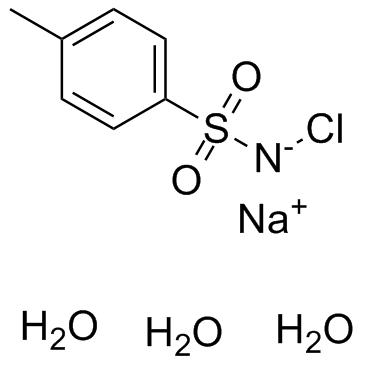
Chloramine-T trihydrate structure
|
Common Name | Chloramine-T trihydrate | ||
|---|---|---|---|---|
| CAS Number | 7080-50-4 | Molecular Weight | 281.690 | |
| Density | N/A | Boiling Point | N/A | |
| Molecular Formula | C7H13ClNNaO5S | Melting Point | 167-170 °C(lit.) | |
| MSDS | Chinese USA | Flash Point | 92 °C | |
| Symbol |


GHS05, GHS07, GHS08 |
Signal Word | Danger | |
Use of Chloramine-T trihydrateTosylchloramide sodium trihydrate (Chloramine T sodium trihydrate) is a disinfectant agent widely used in laboratories, kitchens and hospitals. It is also used as a biocide in air fresheners and deodorants. |
| Name | Chloramine-T trihydrate |
|---|---|
| Synonym | More Synonyms |
| Description | Tosylchloramide sodium trihydrate (Chloramine T sodium trihydrate) is a disinfectant agent widely used in laboratories, kitchens and hospitals. It is also used as a biocide in air fresheners and deodorants. |
|---|---|
| Related Catalog | |
| In Vitro | Gram-positive growth is reduced by 95% to 100% after tosylchloramide treatment, regardless of dose, with or without serum. E coli (gram-negative; with/without serum) is reduced 94% to 100% at antiseptic concentrations of 300 and 400 ppm. At 200 ppm, E coli growth is fully inhibited without serum present and by 50% with serum. At 100 and 200 ppm, cell viability remains greater than 90% under all experimental conditions. A 300-ppm, 3-minute exposure to tosylchloramide results in cell viability of up to 70%, with longer exposures producing lower viabilities. Serum does not affect cell viability in any condition[1]. |
| In Vivo | A dose-dependently significant DNA damage in the rat tissues and inflammation is histopathologically noted around the terminal airways of the lung in both male and female rats[2]. The 24-h exposure to 50 mg/L of chloramine-T is toxic for crayfish and leads to substantial loss of energy that became apparent during subsequently conducted physical stress[3]. Tosylchloramide may potentiate the toxicity of many xenobiotics via metabolic activation and/or accumulation of reactive metabolites. The activities of CYP2E1, CYP1A1/2 CYP2B1/2, CYP3A4 and CYP4A1/2 enzymes significantly increase after treatment with 2.50, 5 and 10 mg/kg bw/day tosylchloramide, in a dose-dependent manner. This effect is not observed after tosylchloramide treatment at dose of 1.25 mg/kg bw/day[4]. |
| Animal Admin | Rats: Male and female groups of rats are exposed to tosylchloramide at concentrations of 0.2, 0.9 and 4 mg/m3 for 6 hr/day, 5 days/week during 4 weeks. All rats are sacrificed after treatment for 4 weeks[2]. |
| References |
| Melting Point | 167-170 °C(lit.) |
|---|---|
| Molecular Formula | C7H13ClNNaO5S |
| Molecular Weight | 281.690 |
| Flash Point | 92 °C |
| Exact Mass | 281.010071 |
| PSA | 70.21000 |
| LogP | 3.09910 |
| InChIKey | NZYOAGBNMCVQIV-UHFFFAOYSA-N |
| SMILES | Cc1ccc(S(=O)(=O)[N-]Cl)cc1.O.O.O.[Na+] |
| Storage condition | 0-6°C |
| Symbol |
GHS05, GHS07, GHS08 |
|---|---|
| Signal Word | Danger |
| Hazard Statements | H302-H314-H334 |
| Supplemental HS | Contact with acids liberates toxic gas. |
| Precautionary Statements | P260-P280-P284-P303 + P361 + P353-P304 + P340 + P310-P305 + P351 + P338 |
| Personal Protective Equipment | Eyeshields;Faceshields;full-face particle respirator type N100 (US);Gloves;respirator cartridge type N100 (US);type P1 (EN143) respirator filter;type P3 (EN 143) respirator cartridges |
| Hazard Codes | C:Corrosive |
| Risk Phrases | R22;R31;R34;R42 |
| Safety Phrases | S22-S26-S36/37/39-S45 |
| RIDADR | UN 3263 8/PG 3 |
| WGK Germany | 2 |
| RTECS | XT5616800 |
| Packaging Group | III |
| Hazard Class | 8 |
| Precursor 2 | |
|---|---|
| DownStream 10 | |
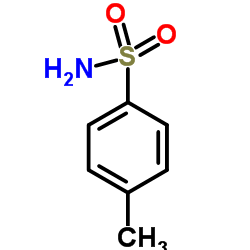 CAS#:70-55-3
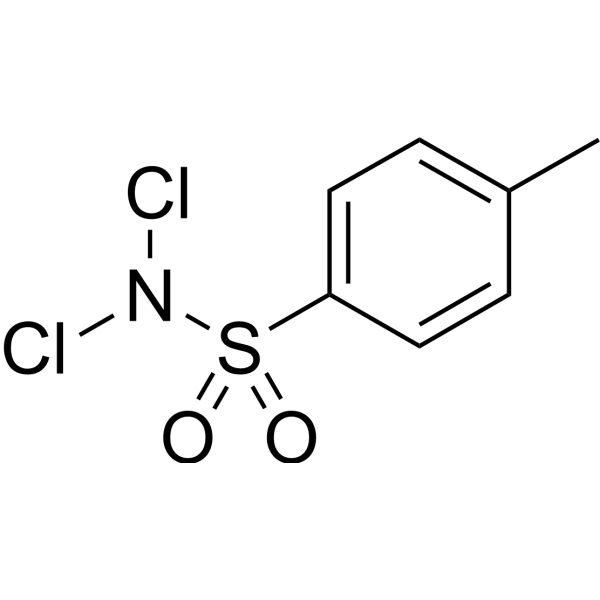 CAS#:473-34-7
 CAS#:60577-30-2
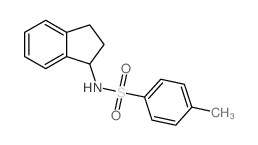 CAS#:93008-98-1
 CAS#:83-33-0
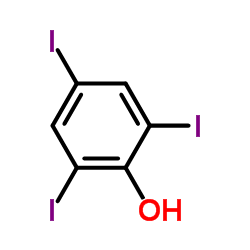 CAS#:609-23-4
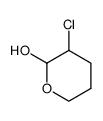 CAS#:1003-57-2
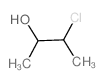 CAS#:563-84-8
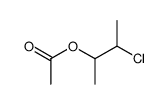 CAS#:760-86-1
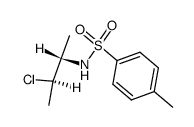 CAS#:76475-10-0
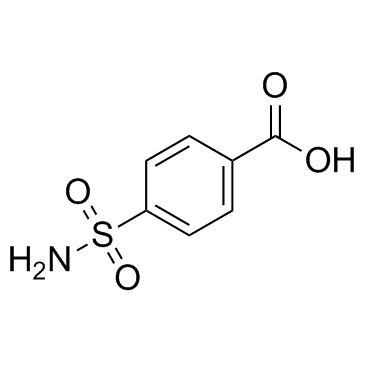 CAS#:138-41-0
|
Catalytic diastereoselective sulfimidation of diaryl sulfides and application of chiral sulfimides to asymmetric allylic alkylation.
Chirality 12(5-6) , 299-312, (2000) The copper-catalyzed diastereoselective imidation of diaryl sulfides bearing a chiral oxazolinyl moiety at the ortho-position with [N-(p-toluenesulfonyl) imino]phenyliodinane (TsN=IPh) or Chloramine-T... |
|
|
The estimation of microgram amounts of methionine by reaction with chloramine-T.
Anal. Biochem. 93 , 419, (1979)
|
|
|
THE PREPARATION OF I-131-LABELLED HUMAN GROWTH HORMONE OF HIGH SPECIFIC RADIOACTIVITY.
Biochem. J. 89 , 114, (1963)
|
| N-chloro-toluene-4-sulfonamide,sodium salt |
| Chloramine-T trihydrate |
| MFCD00149066 |
| TOSYLCHLORAMIDE SODIUM TRIHYDRATE |
| ChloraMine T&chloroamine T trihydrate |
| sodium chloro[(4-methylphenyl)sulfonyl]azanide trihydrate |
| CHLORAMINE T GR |
| CHLORAMINE T 3-HYDRATE |
| CHLORAMINE T TRIHYDRATE |
| N-Chloro-p-toluenesulfonamide sodium salt trihydrate |
| chloramine T hydratee |
| CHLOROMINE-T SOLUTION |
| Sodium chloro[(4-methylphenyl)sulfonyl]azanide hydrate (1:1:3) |
| Chloroamine t trihydrate |
| Benzenesulfonamide, N-chloro-4-methyl-, sodium salt, hydrate (1:1:3) |
| CHLOROAMINUM |
| Chloramine-T,Sodium salt |
| EINECS 204-854-7 |
The content on this webpage is sourced from various professional data sources. If you have any questions or concerns regarding the content, please feel free to contact service1@chemsrc.com.
- Shanghai Nianxing Industrial Co., Ltd
- China
- Product Name: Chloramine-T trihydrate
- Price: Check
- Purity: 97.0%
- Delivery: 10 Day
- Contact: Yang
- Email: sales@echemcloud.com
- Shanghai Jizhi Biochemical Technology Co., Ltd
- China
- Product Name: Chloramine-T trihydrate
- Price: ¥78.0/500g
- Purity: 98.0%
- Delivery: Inquiry
- Contact: Liu jia


- Email: 2130147988@qq.com
- Dayang Chem (Hangzhou) Co., Ltd.
- China
- Product Name: Chloramine-T trihydrate
- Price: $Inquiry/100g $Inquiry/1kg $Inquiry/100kg $Inquiry/1000kg
- Purity: 98.0%
- Delivery: Inquiry
- Contact: Ms Wang
- Email: enquiry@dycnchem.com
- Zhongshan Xingrui Chemical Co. , Ltd.
- China
- Product Name: Chloramine-T trihydrate
- Price: ¥Inquiry/25kg
- Purity: 99.0%
- Delivery: Inquiry
- Contact: Wang Jie
- Email: 3096638339@qq.com
Get all suppliers and price by the below link:
Chloramine-T trihydrate suppliers
Price: $60/5mg
Reference only. check more Chloramine-T trihydrate price