Triphosgene
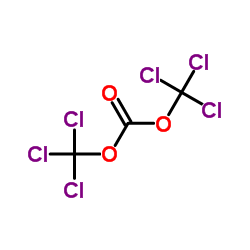
Triphosgene structure
|
Common Name | Triphosgene | ||
|---|---|---|---|---|
| CAS Number | 32315-10-9 | Molecular Weight | 296.748 | |
| Density | 1.9±0.1 g/cm3 | Boiling Point | 204.5±0.0 °C at 760 mmHg | |
| Molecular Formula | C3Cl6O3 | Melting Point | 79-83 °C(lit.) | |
| MSDS | Chinese USA | Flash Point | 53.3±26.3 °C | |
| Symbol |


GHS05, GHS06 |
Signal Word | Danger | |
| Name | bis(trichloromethyl) carbonate |
|---|---|
| Synonym | More Synonyms |
| Density | 1.9±0.1 g/cm3 |
|---|---|
| Boiling Point | 204.5±0.0 °C at 760 mmHg |
| Melting Point | 79-83 °C(lit.) |
| Molecular Formula | C3Cl6O3 |
| Molecular Weight | 296.748 |
| Flash Point | 53.3±26.3 °C |
| Exact Mass | 293.797852 |
| PSA | 35.53000 |
| LogP | 4.02 |
| Vapour Pressure | 0.3±0.4 mmHg at 25°C |
| Index of Refraction | 1.533 |
| InChIKey | UCPYLLCMEDAXFR-UHFFFAOYSA-N |
| SMILES | O=C(OC(Cl)(Cl)Cl)OC(Cl)(Cl)Cl |
| Storage condition | 2-8°C |
| Water Solubility | practically insoluble |
| Symbol |
GHS05, GHS06 |
|---|---|
| Signal Word | Danger |
| Hazard Statements | H314-H330 |
| Precautionary Statements | P260-P280-P284-P305 + P351 + P338-P310 |
| Personal Protective Equipment | Eyeshields;Faceshields;full-face particle respirator type N100 (US);Gloves;respirator cartridge type N100 (US);type P1 (EN143) respirator filter;type P3 (EN 143) respirator cartridges |
| Hazard Codes | T+:Verytoxic; |
| Risk Phrases | R26;R29;R34 |
| Safety Phrases | S36/37/39-S45-S9-S26 |
| RIDADR | UN 2928 6.1/PG 2 |
| WGK Germany | 2 |
| Packaging Group | II |
| Hazard Class | 6.1 |
| HS Code | 29209010 |
|
~%
Triphosgene CAS#:32315-10-9 |
| Literature: WO2011/107998 A1, ; Page/Page column 22-23 ; |
|
~99%
Triphosgene CAS#:32315-10-9 |
| Literature: Falb; Nudelman; Hassner Synthetic Communications, 1993 , vol. 23, # 20 p. 2839 - 2844 |
|
~%
Triphosgene CAS#:32315-10-9 |
| Literature: Annales de Chimie (Cachan, France), , vol. <9>13, p. 263 |
|
~%
Triphosgene CAS#:32315-10-9 |
| Literature: Journal fuer Praktische Chemie (Leipzig), , vol. <2>36, p. 103,314 |
|
~%
Triphosgene CAS#:32315-10-9 |
| Literature: Comptes Rendus Hebdomadaires des Seances de l'Academie des Sciences, , vol. 169, p. 1146 Annales de Chimie (Cachan, France), , vol. <9>13, p. 259 |

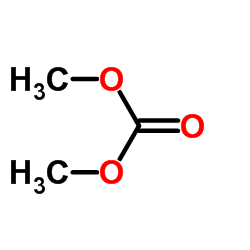
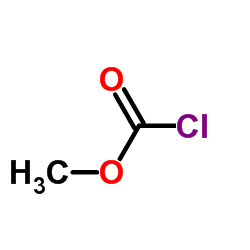
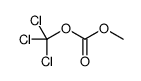
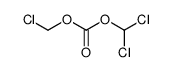
| Precursor 5 | |
|---|---|
| DownStream 10 | |
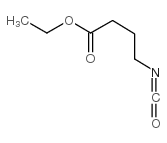 CAS#:106508-62-7
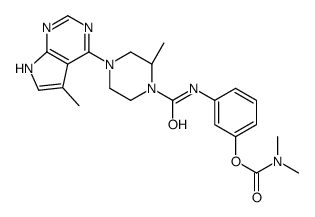 CAS#:1116570-97-8
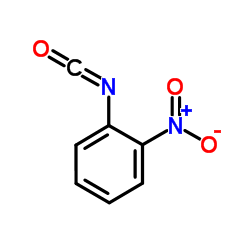 CAS#:3320-86-3
 CAS#:327-78-6
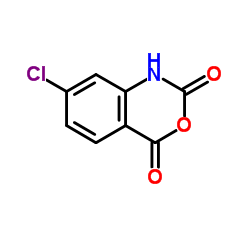 CAS#:40928-13-0
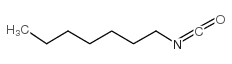 CAS#:4747-81-3
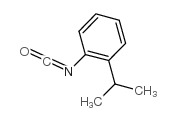 CAS#:56309-56-9
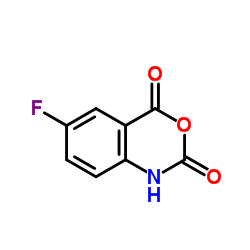 CAS#:321-69-7
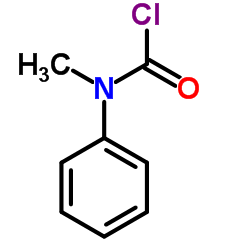 CAS#:4285-42-1
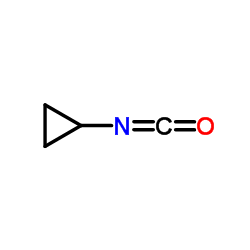 CAS#:4747-72-2
| HS Code | 2920909090 |
|---|---|
| Summary | 2920909090 esters of other inorganic acids of non-metals (excluding esters of hydrogen halides) and their salts; their halogenated, sulphonated, nitrated or nitrosated derivatives。Supervision conditions:None。VAT:17.0%。Tax rebate rate:9.0%。MFN tariff:6.5%。General tariff:30.0% |
|
Multi-modal transfection agent based on monodisperse magnetic nanoparticles for stem cell gene delivery and tracking.
Biomaterials 35(25) , 7239-47, (2014) Directing the controlled differentiation and tracking of stem cells is essential to achieve successful stem cell therapy. In this work, we describe a multi-modal (MR/optical) transfection agent (MTA) ... |
|
|
Poly(anhydride-ester) and poly(N-vinyl-2-pyrrolidone) blends: salicylic acid-releasing blends with hydrogel-like properties that reduce inflammation.
Macromol. Biosci. 15(3) , 342-50, (2015) Polymers such as poly(N-vinyl-2-pyrrolidone) (PVP) have been used to prepare hydrogels for wound dressing applications but are not inherently bioactive. For enhanced healing, PVP was blended with sali... |
|
|
Ultrasound-Triggered Phase-Transition Cationic Nanodroplets for Enhanced Gene Delivery.
ACS Appl. Mater. Interfaces 7 , 13524-37, (2015) Ultrasound as an external stimulus for enhanced gene transfection represents a safe, noninvasive, cost-effective delivery strategy for gene therapy. Herein, we have developed an ultrasound-triggered p... |
| MFCD00062848 |
| tri-Phosgene |
| Bis(trichloromethyl) carbonate |
| ditrichloromethyl carbonate |
| Triphosgene |
| Bis(trichloromethyl)carbonate |
| trichloromethyl carbonate |
| bistrichloromethyl carbonate |
| EINECS 250-986-3 |
The content on this webpage is sourced from various professional data sources. If you have any questions or concerns regarding the content, please feel free to contact service1@chemsrc.com.
- Shanghai Nianxing Industrial Co., Ltd
- China
- Product Name: Triphosgene
- Price: Check
- Purity: 99.0%
- Delivery: 10 Day
- Contact: Yang
- Email: sales@echemcloud.com
- GL Biochem (Shanghai) Ltd.
- China
- Product Name: Triphosgene
- Price: $Inquiry/1kg
- Purity: 98.0%
- Delivery: Inquiry
- Contact: Jackie Yang
- Email: ymbetter@glbiochem.com
- Shanghai Jizhi Biochemical Technology Co., Ltd
- China
- Product Name: Triphosgene
- Price: ¥508.0/500g ¥168.0/100g
- Purity: 99.0%
- Delivery: Inquiry
- Contact: Liu jia


- Email: 2130147988@qq.com
- Dayang Chem (Hangzhou) Co., Ltd.
- China
- Product Name: Triphosgene
- Price: $Inquiry/100g $Inquiry/1kg $Inquiry/100kg $Inquiry/1000kg
- Purity: 98.0%
- Delivery: Inquiry
- Contact: Ms Wang
- Email: enquiry@dycnchem.com
- Henan Tianfu Chemical Co., Ltd.
- China
- Product Name: bis(trichloromethyl) carbonate
- Price: $Inquiry/1kg $Inquiry/25kg $Inquiry/1000kg $Inquiry/10ton
- Purity: 99.0%
- Delivery: Inquiry
- Contact: Anson
- Email: info@tianfuchem.com
Get all suppliers and price by the below link: