Rutoside Trihydrate
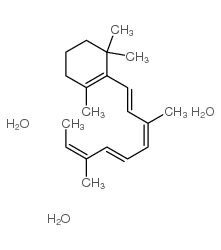
Rutoside Trihydrate structure
|
Common Name | Rutoside Trihydrate | ||
|---|---|---|---|---|
| CAS Number | 250249-75-3 | Molecular Weight | 324.49800 | |
| Density | 1.82g/cm3 | Boiling Point | 983.1ºC at 760mmHg | |
| Molecular Formula | C20H36O3 | Melting Point | 195ºC | |
| MSDS | Chinese USA | Flash Point | 325.4ºC | |
| Symbol |

GHS07 |
Signal Word | Warning | |
Use of Rutoside TrihydrateRutin (Rutoside) trihydrate is a multifunctional natural flavonoid glycoside. Rutin trihydrate has been demonstrating excellent antioxidant, anti-inflammatory, anti-diabetic, and anti-carcinogenic properties. Cardioprotective and neuroprotective activities [1][2][3]. |
| Name | Rutin trihydrate |
|---|---|
| Synonym | More Synonyms |
| Description | Rutin (Rutoside) trihydrate is a multifunctional natural flavonoid glycoside. Rutin trihydrate has been demonstrating excellent antioxidant, anti-inflammatory, anti-diabetic, and anti-carcinogenic properties. Cardioprotective and neuroprotective activities [1][2][3]. |
|---|---|
| Related Catalog | |
| In Vitro | Rutin (Rutoside) trihydrate (0.5- 160 μM/ml; PC12 cells) decreases the acrylamide (ACR)-induced (5.46 mM) cytotoxicity significantly. ACR (5.46 mM) decreases cell viability in PC12 cells and pretreatment with rutin (0.5, 1, 1.5, 2.5, 5, 10, 20 and 40 μM/ml) increases the cell viability[2]. Due to the ability of Rutin and/or its metabolites to cross the blood brain barrier, it has also been shown to modify the cognitive and various behavioral symptoms of neurodegenerative diseases[3]. |
| In Vivo | Pretreatment of Rutin (100 and 200 mg/kg/day; i.p.) for long-term caused behavioural and neurochemical changes in aged WAG male rats[2]. |
| References |
| Density | 1.82g/cm3 |
|---|---|
| Boiling Point | 983.1ºC at 760mmHg |
| Melting Point | 195ºC |
| Molecular Formula | C20H36O3 |
| Molecular Weight | 324.49800 |
| Flash Point | 325.4ºC |
| Exact Mass | 324.26600 |
| PSA | 27.69000 |
| LogP | 6.34500 |
| Vapour Pressure | 0mmHg at 25°C |
| Index of Refraction | 1.764 |
| InChIKey | NLLBWFFSGHKUSY-JPRRWYCFSA-N |
| SMILES | CC1OC(OCC2OC(Oc3c(-c4ccc(O)c(O)c4)oc4cc(O)cc(O)c4c3=O)C(O)C(O)C2O)C(O)C(O)C1O.O.O.O |
| Symbol |
GHS07 |
|---|---|
| Signal Word | Warning |
| Hazard Statements | H302 |
| Precautionary Statements | P301 + P312 + P330 |
| Personal Protective Equipment | dust mask type N95 (US);Eyeshields;Gloves |
| Hazard Codes | Xn: Harmful; |
| Risk Phrases | 22 |
| Safety Phrases | S22-S24/25 |
| RIDADR | NONH for all modes of transport |
|
Rapid evaluation and comparison of natural products and antioxidant activity in calendula, feverfew, and German chamomile extracts.
J. Chromatogr. A. 1385 , 103-10, (2015) The present study describes a simple high performance thin layer chromatographic (HPTLC) method for the simultaneous quantification of apigenin, chamazulene, bisabolol and the use of DPPH free radical... |
|
|
Hypolipidemic and hypoglycemic effects of Centella asiatica (L.) extract in vitro and in vivo.
Indian J. Exp. Biol. 52(10) , 965-71, (2014) In vitro study revealed that pancreatic lipase inhibitory activity of C. asiatica extract was significantly higher than rutin but lower than orlistat, an anti-obesity drug. alpha-Amylase inhibitory ac... |
|
|
Ruminal degradation of quercetin and its influence on fermentation in ruminants.
J. Dairy Sci. 98 , 5688-98, (2015) The aim of the present study was to investigate the ruminal degradation of the flavonol quercetin and to determine its potential antimicrobial effects on ruminal fermentation in cows. Ruminal degradat... |
| Rutoside trihydrate |
| MFCD00149490 |
| EINECS 205-814-1 |
| Quercetin-3-rutinoside trihydrate,Vitamin P trihydrate |
The content on this webpage is sourced from various professional data sources. If you have any questions or concerns regarding the content, please feel free to contact service1@chemsrc.com.
- Shanghai Nianxing Industrial Co., Ltd
- China
- Product Name: Rutoside Trihydrate
- Price: Check
- Purity: 98.0%
- Delivery: 10 Day
- Contact: Yang
- Email: sales@echemcloud.com
- Shanghai Jizhi Biochemical Technology Co., Ltd
- China
- Product Name: Rutoside Trihydrate
- Price: ¥268.0/25g ¥2278.0/500g ¥848.0/100g
- Purity: 97.0%
- Delivery: Inquiry
- Contact: Liu jia


- Email: 2130147988@qq.com
- DC Chemicals Limited
- China
- Product Name: Rutin trihydrate
- Price: ¥Inquiry/100mg ¥Inquiry/250mg ¥Inquiry/1g
- Purity: 98.0%
- Delivery: 1 Day
- Contact: Tony Cao
- Email: sales@dcchemicals.com
Get all suppliers and price by the below link: