H-Glu(Gly-OH)-OH
Modify Date: 2025-08-27 17:13:50
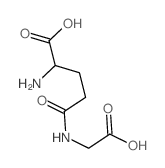
H-Glu(Gly-OH)-OH structure
|
Common Name | H-Glu(Gly-OH)-OH | ||
|---|---|---|---|---|
| CAS Number | 1948-29-4 | Molecular Weight | 204.18100 | |
| Density | 1.424g/cm3 | Boiling Point | 586.6ºC at 760mmHg | |
| Molecular Formula | C7H12N2O5 | Melting Point | N/A | |
| MSDS | N/A | Flash Point | 308.6ºC | |
Use of H-Glu(Gly-OH)-OHγ-Glu-Gly, a γ-glutamyl dipeptide, is a human lipid metabolite.γ-Glu-Gly has a similar structure to GABA (γ-aminobutyric acid) and can act as an antagonist of excitatory amino acids[1][2][3]. |
| Name | 2-amino-5-(carboxymethylamino)-5-oxopentanoic acid |
|---|---|
| Synonym | More Synonyms |
| Description | γ-Glu-Gly, a γ-glutamyl dipeptide, is a human lipid metabolite.γ-Glu-Gly has a similar structure to GABA (γ-aminobutyric acid) and can act as an antagonist of excitatory amino acids[1][2][3]. |
|---|---|
| Related Catalog | |
| Target |
Human Endogenous Metabolite |
| In Vitro | γ-Glu-Gly is a key component that influence the flavor of mature cheese. In S. cerevisiae, γ-Glutamyltransferase (GGT) produces two γ-glutamyl peptides, γ-Glu-Glu and γ-Glu-Gly[1]. |
| References |
| Density | 1.424g/cm3 |
|---|---|
| Boiling Point | 586.6ºC at 760mmHg |
| Molecular Formula | C7H12N2O5 |
| Molecular Weight | 204.18100 |
| Flash Point | 308.6ºC |
| Exact Mass | 204.07500 |
| PSA | 129.72000 |
| Vapour Pressure | 2.78E-15mmHg at 25°C |
| Index of Refraction | 1.536 |
| HS Code | 2924199090 |
|---|
| Precursor 0 | |
|---|---|
| DownStream 2 | |
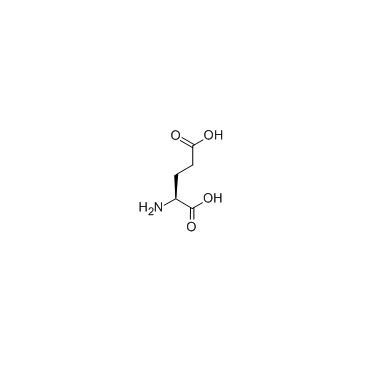 CAS#:56-86-0
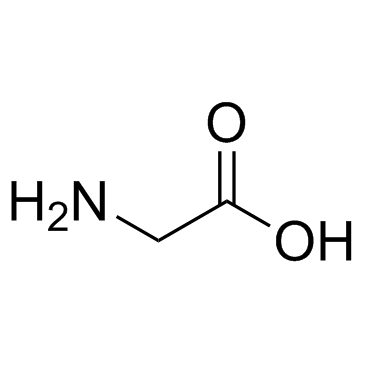 CAS#:56-40-6
| HS Code | 2924199090 |
|---|---|
| Summary | 2924199090. other acyclic amides (including acyclic carbamates) and their derivatives; salts thereof. VAT:17.0%. Tax rebate rate:13.0%. . MFN tariff:6.5%. General tariff:30.0% |
| H-g-Glu-Gly-OH |
| H-GLU(GLY)-OH |
| L-Y-GLUTAMYL-GLYCINE |
| H-GLU(GLY-OH)-OH |
| H-Glu-Gly-OH |
| H-γ-Glu-Gly-OH |
The content on this webpage is sourced from various professional data sources. If you have any questions or concerns regarding the content, please feel free to contact service1@chemsrc.com.
- Shanghai Nianxing Industrial Co., Ltd
- China
- Product Name: γ-Glu-Gly
- Price: Check
- Purity: 98.0%
- Delivery: 10 Day
- Contact: Yang
- Email: sales@echemcloud.com
- GL Biochem (Shanghai) Ltd.
- China
- Product Name: H-Glu-Gly-OH
- Price: $Inquiry/1g
- Purity: 98.0%
- Delivery: Inquiry
- Contact: Jackie Yang
- Email: ymbetter@glbiochem.com
- Nanjing Peptide Biotech Ltd
- China
- Product Name: H-Glu-Gly-OH
- Price: ¥Inquiry/10g ¥Inquiry/100g ¥Inquiry/1kg ¥Inquiry/10kg
- Purity: 98.0%
- Delivery: 7 Day
- Contact: jom


- Email: chenglong.fan@njpeptide.com
- Dayang Chem (Hangzhou) Co., Ltd.
- China
- Product Name: Glycine, L-g-glutamyl-
- Price: $Inquiry/100g $Inquiry/1kg $Inquiry/100kg $Inquiry/1000kg
- Purity: 98.0%
- Delivery: Inquiry
- Contact: Ms Wang
- Email: enquiry@dycnchem.com
Get all suppliers and price by the below link: