2-chloroacetonitrile

2-chloroacetonitrile structure
|
Common Name | 2-chloroacetonitrile | ||
|---|---|---|---|---|
| CAS Number | 107-14-2 | Molecular Weight | 75.497 | |
| Density | 1.1±0.1 g/cm3 | Boiling Point | 126.5±0.0 °C at 760 mmHg | |
| Molecular Formula | C2H2ClN | Melting Point | 38℃ | |
| MSDS | Chinese USA | Flash Point | 47.8±0.0 °C | |
| Symbol |


GHS02, GHS06, GHS09 |
Signal Word | Danger | |
| Name | Chloroacetonitrile |
|---|---|
| Synonym | More Synonyms |
| Density | 1.1±0.1 g/cm3 |
|---|---|
| Boiling Point | 126.5±0.0 °C at 760 mmHg |
| Melting Point | 38℃ |
| Molecular Formula | C2H2ClN |
| Molecular Weight | 75.497 |
| Flash Point | 47.8±0.0 °C |
| Exact Mass | 74.987579 |
| PSA | 23.79000 |
| LogP | 0.14 |
| Vapour density | 3 (vs air) |
| Vapour Pressure | 11.6±0.2 mmHg at 25°C |
| Index of Refraction | 1.400 |
| Stability | Stable, but reacts with water. Combustible. Incompatible with water, moisture, strong oxidizing agents, acids. |
| Water Solubility | INSOLUBLE |
CHEMICAL IDENTIFICATION
HEALTH HAZARD DATAACUTE TOXICITY DATA
MUTATION DATA
|
| Symbol |
GHS02, GHS06, GHS09 |
|---|---|
| Signal Word | Danger |
| Hazard Statements | H226-H301 + H311 + H331-H411 |
| Precautionary Statements | Missing Phrase - N15.00950417-P210-P280-P302 + P352 + P312-P304 + P340 + P312-P370 + P378 |
| Personal Protective Equipment | Eyeshields;Faceshields;full-face respirator (US);Gloves;multi-purpose combination respirator cartridge (US);type ABEK (EN14387) respirator filter |
| Hazard Codes | T:Toxic |
| Risk Phrases | R23/24/25;R51/53 |
| Safety Phrases | S45-S61 |
| RIDADR | UN 2668 6.1/PG 2 |
| WGK Germany | 3 |
| RTECS | AL8225000 |
| Packaging Group | II |
| Hazard Class | 6.1 |
| HS Code | 2926909090 |
| Precursor 9 | |
|---|---|
| DownStream 10 | |
 CAS#:79-07-2
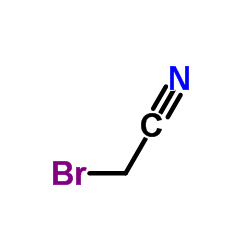 CAS#:590-17-0
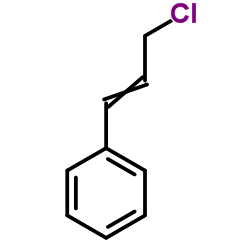 CAS#:2687-12-9
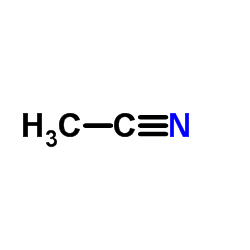 CAS#:75-05-8
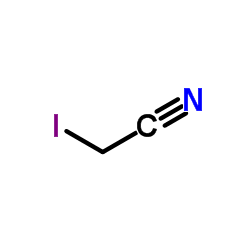 CAS#:624-75-9
 CAS#:107-16-4
 CAS#:7572-29-4
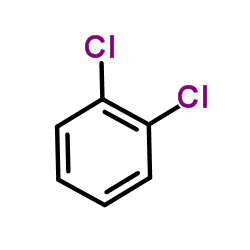 CAS#:95-50-1
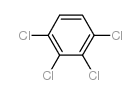 CAS#:634-66-2
![3-amino-6-phenyl-4-(trifluoromethyl)thieno[2,3-b]pyridine-2-carbonitrile structure](https://image.chemsrc.com/caspic/420/104960-55-6.png) CAS#:104960-55-6
CAS#:104960-55-6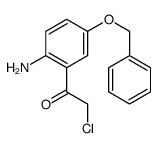 CAS#:109532-25-4
![2-[(2-methyl-5-nitro-1H-imidazol-4-yl)sulfanyl]acetonitrile structure](https://image.chemsrc.com/caspic/206/110579-00-5.png) CAS#:110579-00-5
CAS#:110579-00-5 CAS#:109532-22-1
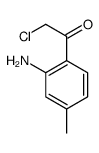 CAS#:109532-23-2
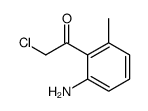 CAS#:109532-24-3
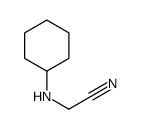 CAS#:1074-58-4
 CAS#:105648-40-6
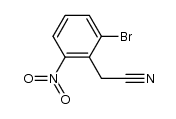 CAS#:105018-28-8
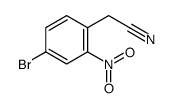 CAS#:105003-96-1
| HS Code | 2926909090 |
|---|---|
| Summary | HS:2926909090 other nitrile-function compounds VAT:17.0% Tax rebate rate:9.0% Supervision conditions:none MFN tariff:6.5% General tariff:30.0% |
|
Genotoxic activity of five haloacetonitriles: comparative investigations in the single cell gel electrophoresis (comet) assay and the ames-fluctuation test.
Environ. Mol. Mutagen. 36(1) , 52-8, (2000) Halogenated acetonitriles (HANs) are known to be water disinfectant by-products. Their mutagenicity and carcinogenicity have been shown in different test systems in vivo and in vitro. They also have c... |
|
|
Percutaneous absorption of haloacetonitriles and chloral hydrate and simulated human exposures.
J. Appl. Toxicol. 32(6) , 387-94, (2012) Disinfection-by-products (DBPs) have long been a human health concern and many are known carcinogens and teratogens. Skin is exposed to DBPs in water through bathing and swimming; however, dermal upta... |
|
|
Chloroacetonitrile induces intrauterine growth restriction and musculoskeletal toxicity in fetal mouse.
Toxicol. Ind. Health 24(8) , 511-8, (2008) Chloroacetonitrile (CAN) is a by-product of chlorination of drinking water. Epidemiological studies indicate that it might present a hazard to human health. The present study was designed to investiga... |
| 2-chloroacetonitrile |
| EINECS 203-467-0 |
| MFCD00001885 |
The content on this webpage is sourced from various professional data sources. If you have any questions or concerns regarding the content, please feel free to contact service1@chemsrc.com.
- Shanghai Nianxing Industrial Co., Ltd
- China
- Product Name: 2-chloroacetonitrile
- Price: Check
- Purity: 99.0%
- Delivery: 10 Day
- Contact: Yang
- Email: sales@echemcloud.com
- Shanghai Jizhi Biochemical Technology Co., Ltd
- China
- Product Name: 2-chloroacetonitrile
- Price: ¥88.0/100g ¥288.0/500g
- Purity: 98.0%
- Delivery: 3 Day
- Contact: Liu jia


- Email: 2130147988@qq.com
- Dayang Chem (Hangzhou) Co., Ltd.
- China
- Product Name: Chloroacetonitrile
- Price: $Inquiry/100g $Inquiry/1kg $Inquiry/100kg $Inquiry/1000kg
- Purity: 98.0%
- Delivery: Inquiry
- Contact: Ms Wang
- Email: enquiry@dycnchem.com
- Henan Tianfu Chemical Co., Ltd.
- China
- Product Name: Chloroacetonitrile
- Price: $Inquiry/1kg $Inquiry/25kg $Inquiry/1000kg $Inquiry/10ton
- Purity: 99.0%
- Delivery: Inquiry
- Contact: Anson
- Email: info@tianfuchem.com
Get all suppliers and price by the below link: