691852-58-1

691852-58-1 structure
- Name: HCV-796 (Nesbuvir)
- Chemical Name: 5-cyclopropyl-2-(4-fluorophenyl)-6-[2-hydroxyethyl(methylsulfonyl)amino]-N-methyl-1-benzofuran-3-carboxamide
- CAS Number: 691852-58-1
- Molecular Formula: C22H23FN2O5S
- Molecular Weight: 446.49200
- Catalog: Signaling Pathways Anti-infection HCV
- Create Date: 2016-05-01 04:21:06
- Modify Date: 2026-07-05 09:46:41
-
Nesbuvir is a nonnucleoside inhibitor of the hepatitis C virus (HCV) nonstructural protein 5B (NS5B) polymerase.
| Name | 5-cyclopropyl-2-(4-fluorophenyl)-6-[2-hydroxyethyl(methylsulfonyl)amino]-N-methyl-1-benzofuran-3-carboxamide |
|---|---|
| Synonyms |
HCV 796
5-cyclopropyl-2-(4-fluorophenyl)-6-[N-(2-hydroxyethyl)methanesulfonylamino]benzofuran-3-carboxylic acid methylamide 5-cyclopropyl-2-(4-fluorophenyl)-6-[(2-hydroxyethyl)methanesulfonylamino]benzofuran-3-carboxylic acid methylamide 5-Cyclopropyl-2-(4-Fluorophenyl)-6-[(2-Hydroxyethyl)(Methylsulfonyl)amino]-N-Methyl-1-Benzofuran-3-Carboxamide Nesbuvir (USAN) Nesbuvir |
| Description | Nesbuvir is a nonnucleoside inhibitor of the hepatitis C virus (HCV) nonstructural protein 5B (NS5B) polymerase. |
|---|---|
| Related Catalog | |
| Target |
EC50: 9 nM (NS3V170A), 13 nM (NS3V170A), 15 nM (NS3K583T), 13 nM (NS5BI424V)[1] |
| In Vitro | Replicon cells are treated with 1 mg/mL G418 and combinations of the two compounds. Nesbuvir (HCV-796) is added to 40 or 80 nM (approximately 10 and 20 times the EC50 in a 3-day replicon inhibition assay, respectively) and Boceprevir is added to 400 or 800 nM (approximately 2 and 4 times the EC50, respectively). The EC50s for Nesbuvir and Boceprevir for the parental replicon in the transient expression assay are comparable to those obtained in the 3-day inhibition assay with the stable replicon cells; the EC50 for Nesbuvir in the transient expression assay is 14 nM, whereas it is 5 nM for the stable replicon; and the EC50 for Boceprevir in the transient expression assay is 608 nM, whereas it is 201 nM for the stable replicon[1]. |
| In Vivo | Among a huge variety of yet characterized nucleoside and non-nucleoside inhibitors (NNI), the benzofurane derivative NNI Nesbuvir (HCV-796) is demonstrated to yield significant antiviral effects in mice with chimeric human livers and in patients infected with HCV. HCV-796 binds to a hydrophobic binding pocket at the “palm” domain of NS5B; however, its mode of inhibition remains to be defined[2]. |
| Cell Assay | Huh7-BB7 cells are seeded at a density of 20,000 cells per 100 mm dish in DMEM supplemented with 2% FBS, 1 mg/mL G418, and various concentrations of Nesbuvir and/or Boceprevir with DMSO at a final concentration of 0.5% (vol/vol). The medium is removed and is replaced with fresh medium with the appropriate compound concentrations every 3 or 4 days. After 7 days, the cells are split 1 to 10, placed into fresh 100 mm dishes, and incubated with medium with the appropriate compound concentrations. After 20 days, the medium is removed and the cells are fixed with 7% (wt/vol) formaldehyde and stained with 1% (wt/vol) crystal violet in 50% (vol/vol) ethanol[1]. |
| References |
| Molecular Formula | C22H23FN2O5S |
|---|---|
| Molecular Weight | 446.49200 |
| Exact Mass | 446.13100 |
| PSA | 108.23000 |
| LogP | 4.70590 |
| Storage condition | 2-8℃ |
|
~%
691852-58-1 |
| Literature: VIROPHARMA INCORPORATED; WYETH Patent: WO2008/24843 A2, 2008 ; Location in patent: Page/Page column 19 ; |
|
~%
691852-58-1 |
| Literature: Zhu, Tianmin; Fawzi, Mahdi B.; Flint, Michael; Kong, Fangming; Szeliga, Jan; Tsao, Russ; Howe, Anita Y.M.; Pan, Weitao Bioorganic and Medicinal Chemistry Letters, 2010 , vol. 20, # 17 p. 5212 - 5216 |
|
~%
691852-58-1 |
| Literature: Zhu, Tianmin; Fawzi, Mahdi B.; Flint, Michael; Kong, Fangming; Szeliga, Jan; Tsao, Russ; Howe, Anita Y.M.; Pan, Weitao Bioorganic and Medicinal Chemistry Letters, 2010 , vol. 20, # 17 p. 5212 - 5216 |


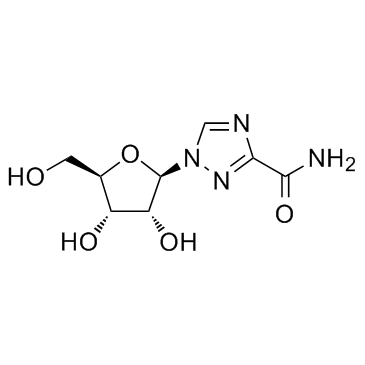
| Precursor 1 | |
|---|---|
| DownStream 0 | |