Imidafenacin

Imidafenacin structure
|
Common Name | Imidafenacin | ||
|---|---|---|---|---|
| CAS Number | 170105-16-5 | Molecular Weight | 319.400 | |
| Density | 1.1±0.1 g/cm3 | Boiling Point | 579.7±50.0 °C at 760 mmHg | |
| Molecular Formula | C20H21N3O | Melting Point | N/A | |
| MSDS | USA | Flash Point | 304.4±30.1 °C | |
Use of ImidafenacinImidafenacin(KRP-197; ONO-8025) is a potent and selective inhibitor of M3 receptors with Kb of 0.317 nM; less potent for M2 receptors(IC50=4.13 nM).IC50 value: 0.3 nM(M3) [1]in vitro: KRP-197 showed equipotent anti-M2 and anti-M3 activity and decreased subtype-selectivity [1]. in vivo: Intraduodenal administration of KRP-197 (0.04±0.30 mg/kg) inhibited bladder contraction dose-dependently, and the ED30 value was 0.11 mg/kg. The inhibitory action of KRP-197 on the bladder contraction was 19 times as potent as that of oxybutynin. KRP-197 showed preventive action againstthe decrease in bladder capacity induced by carbachol(ED50 0.074 mg/kg, intragastric administration), andthe potency of the inhibitory action was 15-fold greaterthan that of oxybutynin [1]. The learning-inhibitory doses of intravenous oxybutynin hydrochloride and tolterodine tartrate were 0.3 and 3 mg/kg in sham-operated rats and 0.1 and 1 mg/kg in nbM-lesioned rats, respectively. Thus, the learning impairments by those antimuscarinics were more sensitive in nbM-lesioned rats than in sham-operated rats. On the other hand, intravenous administration of imidafenacin had no influence on learning in either case of the rats. In normal rats, however, intracerebroventricular administration of imidafenacin impaired learning to the same degree as that of oxybutynin hydrochloride [2]. |
This table lists Chinese names, IUPAC names and various aliases of this chemical substance.
| Name | 4-(2-methylimidazol-1-yl)-2,2-diphenylbutanamide |
|---|---|
| Synonym | More Synonyms |
This table contains bioactivity, target information and biological‑assay experimental data of this compound.
| Description | Imidafenacin(KRP-197; ONO-8025) is a potent and selective inhibitor of M3 receptors with Kb of 0.317 nM; less potent for M2 receptors(IC50=4.13 nM).IC50 value: 0.3 nM(M3) [1]in vitro: KRP-197 showed equipotent anti-M2 and anti-M3 activity and decreased subtype-selectivity [1]. in vivo: Intraduodenal administration of KRP-197 (0.04±0.30 mg/kg) inhibited bladder contraction dose-dependently, and the ED30 value was 0.11 mg/kg. The inhibitory action of KRP-197 on the bladder contraction was 19 times as potent as that of oxybutynin. KRP-197 showed preventive action againstthe decrease in bladder capacity induced by carbachol(ED50 0.074 mg/kg, intragastric administration), andthe potency of the inhibitory action was 15-fold greaterthan that of oxybutynin [1]. The learning-inhibitory doses of intravenous oxybutynin hydrochloride and tolterodine tartrate were 0.3 and 3 mg/kg in sham-operated rats and 0.1 and 1 mg/kg in nbM-lesioned rats, respectively. Thus, the learning impairments by those antimuscarinics were more sensitive in nbM-lesioned rats than in sham-operated rats. On the other hand, intravenous administration of imidafenacin had no influence on learning in either case of the rats. In normal rats, however, intracerebroventricular administration of imidafenacin impaired learning to the same degree as that of oxybutynin hydrochloride [2]. |
|---|---|
| Related Catalog | |
| References |
This table shows physicochemical parameters including melting point, boiling point, density, solubility and optical rotation. Missing data is marked as N/A.
| Density | 1.1±0.1 g/cm3 |
|---|---|
| Boiling Point | 579.7±50.0 °C at 760 mmHg |
| Molecular Formula | C20H21N3O |
| Molecular Weight | 319.400 |
| Flash Point | 304.4±30.1 °C |
| Exact Mass | 319.168457 |
| PSA | 61.90000 |
| LogP | 2.42 |
| Vapour Pressure | 0.0±1.6 mmHg at 25°C |
| Index of Refraction | 1.603 |
| InChIKey | SQKXYSGRELMAAU-UHFFFAOYSA-N |
| SMILES | Cc1nccn1CCC(C(N)=O)(c1ccccc1)c1ccccc1 |
| Storage condition | 2-8℃ |
This table presents publicly reported synthetic routes, reaction conditions, reactants and product information of the compound.
|
~32%
Imidafenacin CAS#:170105-16-5 |
| Literature: Kyorin Pharmaceutical Co., Ltd. Patent: US5932607 A1, 1999 ; |
|
~86%
Imidafenacin CAS#:170105-16-5 |
| Literature: KYORIN PHARMACEUTICAL CO., LTD. Patent: EP1845091 A1, 2007 ; Location in patent: Page/Page column 4 ; EP 1845091 A1 |
|
~89%
Imidafenacin CAS#:170105-16-5 |
| Literature: KYORIN PHARMACEUTICAL CO., LTD. Patent: EP1845091 A1, 2007 ; Location in patent: Page/Page column 5 ; EP 1845091 A1 |
|
~77%
Imidafenacin CAS#:170105-16-5 |
| Literature: KYORIN PHARMACEUTICAL CO., LTD. Patent: EP1845091 A1, 2007 ; Location in patent: Page/Page column 6 ; EP 1845091 A1 |
|
~%
Imidafenacin CAS#:170105-16-5 |
| Literature: Bioorganic and Medicinal Chemistry Letters, , vol. 9, # 20 p. 3003 - 3008 |
|
~%
Imidafenacin CAS#:170105-16-5 |
| Literature: Bioorganic and Medicinal Chemistry Letters, , vol. 9, # 20 p. 3003 - 3008 |
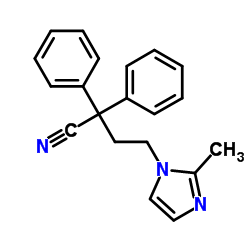
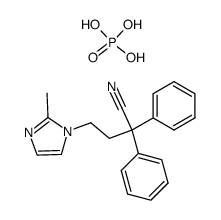


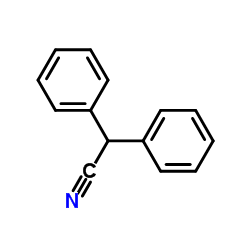
This table contains target information, in‑vitro & in‑vivo assay data for this compound.
|
Name: Antimuscarinic activity against muscarinic acetylcholine M3-receptor in guinea pig il...
Source: ChEMBL
Target: Muscarinic acetylcholine receptor
External Id: CHEMBL874696
|
|
Name: Antimuscarinic activity was evaluated against muscarinic M3 receptor in Guinea-Pig il...
Source: ChEMBL
Target: Muscarinic acetylcholine receptor
External Id: CHEMBL745483
|
|
Name: Selectivity ratio between Kb values of M2-receptor (atria) and M3-receptor (ileum)
Source: ChEMBL
Target: Muscarinic acetylcholine receptors; M2 & M3
External Id: CHEMBL849679
|
|
Name: Antimuscarinic activity against M3 receptor of guinea pig ileum
Source: ChEMBL
Target: Muscarinic acetylcholine receptor
External Id: CHEMBL745484
|
|
Name: ASTRAZENECA: Octan-1-ol/water (pH7.4) distribution coefficent measured by a shake fl...
Source: ChEMBL
Target: N/A
External Id: CHEMBL3301363
|
|
Name: Cytotoxicity counterscreen for inhibitors of SARS-CoV-2 cell entry
Source: NCGC
Target: N/A
External Id: TRND-SARS-CoV-2-cytotox-48hr
|
|
Name: SARS-CoV-2 3CL-Pro protease inhibition percentage at 20µM by FRET kind of response f...
Source: ChEMBL
Target: Replicase polyprotein 1ab
External Id: CHEMBL4495582
|
|
Name: Primary qHTS to identify inhibitors of SARS-CoV-2 cell entry
Source: NCGC
External Id: TRND-SARS-CoV-2-PP
|
|
Name: Antiviral activity against SARS-CoV-2 (USA-WA1/2020 strain) measured by imaging in HR...
Source: ChEMBL
Target: Severe acute respiratory syndrome coronavirus 2
External Id: CHEMBL4303810
|
|
Name: Enzymatic assay of human HDAC6 with commercial peptide substrate
Source: ChEMBL
Target: Histone deacetylase 6
External Id: CHEMBL4808149
|
This table collects all English aliases, systematic names and CAS‑related synonyms of the compound.
| Imidafenacin |
| [14C]-Imidafenacin |
| 4-(2-Methyl-imidazol-1-yl)-2,2-diphenyl-butyramide |
| Staybla |
| 4-(2-methyl-1-imidazolyl)-2,2-diphenylbutyramide |
| Imidafenacin (JAN/INN) |
| 4-(2-Methyl-1H-imidazol-1-yl)-2,2-diphenylbutanamide |
| Uritos (TN) |
| Uritos |
| Staybla (TN) |
This section contains frequently‑asked‑questions about this compound, including basic parameters, properties, storage conditions and corresponding answers.
| Q: What is the SMILES notation of 4-(2-methylimidazol-1-yl)-2,2-diphenylbutanamide? |
| A: SMILES notation of 4-(2-methylimidazol-1-yl)-2,2-diphenylbutanamide is Cc1nccn1CCC(C(N)=O)(c1ccccc1)c1ccccc1. |
| Q: What English synonyms does 4-(2-methylimidazol-1-yl)-2,2-diphenylbutanamide have? |
| A: English synonyms of 4-(2-methylimidazol-1-yl)-2,2-diphenylbutanamide: Imidafenacin, [14C]-Imidafenacin, 4-(2-Methyl-imidazol-1-yl)-2,2-diphenyl-butyramide, Staybla, 4-(2-methyl-1-imidazolyl)-2,2-diphenylbutyramide, Imidafenacin (JAN/INN), 4-(2-Methyl-1H-imidazol-1-yl)-2,2-diphenylbutanamide, Uritos (TN), Uritos, Staybla (TN). |
| Q: What is the LogP of 4-(2-methylimidazol-1-yl)-2,2-diphenylbutanamide? |
| A: LogP of 4-(2-methylimidazol-1-yl)-2,2-diphenylbutanamide is 2.42. |
| Q: What is the CAS number of 4-(2-methylimidazol-1-yl)-2,2-diphenylbutanamide? |
| A: CAS number of 4-(2-methylimidazol-1-yl)-2,2-diphenylbutanamide is 170105-16-5. |
| Q: What are the storage conditions for 4-(2-methylimidazol-1-yl)-2,2-diphenylbutanamide? |
| A: Storage conditions for 4-(2-methylimidazol-1-yl)-2,2-diphenylbutanamide: 2-8℃. |
| Q: What is the polar surface area (PSA) of 4-(2-methylimidazol-1-yl)-2,2-diphenylbutanamide? |
| A: Polar surface area (PSA) of 4-(2-methylimidazol-1-yl)-2,2-diphenylbutanamide is 61.90000. |
| Q: What is the English name of 4-(2-methylimidazol-1-yl)-2,2-diphenylbutanamide? |
| A: The English name of 4-(2-methylimidazol-1-yl)-2,2-diphenylbutanamide is 4-(2-methylimidazol-1-yl)-2,2-diphenylbutanamide. |
| Q: What is the boiling point of 4-(2-methylimidazol-1-yl)-2,2-diphenylbutanamide? |
| A: Boiling point of 4-(2-methylimidazol-1-yl)-2,2-diphenylbutanamide is 579.7±50.0 °C at 760 mmHg. |
| Q: What is the molecular weight of 4-(2-methylimidazol-1-yl)-2,2-diphenylbutanamide? |
| A: Molecular weight of 4-(2-methylimidazol-1-yl)-2,2-diphenylbutanamide is 319.400. |
| Q: What is the InChIKey of 4-(2-methylimidazol-1-yl)-2,2-diphenylbutanamide? |
| A: InChIKey of 4-(2-methylimidazol-1-yl)-2,2-diphenylbutanamide is SQKXYSGRELMAAU-UHFFFAOYSA-N. |
This table lists manufacturers and suppliers of this compound, including vendor names and product supply reference information.
| Shanghai Nianxing Industrial Co., Ltd |
| Dayang Chem (Hangzhou) Co., Ltd. |
| Henan Tianfu Chemical Co., Ltd. |