(DL)-3-O-Methyldopa
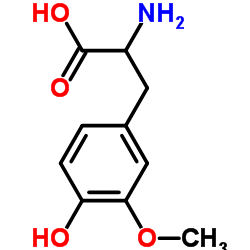
(DL)-3-O-Methyldopa structure
|
Common Name | (DL)-3-O-Methyldopa | ||
|---|---|---|---|---|
| CAS Number | 7636-26-2 | Molecular Weight | 211.214 | |
| Density | 1.3±0.1 g/cm3 | Boiling Point | 407.3±45.0 °C at 760 mmHg | |
| Molecular Formula | C10H13NO4 | Melting Point | N/A | |
| MSDS | N/A | Flash Point | 200.1±28.7 °C | |
Use of (DL)-3-O-Methyldopa3-O-Methyl-DL-DOPA is an endogenous metabolite present in Cerebrospinal_Fluid that can be used for the research of Epilepsy, Purine Nucleoside Phosphorylase Deficiency and Aromatic L Amino Acid Decarboxylase Deficiency[1][2][3][4]. |
This table lists Chinese names, IUPAC names and various aliases of this chemical substance.
| Name | 2-Amino-3-(4-hydroxy-3-methoxyphenyl)propanoic acid |
|---|---|
| Synonym | More Synonyms |
This table contains bioactivity, target information and biological‑assay experimental data of this compound.
| Description | 3-O-Methyl-DL-DOPA is an endogenous metabolite present in Cerebrospinal_Fluid that can be used for the research of Epilepsy, Purine Nucleoside Phosphorylase Deficiency and Aromatic L Amino Acid Decarboxylase Deficiency[1][2][3][4]. |
|---|---|
| Related Catalog | |
| In Vitro | Endogenous metabolites is defined as those that are annotated by Kyoto Encyclopedia of Genes and Genomes as substrates or products of the ~1900 metabolic enzymes encoded in our genome. It is clear in the body of literature that there are documented toxic properties for many of these metabolites[1]. |
| References |
This table shows physicochemical parameters including melting point, boiling point, density, solubility and optical rotation. Missing data is marked as N/A.
| Density | 1.3±0.1 g/cm3 |
|---|---|
| Boiling Point | 407.3±45.0 °C at 760 mmHg |
| Molecular Formula | C10H13NO4 |
| Molecular Weight | 211.214 |
| Flash Point | 200.1±28.7 °C |
| Exact Mass | 211.084457 |
| PSA | 92.78000 |
| LogP | 0.08 |
| Vapour Pressure | 0.0±1.0 mmHg at 25°C |
| Index of Refraction | 1.591 |
| InChIKey | PFDUUKDQEHURQC-UHFFFAOYSA-N |
| SMILES | COc1cc(CC(N)C(=O)O)ccc1O |
This table provides MSDS information including hazard classification, first‑aid, fire‑fighting, spill handling, operation and storage instructions.
|
Material Safety Data Sheet
Section1. Identification of the substance Product Name: 3-Methoxy-DL-tyrosine Synonyms: Section2. Hazards identification Harmful by inhalation, in contact with skin, and if swallowed. Section3. Composition/information on ingredients. Ingredient name:3-Methoxy-DL-tyrosine CAS number:7636-26-2 Section4. First aid measures Skin contact:Immediately wash skin with copious amounts of water for at least 15 minutes while removing contaminated clothing and shoes. If irritation persists, seek medical attention. Eye contact:Immediately wash skin with copious amounts of water for at least 15 minutes. Assure adequate flushing of the eyes by separating the eyelids with fingers. If irritation persists, seek medical attention. Inhalation:Remove to fresh air. In severe cases or if symptoms persist, seek medical attention. Ingestion:Wash out mouth with copious amounts of water for at least 15 minutes. Seek medical attention. Section5. Fire fighting measures In the event of a fire involving this material, alone or in combination with other materials, use dry powder or carbon dioxide extinguishers. Protective clothing and self-contained breathing apparatus should be worn. Section6. Accidental release measures Personal precautions: Wear suitable personal protective equipment which performs satisfactorily and meets local/state/national standards. Respiratory precaution:Wear approved mask/respirator Hand precaution:Wear suitable gloves/gauntlets Skin protection:Wear suitable protective clothing Eye protection:Wear suitable eye protection Methods for cleaning up: Mix with sand or similar inert absorbent material, sweep up and keep in a tightly closed container for disposal. See section 12. Environmental precautions: Do not allow material to enter drains or water courses. Section7. Handling and storage Handling:This product should be handled only by, or under the close supervision of, those properly qualified in the handling and use of potentially hazardous chemicals, who should take into account the fire, health and chemical hazard data given on this sheet. Store in closed vessels, refrigerated. Storage: Section8. Exposure Controls / Personal protection Engineering Controls: Use only in a chemical fume hood. Personal protective equipment: Wear laboratory clothing, chemical-resistant gloves and safety goggles. General hydiene measures: Wash thoroughly after handling. Wash contaminated clothing before reuse. Section9. Physical and chemical properties Appearance:Not specified Boiling point:No data No data Melting point: Flash point:No data Density:No data Molecular formula:C10H13NO4 Molecular weight:211.2 Section10. Stability and reactivity Conditions to avoid: Heat, flames and sparks. Materials to avoid: Oxidizing agents. Possible hazardous combustion products: Carbon monoxide, nitrogen oxides. Section11. Toxicological information No data. Section12. Ecological information No data. Section13. Disposal consideration Arrange disposal as special waste, by licensed disposal company, in consultation with local waste disposal authority, in accordance with national and regional regulations. Section14. Transportation information Non-harzardous for air and ground transportation. Section15. Regulatory information No chemicals in this material are subject to the reporting requirements of SARA Title III, Section 302, or have known CAS numbers that exceed the threshold reporting levels established by SARA Title III, Section 313. SECTION 16 - ADDITIONAL INFORMATION N/A |
This table covers safety warnings, protective measures, incompatible substances and disposal guidelines for this compound.
| Risk Phrases | 22-36/37/38 |
|---|---|
| Safety Phrases | 22-26-36/37/39 |
| RIDADR | NONH for all modes of transport |
This table presents publicly reported synthetic routes, reaction conditions, reactants and product information of the compound.
|
~%
(DL)-3-O-Methyldopa CAS#:7636-26-2 |
| Literature: Journal of the Chemical Society, , p. 1692,1694 |
|
~%
(DL)-3-O-Methyldopa CAS#:7636-26-2 |
| Literature: Journal of Organic Chemistry, , vol. 23, p. 27,32 |
|
~%
(DL)-3-O-Methyldopa CAS#:7636-26-2 |
| Literature: Journal of the Chemical Society, , p. 1795,1799 |
|
~%
(DL)-3-O-Methyldopa CAS#:7636-26-2 |
| Literature: Journal of the Chemical Society, , p. 1692,1694 |
|
~%
(DL)-3-O-Methyldopa CAS#:7636-26-2 |
| Literature: Journal of the Chemical Society, , p. 1795,1799 |
|
~%
(DL)-3-O-Methyldopa CAS#:7636-26-2 |
| Literature: Journal of the American Chemical Society, , vol. 35, p. 1611 |
![N-[[4-(5-ethyl-1,3-benzoxazol-2-yl)phenyl]carbamothioyl]-4-methoxybenzamide structure](https://image.chemsrc.com/caspic/436/6391-59-9.png)
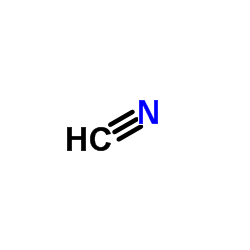

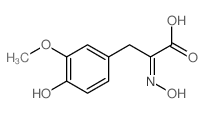
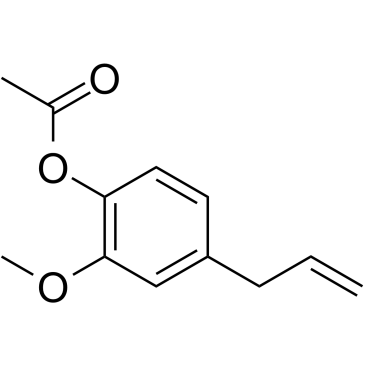

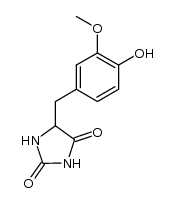
This table lists upstream starting materials and downstream derivative products related to this chemical.
| Precursor 7 | |
|---|---|
| DownStream 0 | |
This table lists relevant public references with title, journal and publication metadata for this compound.
|
Cysteinyl-glycine reduction as marker for levodopa-induced oxidative stress in Parkinson's disease patients.
Mov. Disord 26 , 543-546, (2011) Oxidative stress is influenced by the thiol homeostasis, which determines the redox milieu. One of its components is Cysteinyl-glycine (Cys-Gly) generation, as its metabolic precursor is the free radi... |
|
|
Pharmacokinetic-pharmacodynamic modeling of levodopa in patients with advanced Parkinson disease.
Clin. Neuropharmacol. 33(3) , 135-41, (2010) The aims of the present study were to investigate the pharmacokinetic and pharmacodynamic (pk/pd) relationship of levodopa (l-dopa) in patients with advanced Parkinson disease (PD) and also to evaluat... |
|
|
Levodopa infusion combined with entacapone or tolcapone in Parkinson disease: a pilot trial.
Eur. J. Neurol. 19(6) , 820-6, (2012) Catechol-O-methyltransferase inhibitors may be used to decrease levodopa requirement. The objective was to investigate whether the levodopa/carbidopa intestinal gel infusion dose can be reduced by 20%... |
This table collects all English aliases, systematic names and CAS‑related synonyms of the compound.
| 3-Methoxytyrosine |
| 3-Methoxy-D,L-tyrosine |
| 2-amino-3-(4-hydroxy-3-methoxyphenyl)propanoic acid |
| 3-Methoxy-tyrosine |
| 3-METHOXY-DL-TYROSINE |
| UNII:SO86T1OB2P |
| 3-O-Methyldopa |
This section contains frequently‑asked‑questions about this compound, including basic parameters, properties, storage conditions and corresponding answers.
| Q: What is the CAS number of 2-Amino-3-(4-hydroxy-3-methoxyphenyl)propanoic acid? |
| A: CAS number of 2-Amino-3-(4-hydroxy-3-methoxyphenyl)propanoic acid is 7636-26-2. |
| Q: What are the uses of 2-Amino-3-(4-hydroxy-3-methoxyphenyl)propanoic acid? |
| A: Main uses of 2-Amino-3-(4-hydroxy-3-methoxyphenyl)propanoic acid: 3-O-Methyl-DL-DOPA is an endogenous metabolite present in Cerebrospinal_Fluid that can be used for the research of Epilepsy, Purine Nucleoside Phosphorylase Deficiency and Aromatic L Amino Acid Decarboxylase Deficiency[1][2][3][4]. |
| Q: What is the safety information for 2-Amino-3-(4-hydroxy-3-methoxyphenyl)propanoic acid? |
| A: Safety information for 2-Amino-3-(4-hydroxy-3-methoxyphenyl)propanoic acid: 22-26-36/37/39. |
| Q: What is the LogP of 2-Amino-3-(4-hydroxy-3-methoxyphenyl)propanoic acid? |
| A: LogP of 2-Amino-3-(4-hydroxy-3-methoxyphenyl)propanoic acid is 0.08. |
| Q: What is the SMILES notation of 2-Amino-3-(4-hydroxy-3-methoxyphenyl)propanoic acid? |
| A: SMILES notation of 2-Amino-3-(4-hydroxy-3-methoxyphenyl)propanoic acid is COc1cc(CC(N)C(=O)O)ccc1O. |
| Q: What is the molecular formula of 2-Amino-3-(4-hydroxy-3-methoxyphenyl)propanoic acid? |
| A: Molecular formula of 2-Amino-3-(4-hydroxy-3-methoxyphenyl)propanoic acid is C10H13NO4. |
| Q: What are the upstream materials of 2-Amino-3-(4-hydroxy-3-methoxyphenyl)propanoic acid? |
| A: Related upstream materials(CAS) of 2-Amino-3-(4-hydroxy-3-methoxyphenyl)propanoic acid: 6391-59-9;74-90-8;60470-82-8;5447-36-9;93-28-7;5438-45-9;62682-19-3. |
| Q: What is the InChIKey of 2-Amino-3-(4-hydroxy-3-methoxyphenyl)propanoic acid? |
| A: InChIKey of 2-Amino-3-(4-hydroxy-3-methoxyphenyl)propanoic acid is PFDUUKDQEHURQC-UHFFFAOYSA-N. |
| Q: What English synonyms does 2-Amino-3-(4-hydroxy-3-methoxyphenyl)propanoic acid have? |
| A: English synonyms of 2-Amino-3-(4-hydroxy-3-methoxyphenyl)propanoic acid: 3-Methoxytyrosine, 3-Methoxy-D,L-tyrosine, 2-amino-3-(4-hydroxy-3-methoxyphenyl)propanoic acid, 3-Methoxy-tyrosine, 3-METHOXY-DL-TYROSINE, UNII:SO86T1OB2P, 3-O-Methyldopa. |
| Q: What is the boiling point of 2-Amino-3-(4-hydroxy-3-methoxyphenyl)propanoic acid? |
| A: Boiling point of 2-Amino-3-(4-hydroxy-3-methoxyphenyl)propanoic acid is 407.3±45.0 °C at 760 mmHg. |
This table lists manufacturers and suppliers of this compound, including vendor names and product supply reference information.
| Shanghai Nianxing Industrial Co., Ltd |
| Dayang Chem (Hangzhou) Co., Ltd. |