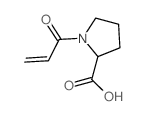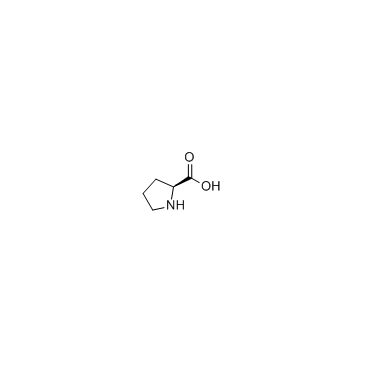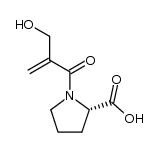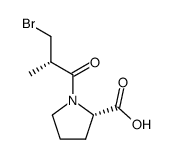
Captopril

Modify Date: 2026-08-02 13:34:30

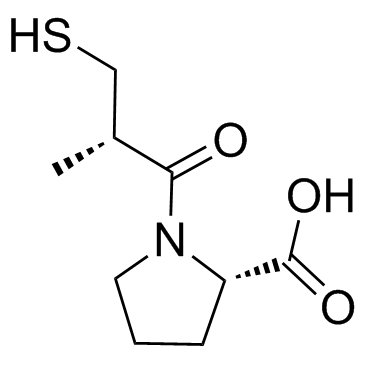
Captopril Structure
Captopril structure
Common Name Captopril
CAS Number 62571-86-2 Molecular Weight 217.285
Density 1.3±0.1 g/cm3 Boiling Point 427.0±40.0 °C at 760 mmHg
Molecular Formula C9H15NO3S Melting Point 104-108 °C(lit.)
MSDS Chinese USA Flash Point 212.1±27.3 °C
Symbol GHS07 GHS08
GHS07, GHS08
Signal Word Warning

 Use of Captopril


Captopril is a potent, competitive inhibitor of angiotensin-converting enzyme (ACE).Target: ACECaptopril has been shown to have similar morbidity and mortality benefits to those of diuretics and beta-blockers in hypertensive patients. Captopril has been shown to delay the progression of diabetic nephropathy, and enalapril and lisinopril prevent the development of nephropathy in normoalbuminuric patients with diabetes [1]. an equimolar ratio of the cis and trans states of captopril exists in solution and that the enzyme selects only the trans state of the inhibitor that presents architectural and stereoelectronic complementarity with its substrate binding groove [2].

 Names

This table lists Chinese names, IUPAC names and various aliases of this chemical substance.

Name captopril
Synonym More Synonyms

 Captopril Biological Activity

This table contains bioactivity, target information and biological‑assay experimental data of this compound.

Description Captopril is a potent, competitive inhibitor of angiotensin-converting enzyme (ACE).Target: ACECaptopril has been shown to have similar morbidity and mortality benefits to those of diuretics and beta-blockers in hypertensive patients. Captopril has been shown to delay the progression of diabetic nephropathy, and enalapril and lisinopril prevent the development of nephropathy in normoalbuminuric patients with diabetes [1]. an equimolar ratio of the cis and trans states of captopril exists in solution and that the enzyme selects only the trans state of the inhibitor that presents architectural and stereoelectronic complementarity with its substrate binding groove [2].
Related Catalog
References

[1]. Tzakos, A.G., et al., The molecular basis for the selection of captopril cis and trans conformations by angiotensin I converting enzyme. Bioorg Med Chem Lett, 2006. 16(19): p. 5084-7.

[2]. Song, J.C. and C.M. White, Clinical pharmacokinetics and selective pharmacodynamics of new angiotensin converting enzyme inhibitors: an update. Clin Pharmacokinet, 2002. 41(3): p. 207-24.

 Chemical & Physical Properties

This table shows physicochemical parameters including melting point, boiling point, density, solubility and optical rotation. Missing data is marked as N/A.

Density 1.3±0.1 g/cm3
Boiling Point 427.0±40.0 °C at 760 mmHg
Melting Point 104-108 °C(lit.)
Molecular Formula C9H15NO3S
Molecular Weight 217.285
Flash Point 212.1±27.3 °C
Exact Mass 217.077271
PSA 96.41000
LogP 0.27
Vapour Pressure 0.0±2.2 mmHg at 25°C
Index of Refraction 1.551
InChIKey FAKRSMQSSFJEIM-RQJHMYQMSA-N
SMILES CC(CS)C(=O)N1CCCC1C(=O)O
Water Solubility soluble

 MSDS

This table provides MSDS information including hazard classification, first‑aid, fire‑fighting, spill handling, operation and storage instructions.

 Toxicological Information

This table summarizes toxicological test data, acute & chronic toxicity and ecological hazard parameters for this chemical.

CHEMICAL IDENTIFICATION

RTECS NUMBER :
UY0550000
CHEMICAL NAME :
1-Pyrrolidinecarboxylic acid, 1-(D-3-mercapto-2-methyl-1-propionyl)-, L-(S,S)-
CAS REGISTRY NUMBER :
62571-86-2
LAST UPDATED :
199609
DATA ITEMS CITED :
33
MOLECULAR FORMULA :
C9-H15-N-O3-S
MOLECULAR WEIGHT :
217.31
WISWESSER LINE NOTATION :
T5NTJ AVY1&1SH BVQ

HEALTH HAZARD DATA

ACUTE TOXICITY DATA

TYPE OF TEST :
TDLo - Lowest published toxic dose
ROUTE OF EXPOSURE :
Oral
SPECIES OBSERVED :
Human - woman
DOSE/DURATION :
10 mg/kg
TOXIC EFFECTS :
Behavioral - somnolence (general depressed activity) Vascular - BP lowering not characterized in autonomic section
REFERENCE :
AEMED3 Annals of Emergency Medicine. (American College of Emergency Physicians, 1125 Executive Circle, Irving, TX 75038) Volume(issue)/page/year: 20,1125,1991
TYPE OF TEST :
LDLo - Lowest published lethal dose
ROUTE OF EXPOSURE :
Oral
SPECIES OBSERVED :
Human - man
DOSE/DURATION :
16 mg/kg
TOXIC EFFECTS :
Details of toxic effects not reported other than lethal dose value
REFERENCE :
JTCTDW Journal of Toxicology, Clinical Toxicology. (Marcel Dekker, 270 Madison Ave., New York, NY 10016) V.19- 1982- Volume(issue)/page/year: 28,379,1990
TYPE OF TEST :
TDLo - Lowest published toxic dose
ROUTE OF EXPOSURE :
Oral
SPECIES OBSERVED :
Human - man
DOSE/DURATION :
4 mg/kg/8D-I
TOXIC EFFECTS :
Behavioral - toxic psychosis
REFERENCE :
AJPSAO American Journal of Psychiatry. (American Psychiatric Assoc., Circulation Dept., 1400 K St., NW, Washington, DC 20005) V.78- 1921- Volume(issue)/page/year: 142,270,1985
TYPE OF TEST :
TDLo - Lowest published toxic dose
ROUTE OF EXPOSURE :
Oral
SPECIES OBSERVED :
Human - man
DOSE/DURATION :
239 mg/kg/6W-I
TOXIC EFFECTS :
Sense Organs and Special Senses (Taste) - change in function Kidney, Ureter, Bladder - changes in tubules (including acute renal failure, acute tubular necrosis) Blood - normocytic anemia
REFERENCE :
AJMEAZ American Journal of Medicine. (Technical Pub., 875 Third Ave., New York, NY 10022) V.1- 1946- Volume(issue)/page/year: 71,493,1981
TYPE OF TEST :
LDLo - Lowest published lethal dose
ROUTE OF EXPOSURE :
Oral
SPECIES OBSERVED :
Human - man
DOSE/DURATION :
2500 ug/kg/3D-I
TOXIC EFFECTS :
Kidney, Ureter, Bladder - urine volume decreased Kidney, Ureter, Bladder - other changes
REFERENCE :
PGMJAO Postgraduate Medical Journal. (Blackwell Scientific Pub. Ltd., POB 88, Oxford, UK) V.1- 1925- Volume(issue)/page/year: 60,561,1984
TYPE OF TEST :
TDLo - Lowest published toxic dose
ROUTE OF EXPOSURE :
Oral
SPECIES OBSERVED :
Human - man
DOSE/DURATION :
2679 ug/kg/5D-I
TOXIC EFFECTS :
Kidney, Ureter, Bladder - changes in tubules (including acute renal failure, acute tubular necrosis)
REFERENCE :
IJMDAI Israel Journal of Medical Sciences. (POB 1435, Jerusalem 91013, Israel) V.1- 1965- Volume(issue)/page/year: 21,892,1985
TYPE OF TEST :
TDLo - Lowest published toxic dose
ROUTE OF EXPOSURE :
Oral
SPECIES OBSERVED :
Human - man
DOSE/DURATION :
7143 ug/kg/2D-I
TOXIC EFFECTS :
Skin and Appendages - dermatitis, other (after systemic exposure)
REFERENCE :
BMJOAE British Medical Journal. (British Medical Assoc., BMA House, Tavistock Sq., London WC1H 9JR, UK) V.1- 1857- Volume(issue)/page/year: 294,91,1987
TYPE OF TEST :
TDLo - Lowest published toxic dose
ROUTE OF EXPOSURE :
Oral
SPECIES OBSERVED :
Human - man
DOSE/DURATION :
12500 ug/kg/25D-I
TOXIC EFFECTS :
Blood - other hemolysis with or without anemia
REFERENCE :
CMAJAX Canadian Medical Association Journal. (Canadian Medical Assoc., POB 8650, Ottawa, ON K1G 0G8, Canada) V.1- 1911- Volume(issue)/page/year: 129,525,1983
TYPE OF TEST :
TDLo - Lowest published toxic dose
ROUTE OF EXPOSURE :
Oral
SPECIES OBSERVED :
Human - woman
DOSE/DURATION :
14 mg/kg/2W-I
TOXIC EFFECTS :
Kidney, Ureter, Bladder - changes in tubules (including acute renal failure, acute tubular necrosis) Biochemical - Metabolism (Intermediary) - other
REFERENCE :
AIMEAS Annals of Internal Medicine. (American College of Physicians, 4200 Pine St., Philadelphia, PA 19104) V.1- 1927- Volume(issue)/page/year: 104,126,1986
TYPE OF TEST :
LDLo - Lowest published lethal dose
ROUTE OF EXPOSURE :
Oral
SPECIES OBSERVED :
Human - woman
DOSE/DURATION :
1500 ug/kg/7W
TOXIC EFFECTS :
Behavioral - somnolence (general depressed activity) Vascular - BP lowering not characterized in autonomic section Lungs, Thorax, or Respiration - dyspnea
REFERENCE :
AIMEAS Annals of Internal Medicine. (American College of Physicians, 4200 Pine St., Philadelphia, PA 19104) V.1- 1927- Volume(issue)/page/year: 94,58,1981
TYPE OF TEST :
TDLo - Lowest published toxic dose
ROUTE OF EXPOSURE :
Oral
SPECIES OBSERVED :
Human - woman
DOSE/DURATION :
10 mg/kg/10D-I
TOXIC EFFECTS :
Skin and Appendages - dermatitis, other (after systemic exposure)
REFERENCE :
BMJOAE British Medical Journal. (British Medical Assoc., BMA House, Tavistock Sq., London WC1H 9JR, UK) V.1- 1857- Volume(issue)/page/year: 294,91,1987
TYPE OF TEST :
TDLo - Lowest published toxic dose
ROUTE OF EXPOSURE :
Oral
SPECIES OBSERVED :
Human - man
DOSE/DURATION :
87 mg/kg/18W-I
TOXIC EFFECTS :
Kidney, Ureter, Bladder - changes primarily in glomeruli Kidney, Ureter, Bladder - proteinuria Kidney, Ureter, Bladder - hematuria
REFERENCE :
AIMEAS Annals of Internal Medicine. (American College of Physicians, 4200 Pine St., Philadelphia, PA 19104) V.1- 1927- Volume(issue)/page/year: 112,550,1990
TYPE OF TEST :
LDLo - Lowest published lethal dose
ROUTE OF EXPOSURE :
Oral
SPECIES OBSERVED :
Human - man
DOSE/DURATION :
2680 ug/kg/5D-I
TOXIC EFFECTS :
Behavioral - somnolence (general depressed activity) Nutritional and Gross Metabolic - changes in potassium
REFERENCE :
SMJOAV Southern Medical Journal. (Southern Medical Assoc., POB 2446, Birmingham, AL 35205) V.1- 1908- Volume(issue)/page/year: 86,1269,1993
TYPE OF TEST :
LD50 - Lethal dose, 50 percent kill
ROUTE OF EXPOSURE :
Oral
SPECIES OBSERVED :
Rodent - rat
DOSE/DURATION :
4245 mg/kg
TOXIC EFFECTS :
Details of toxic effects not reported other than lethal dose value
REFERENCE :
IYKEDH Iyakuhin Kenkyu. Study of Medical Supplies. (Nippon Koteisho Kyokai, 12-15, 2-chome, Shibuya, Shibuya-ku, Tokyo 150, Japan) V.1- 1970- Volume(issue)/page/year: 14,297,1983
TYPE OF TEST :
LD50 - Lethal dose, 50 percent kill
ROUTE OF EXPOSURE :
Subcutaneous
SPECIES OBSERVED :
Rodent - rat
DOSE/DURATION :
>600 mg/kg
TOXIC EFFECTS :
Details of toxic effects not reported other than lethal dose value
REFERENCE :
YAKUD5 Gekkan Yakuji. Pharmaceuticals Monthly. (Yakugyo Jihosha, Inaoka Bldg., 2-36 Jinbo-cho, Kanda, Chiyoda-ku, Tokyo 101, Japan) V.1- 1959- Volume(issue)/page/year: 24,2439,1982
TYPE OF TEST :
LD50 - Lethal dose, 50 percent kill
ROUTE OF EXPOSURE :
Intravenous
SPECIES OBSERVED :
Rodent - rat
DOSE/DURATION :
554 mg/kg
TOXIC EFFECTS :
Details of toxic effects not reported other than lethal dose value
REFERENCE :
IYKEDH Iyakuhin Kenkyu. Study of Medical Supplies. (Nippon Koteisho Kyokai, 12-15, 2-chome, Shibuya, Shibuya-ku, Tokyo 150, Japan) V.1- 1970- Volume(issue)/page/year: 14,297,1983
TYPE OF TEST :
LD50 - Lethal dose, 50 percent kill
ROUTE OF EXPOSURE :
Oral
SPECIES OBSERVED :
Rodent - mouse
DOSE/DURATION :
2500 mg/kg
TOXIC EFFECTS :
Details of toxic effects not reported other than lethal dose value
REFERENCE :
PCJOAU Pharmaceutical Chemistry Journal (English Translation). Translation of KHFZAN. (Plenum Pub. Corp., 233 Spring St., New York, NY 10013) No.1- 1967- Volume(issue)/page/year: 22,212,1988
TYPE OF TEST :
LD50 - Lethal dose, 50 percent kill
ROUTE OF EXPOSURE :
Subcutaneous
SPECIES OBSERVED :
Rodent - mouse
DOSE/DURATION :
>2400 mg/kg
TOXIC EFFECTS :
Details of toxic effects not reported other than lethal dose value
REFERENCE :
YAKUD5 Gekkan Yakuji. Pharmaceuticals Monthly. (Yakugyo Jihosha, Inaoka Bldg., 2-36 Jinbo-cho, Kanda, Chiyoda-ku, Tokyo 101, Japan) V.1- 1959- Volume(issue)/page/year: 24,2439,1982
TYPE OF TEST :
LD50 - Lethal dose, 50 percent kill
ROUTE OF EXPOSURE :
Intravenous
SPECIES OBSERVED :
Rodent - mouse
DOSE/DURATION :
663 mg/kg
TOXIC EFFECTS :
Details of toxic effects not reported other than lethal dose value
REFERENCE :
IYKEDH Iyakuhin Kenkyu. Study of Medical Supplies. (Nippon Koteisho Kyokai, 12-15, 2-chome, Shibuya, Shibuya-ku, Tokyo 150, Japan) V.1- 1970- Volume(issue)/page/year: 14,297,1983
TYPE OF TEST :
LD - Lethal dose
ROUTE OF EXPOSURE :
Oral
SPECIES OBSERVED :
Mammal - dog
DOSE/DURATION :
>600 mg/kg
TOXIC EFFECTS :
Gastrointestinal - nausea or vomiting
REFERENCE :
44XQA7 "Captopril and Hypertension, Collection of Papers presented at a Symposium, Princeton, N.J., 1979?," Case, David B., et al. eds., New York, Plenum Publishing, 1980 Volume(issue)/page/year: -,137,1980
TYPE OF TEST :
LD - Lethal dose
ROUTE OF EXPOSURE :
Oral
SPECIES OBSERVED :
Primate - monkey
DOSE/DURATION :
>1500 mg/kg
TOXIC EFFECTS :
Gastrointestinal - nausea or vomiting
REFERENCE :
44XQA7 "Captopril and Hypertension, Collection of Papers presented at a Symposium, Princeton, N.J., 1979?," Case, David B., et al. eds., New York, Plenum Publishing, 1980 Volume(issue)/page/year: -,137,1980 ** OTHER MULTIPLE DOSE TOXICITY DATA **
TYPE OF TEST :
TDLo - Lowest published toxic dose
ROUTE OF EXPOSURE :
Oral
SPECIES OBSERVED :
Rodent - rat
DOSE/DURATION :
45 gm/kg/13W-I
TOXIC EFFECTS :
Kidney, Ureter, Bladder - changes in bladder weight Blood - pigmented or nucleated red blood cells Blood - changes in erythrocyte (RBC) count
REFERENCE :
ARZNAD Arzneimittel-Forschung. Drug Research. (Editio Cantor Verlag, Postfach 1255, W-7960 Aulendorf, Fed. Rep. Ger.) V.1- 1951- Volume(issue)/page/year: 45,15,1995
TYPE OF TEST :
TDLo - Lowest published toxic dose
ROUTE OF EXPOSURE :
Oral
SPECIES OBSERVED :
Rodent - rat
DOSE/DURATION :
3 gm/kg/30D-I
TOXIC EFFECTS :
Cardiac - changes in heart weight Liver - changes in liver weight Blood - changes in other cell count (unspecified)
REFERENCE :
JTSCDR Journal of Toxicological Sciences. (Japanese Soc. of Toxicological Sciences, 4th Floor, Gakkai Center Bldg., 4-16, Yayoi 2-chome, Bunkyo-ku, Tokyo 113, Japan) V.1- 1976- Volume(issue)/page/year: 6(Suppl 2),189,1981
TYPE OF TEST :
TDLo - Lowest published toxic dose
ROUTE OF EXPOSURE :
Oral
SPECIES OBSERVED :
Rodent - rat
DOSE/DURATION :
36500 mg/kg/1Y-C
TOXIC EFFECTS :
Cardiac - changes in heart weight Blood - changes in serum composition (e.g. TP, bilirubin, cholesterol) Blood - changes in erythrocyte (RBC) count
REFERENCE :
JTSCDR Journal of Toxicological Sciences. (Japanese Soc. of Toxicological Sciences, 4th Floor, Gakkai Center Bldg., 4-16, Yayoi 2-chome, Bunkyo-ku, Tokyo 113, Japan) V.1- 1976- Volume(issue)/page/year: 6(Suppl 2),215,1981
TYPE OF TEST :
TDLo - Lowest published toxic dose
ROUTE OF EXPOSURE :
Oral
SPECIES OBSERVED :
Mammal - dog
DOSE/DURATION :
9100 mg/kg/91D-I
TOXIC EFFECTS :
Kidney, Ureter, Bladder - other changes Skin and Appendages - dermatitis, other (after systemic exposure)
REFERENCE :
JTSCDR Journal of Toxicological Sciences. (Japanese Soc. of Toxicological Sciences, 4th Floor, Gakkai Center Bldg., 4-16, Yayoi 2-chome, Bunkyo-ku, Tokyo 113, Japan) V.1- 1976- Volume(issue)/page/year: 6(Suppl 2),247,1981
TYPE OF TEST :
TDLo - Lowest published toxic dose
ROUTE OF EXPOSURE :
Oral
SPECIES OBSERVED :
Primate - monkey
DOSE/DURATION :
6300 mg/kg/28D-I
TOXIC EFFECTS :
Blood - other changes Biochemical - Enzyme inhibition, induction, or change in blood or tissue levels - other Enzymes
REFERENCE :
44XQA7 "Captopril and Hypertension, Collection of Papers presented at a Symposium, Princeton, N.J., 1979?," Case, David B., et al. eds., New York, Plenum Publishing, 1980 Volume(issue)/page/year: -,137,1980 ** REPRODUCTIVE DATA **
TYPE OF TEST :
TDLo - Lowest published toxic dose
ROUTE OF EXPOSURE :
Oral
DOSE :
228 mg/kg
SEX/DURATION :
male 43 week(s) pre-mating
TOXIC EFFECTS :
Reproductive - Paternal Effects - breast development
REFERENCE :
BMJOAE British Medical Journal. (British Medical Assoc., BMA House, Tavistock Sq., London WC1H 9JR, UK) V.1- 1857- Volume(issue)/page/year: 296,1262,1988
TYPE OF TEST :
TDLo - Lowest published toxic dose
ROUTE OF EXPOSURE :
Oral
DOSE :
48 gm/kg
SEX/DURATION :
male 30 day(s) pre-mating
TOXIC EFFECTS :
Reproductive - Paternal Effects - testes, epididymis, sperm duct Reproductive - Paternal Effects - prostate, seminal vesicle, Cowper's gland, accessory glands
REFERENCE :
YACHDS Yakuri to Chiryo. Pharmacology and Therapeutics. (Raifu Saiensu Shuppan K.K., 2-5-13, Yaesu, Chuo-ku, Tokyo 104, Japan) V.1- 1972- Volume(issue)/page/year: 13,7041,1985
TYPE OF TEST :
TDLo - Lowest published toxic dose
ROUTE OF EXPOSURE :
Oral
DOSE :
100 mg/kg
SEX/DURATION :
female 6-15 day(s) after conception
TOXIC EFFECTS :
Reproductive - Fertility - pre-implantation mortality (e.g. reduction in number of implants per female; total number of implants per corpora lutea) Reproductive - Fertility - post-implantation mortality (e.g. dead and/or resorbed implants per total number of implants) Reproductive - Effects on Embryo or Fetus - fetotoxicity (except death, e.g., stunted fetus)
REFERENCE :
RCOCB8 Research Communications in Chemical Pathology and Pharmacology. (PJD Pub. Ltd., P.O. Box 966, Westbury, NY 11590) V.1- 1970- Volume(issue)/page/year: 73,221,1991
TYPE OF TEST :
TDLo - Lowest published toxic dose
ROUTE OF EXPOSURE :
Oral
DOSE :
100 mg/kg
SEX/DURATION :
female 6-15 day(s) after conception
TOXIC EFFECTS :
Reproductive - Specific Developmental Abnormalities - musculoskeletal system
REFERENCE :
RCOCB8 Research Communications in Chemical Pathology and Pharmacology. (PJD Pub. Ltd., P.O. Box 966, Westbury, NY 11590) V.1- 1970- Volume(issue)/page/year: 73,221,1991
TYPE OF TEST :
TDLo - Lowest published toxic dose
ROUTE OF EXPOSURE :
Oral
DOSE :
40 mg/kg
SEX/DURATION :
female 15-30 day(s) after conception
TOXIC EFFECTS :
Reproductive - Effects on Embryo or Fetus - fetal death
REFERENCE :
PSEBAA Proceedings of the Society for Experimental Biology and Medicine. (Academic Press, Inc., 1 E. First St., Duluth, MN 55802) V.1- 1903/04- Volume(issue)/page/year: 170,378,1982
TYPE OF TEST :
TDLo - Lowest published toxic dose
ROUTE OF EXPOSURE :
Oral
DOSE :
8250 ug/kg
SEX/DURATION :
female 24-28 day(s) after conception
TOXIC EFFECTS :
Reproductive - Fertility - other measures of fertility Reproductive - Effects on Embryo or Fetus - fetal death
REFERENCE :
LANCAO Lancet. (7 Adam St., London WC2N 6AD, UK) V.1- 1823- Volume(issue)/page/year: 1,1256,1980 *** NIOSH STANDARDS DEVELOPMENT AND SURVEILLANCE DATA *** NIOSH OCCUPATIONAL EXPOSURE SURVEY DATA : NOES - National Occupational Exposure Survey (1983) NOES Hazard Code - X4863 No. of Facilities: 27 (estimated) No. of Industries: 1 No. of Occupations: 1 No. of Employees: 642 (estimated) No. of Female Employees: 346 (estimated)

 Safety Information

This table covers safety warnings, protective measures, incompatible substances and disposal guidelines for this compound.

Symbol GHS07 GHS08
GHS07, GHS08
Signal Word Warning
Hazard Statements H317-H361
Precautionary Statements P280
Personal Protective Equipment Eyeshields;Faceshields;full-face particle respirator type N100 (US);Gloves;respirator cartridge type N100 (US);type P1 (EN143) respirator filter;type P3 (EN 143) respirator cartridges
Hazard Codes Xi:Irritant
Risk Phrases R36/37/38
Safety Phrases S36/37-S37/39-S26
RIDADR NONH for all modes of transport
WGK Germany 2
RTECS UY0550000
HS Code 2933990090

 Synthetic Route

This table presents publicly reported synthetic routes, reaction conditions, reactants and product information of the compound.

 Customs

This table shows customs‑related data including HS‑code, tariff and regulatory conditions for import and export.

HS Code 2933990090
Summary 2933990090. heterocyclic compounds with nitrogen hetero-atom(s) only. VAT:17.0%. Tax rebate rate:13.0%. . MFN tariff:6.5%. General tariff:20.0%

 Articles161

More Articles

This table lists relevant public references with title, journal and publication metadata for this compound.

Captopril-polyethyleneimine conjugate modified gold nanoparticles for co-delivery of drug and gene in anti-angiogenesis breast cancer therapy.

J. Biomater. Sci. Polym. Ed. 26 , 813-27, (2015)

Captopril-polyethyleneimine (CP) containing low molecular weight polyethyleneimine and anti-angiogenesis drug captopril conjugated via an amide bond was fabricated to modify gold nanoparticles and com...

Cheminformatics analysis of assertions mined from literature that describe drug-induced liver injury in different species.

Chem. Res. Toxicol. 23 , 171-83, (2010)

Drug-induced liver injury is one of the main causes of drug attrition. The ability to predict the liver effects of drug candidates from their chemical structures is critical to help guide experimental...

Translating clinical findings into knowledge in drug safety evaluation--drug induced liver injury prediction system (DILIps).

J. Sci. Ind. Res. 65(10) , 808, (2006)

Drug-induced liver injury (DILI) is a significant concern in drug development due to the poor concordance between preclinical and clinical findings of liver toxicity. We hypothesized that the DILI typ...

 CaptoprilBioassay

View more

This table contains target information, in‑vitro & in‑vivo assay data for this compound.

Name: Primary qHTS assay for inhibitors of alpha-synuclein gene (SNCA) expression
Source: NCGC
External Id: SNCA-p-activity-luciferase
Name: Diuretic activity (ip) was tested in dogs
Source: ChEMBL
Target: Canis lupus familiaris
External Id: CHEMBL663843
Name: Percent inhibition of angiotensin I pressor response 15 min after 0.3 mg/kg, iv admin...
Source: ChEMBL
Target: Rattus norvegicus
External Id: CHEMBL796861
Name: Increase the activity of the Burkholderia fixLJ 2-component system
Source: ICCB-Longwood/NSRB Screening Facility, Harvard Medical School
Target: Burkholderia multivorans
External Id: HMS1625
Name: Half-life (hydrolysis) in human blood
Source: ChEMBL
Target: Homo sapiens
External Id: CHEMBL634148
Name: Cardioprotective activity in C57BL/6 mouse model of LAD coronary artery ligation-indu...
Source: ChEMBL
Target: Mus musculus
External Id: CHEMBL4725993
Name: Cardioprotective activity in C57BL/6 mouse model of LAD coronary artery ligation-indu...
Source: ChEMBL
Target: Mus musculus
External Id: CHEMBL4725994
Name: Cardioprotective activity in C57BL/6 mouse model of LAD coronary artery ligation-indu...
Source: ChEMBL
Target: Mus musculus
External Id: CHEMBL4725991
Name: Drug activation in human Hep3B cells assessed as human CYP2C9-mediated drug metabolis...
Source: ChEMBL
Target: Cytochrome P450 2C9
External Id: CHEMBL4478999
Total 1092, Current Page 1 of 110
1
2
3
4
5

 Synonyms

This table collects all English aliases, systematic names and CAS‑related synonyms of the compound.

MFCD00168073
EINECS 263-607-1
sa333
(S)-1-(3-Mercapto-2-methyl-1-oxopropyl)-L-proline
cesplon
capoten
acediur
1-((2S)-3-Mercapto-2-methylpropionyl)-L-proline
acepril
Hipertil
S-Captopril
Novocaptopril
dilabar
1-[(2S)-2-Methyl-3-sulfanylpropanoyl]-L-proline
Captopril
aceplus
1-(D-3-Mercapto-2-methyl-1-oxopropyl)-L-proline (S,S)
acepress
lopril
1-[(2S)-3-Mercapto-2-methyl-1-oxopropyl]-L-proline
(-)-Captopril
1-(3-Mercapto-2-methyl-1-oxopropyl)-L-proline

 Captopril | FAQ

This section contains frequently‑asked‑questions about this compound, including basic parameters, properties, storage conditions and corresponding answers.

Q: What is the LogP of captopril?
A: LogP of captopril is 0.27.
Q: What is the melting point of captopril?
A: Melting point of captopril is 104-108 °C(lit.).
Q: What is the InChIKey of captopril?
A: InChIKey of captopril is FAKRSMQSSFJEIM-RQJHMYQMSA-N.
Q: What is the molecular formula of captopril?
A: Molecular formula of captopril is C9H15NO3S.
Q: How is the water solubility of captopril?
A: Water solubility of captopril: soluble.
Q: What are the downstream products of captopril?
A: Related downstream products(CAS) of captopril: 64806-05-9;34223-44-4;122130-63-6.
Q: What is the safety information for captopril?
A: Safety information for captopril: S36/37-S37/39-S26.
Q: What are the upstream materials of captopril?
A: Related upstream materials(CAS) of captopril: 613256-52-3;60460-30-2;147-85-3;613256-50-1;80629-35-2;114857-98-6;2812-46-6;122130-63-6;34223-44-4.
Q: What is the English name of captopril?
A: The English name of captopril is captopril.
Q: What is the molecular weight of captopril?
A: Molecular weight of captopril is 217.285.

 Captoprilfactory

This table lists manufacturers and suppliers of this compound, including vendor names and product supply reference information.

Shanghai Nianxing Industrial Co., Ltd
Henan Tianfu Chemical Co., Ltd.
The content on this webpage is sourced from various professional data sources. If you have any questions or concerns regarding the content, please feel free to contact service1@chemsrc.com.