Flumequine
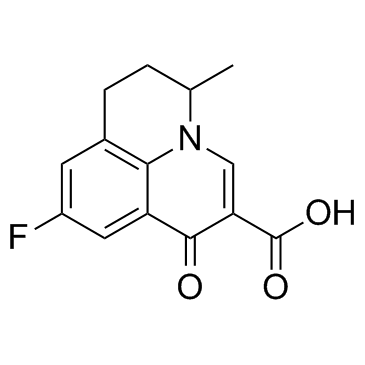
Flumequine structure
|
Common Name | Flumequine | ||
|---|---|---|---|---|
| CAS Number | 42835-25-6 | Molecular Weight | 261.248 | |
| Density | 1.5±0.1 g/cm3 | Boiling Point | 439.7±45.0 °C at 760 mmHg | |
| Molecular Formula | C14H12FNO3 | Melting Point | 253-255°C | |
| MSDS | Chinese USA | Flash Point | 219.7±28.7 °C | |
Use of FlumequineFlumequine is a quinolone antibiotic, and acts as a topoisomerase II inhibitor, with an IC50 of 15 μM (3.92 μg/mL). |
Summary: Flumequine, also known as 氟甲喹, CAS号42835-25-6, with molecular formula C14H12FNO3 and molecular weight 261.248. It is a white to gray-white powder with a melting point of 253-255°C and a boiling point of 439.7±45.0 °C, and a density of 1.5±0.1 g/cm3. For research-use only, not for medical or clinical usage.
This table lists Chinese names, IUPAC names and various aliases of this chemical substance.
| Name | Flumequine |
|---|---|
| Synonym | More Synonyms |
This table contains bioactivity, target information and biological‑assay experimental data of this compound.
| Description | Flumequine is a quinolone antibiotic, and acts as a topoisomerase II inhibitor, with an IC50 of 15 μM (3.92 μg/mL). |
|---|---|
| Related Catalog | |
| Target |
Topoisomerase II:15 μM (IC50) |
| In Vitro | Flumequine is a topoisomerase II inhibitor, with an IC50 of 3.92 μg/mL, and less potently inhibits Gyrase, with an IC50 of 1764 μg/mL. Flumequine (0-625 μg/mL) increases migration of nuclear DNA from CHL cells[1]. Flumequine inhibits Spanish field isolates of B. hyodysenteriae with MIC50 and MIC90 of 50 and 100 μg/mL, and MBC50 and MBC90 of 50, 200 μg/mL, respectively[2]. Flumequine suppresses A. salmonicida isolates with MIC ranging from 0.06 to 32 μg/mL[3]. |
| In Vivo | Flumequine (0-500 mg/kg, p.o.) causes dose-related DNA damage in the stomach, colon, and urinary bladder of mice, 1 and 3 h but not 24 h after its administration[1]. |
| Kinase Assay | Twenty μL of reaction mixture containing 0.4 μg of kinetoplast DNA with 1 U of topoisomerase II and serial dilutions of each antibacterial agent (including Flumequine) are incubated for 5 min at 37°C in buffer containing 20 mM Tris-HCl (pH 7.5), 120 mM KCl, 10 mM MgCl2, 1 mM ATP, 0.5 mM dithiothreitol, and 30 μg/mL of bovine serum albumin. After stopping the reaction by adding sarcosyl with gel-loading buffer, catenated and decatenated kDNAs are separated by agarose gel electrophoresis. The gels are stained with ethidium bromide and photographed using UV light (302 nm) with a Gel Print 200i/VGA, and the brightness of bands is traced with an Image Analyzer. Each band is quantified and the amount of DNA treated with each concentration of quinolone is measured to determine the 50% inhibitory concentration against DNA gyrase and topoisomerase II[1]. |
| Cell Assay | The Chinese hamster lung cell line CHL/IU is routinely maintained in monolayer culture in Dulbecco's modified MEM medium supplemented with 10% fetal bovine serum at 37°C under a 5% CO2 atmosphere. Exponentially growing cells are treated with Flumequine dissolved in DMSO for 1 h. The dose range is chosen in order to obtain both damaged and highly damaged cells. Following Flumequine treatment, cells are embedded in GP42 agarose dissolved in saline at 1%. Cell number and cell viability are determined for each dose[1]. |
| Animal Admin | Infant and young-adult male ddY mice at 4 and 7 weeks of age, respectively, are used after 1 week of acclimatization. Groups are treated once orally with Flumequine at <500 mg/kg. Adult mice are sacrificed at 3 and 24 h after treatment, and 8 organs, the stomach, colon, liver, kidney, urinary bladder, lung, brain, and bone marrow, are removed. Infant mice are sacrificed 3 and 24 h after treatment, and the livers are excised. In another study, the genotoxicity of Flumequine is studied in the regenerating liver of adult mice. For this purpose, male mice at 8 weeks-of-age are anesthetized with ether and 3 major lobes of the liver, left lateral lobe, left medial lobe, and right lateral lobe, are removed. Four days after the hepatectomy, mice are subjected to oral administration of Flumequine once. They are sacrificed 3 h after FL-treatment and regenerated livers are sampled. Slides for the comet assay are prepared at each set time[1]. |
| References |
This table shows physicochemical parameters including melting point, boiling point, density, solubility and optical rotation. Missing data is marked as N/A.
| Density | 1.5±0.1 g/cm3 |
|---|---|
| Boiling Point | 439.7±45.0 °C at 760 mmHg |
| Melting Point | 253-255°C |
| Molecular Formula | C14H12FNO3 |
| Molecular Weight | 261.248 |
| Flash Point | 219.7±28.7 °C |
| Exact Mass | 261.080109 |
| PSA | 59.30000 |
| LogP | 2.41 |
| Vapour Pressure | 0.0±1.1 mmHg at 25°C |
| Index of Refraction | 1.646 |
| InChIKey | DPSPPJIUMHPXMA-UHFFFAOYSA-N |
| SMILES | CC1CCc2cc(F)cc3c(=O)c(C(=O)O)cn1c23 |
| Storage condition | 0-6°C |
| Stability | Stable. Incompatible with strong oxidizing agents. |
This table provides MSDS information including hazard classification, first‑aid, fire‑fighting, spill handling, operation and storage instructions.
This table covers safety warnings, protective measures, incompatible substances and disposal guidelines for this compound.
| Personal Protective Equipment | Eyeshields;Gloves;type N95 (US);type P1 (EN143) respirator filter |
|---|---|
| Hazard Codes | Xi |
| Risk Phrases | R36/37/38 |
| Safety Phrases | S22-S24/25 |
| RIDADR | NONH for all modes of transport |
| WGK Germany | 3 |
| Hazard Class | 6.1 |
| HS Code | 2933990090 |
This table presents publicly reported synthetic routes, reaction conditions, reactants and product information of the compound.
|
~%
Flumequine CAS#:42835-25-6 |
| Literature: Minnesota Mining and Manufacturing Company Patent: US4301289 A1, 1981 ; Title/Abstract Full Text Show Details Minnesota Mining and Manufacturing Company Patent: US4301291 A1, 1981 ; |
|
~%
Flumequine CAS#:42835-25-6 |
| Literature: S P A SOCIETA' PRODOTTI ANTIBIOTICI S.p.a. Patent: EP310849 A1, 1989 ; |
|
~69%
Flumequine CAS#:42835-25-6 |
| Literature: Balint, Jozsef; Egri, Gabriella; Fogassy, Elemer; Boecskei, Zsolt; Simon, Kalman; Gajary, Antal; Friesz, Antal Tetrahedron Asymmetry, 1999 , vol. 10, # 6 p. 1079 - 1087 |
|
~%
Flumequine CAS#:42835-25-6 |
| Literature: S P A SOCIETA' PRODOTTI ANTIBIOTICI S.p.a. Patent: EP310849 A1, 1989 ; |
|
~%
Flumequine CAS#:42835-25-6 |
| Literature: Balint, Jozsef; Egri, Gabriella; Fogassy, Elemer; Boecskei, Zsolt; Simon, Kalman; Gajary, Antal; Friesz, Antal Tetrahedron Asymmetry, 1999 , vol. 10, # 6 p. 1079 - 1087 |
|
~%
Flumequine CAS#:42835-25-6 |
| Literature: Balint, Jozsef; Egri, Gabriella; Fogassy, Elemer; Boecskei, Zsolt; Simon, Kalman; Gajary, Antal; Friesz, Antal Tetrahedron Asymmetry, 1999 , vol. 10, # 6 p. 1079 - 1087 |

![5- [1-(6-fluoro-2-methyl-1,2,3,4-tetrahydroquinolyl)] -methylene-2,2-dimethyl-1,3-dioxan-4,6-dione structure](https://image.chemsrc.com/caspic/123/123400-74-8.png)
![9-fluoro-5-methyl-1-oxo-6,7-dihydro-1H,5H-pyrido[3,2,1-ij]quinoline-2-carboxylic acid ethyl ester structure](https://image.chemsrc.com/caspic/001/42835-47-2.png)
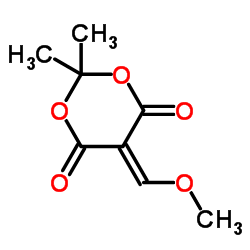

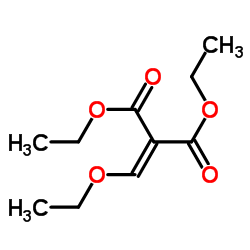
This table lists upstream starting materials and downstream derivative products related to this chemical.
| Precursor 5 | |
|---|---|
| DownStream 0 | |
This table shows customs‑related data including HS‑code, tariff and regulatory conditions for import and export.
| HS Code | 2933990090 |
|---|---|
| Summary | 2933990090. heterocyclic compounds with nitrogen hetero-atom(s) only. VAT:17.0%. Tax rebate rate:13.0%. . MFN tariff:6.5%. General tariff:20.0% |
This table lists relevant public references with title, journal and publication metadata for this compound.
|
Calculating virtual log P in the alkane/water system (log P(N)(alk)) and its derived parameters deltalog P(N)(oct-alk) and log D(pH)(alk).
J. Med. Chem. 48 , 3269-79, (2005) Growing interest in the use of both the logarithm of the partition coefficient of the neutral species in the alkane/water system (log P(N)(alk)) and the difference between log P(N)(oct) (the logarithm... |
|
|
QSAR-based solubility model for drug-like compounds.
Bioorg. Med. Chem. 18 , 7078-84, (2010) Solubility plays a very important role in the selection of compounds for drug screening. In this context, a QSAR model was developed for predicting water solubility of drug-like compounds. First, a se... |
|
|
gyrA and parC Mutations and associated quinolone resistance in Vibrio anguillarum serotype O2b strains isolated from farmed Atlantic cod (Gadus morhua) in Norway.
Antimicrob. Agents Chemother. 51 , 2597-9, (2007) MIC testing of Vibrio anguillarum isolates recovered from diseased farmed Atlantic cod revealed oxolinic acid MICs of < or =0.001, 0.06, and 16 microg ml(-1). Single gyrA Ser-Ile substitutions were id... |
This table contains target information, in‑vitro & in‑vivo assay data for this compound.
|
Name: Primary qHTS assay for inhibitors of alpha-synuclein gene (SNCA) expression
Source: NCGC
External Id: SNCA-p-activity-luciferase
|
|
Name: pKa (acid-base dissociation constant) as determined by Avdeef ref: DOI: 10.1002/04714...
Source: ChEMBL
Target: N/A
External Id: CHEMBL2449007
|
|
Name: Fluorescence-based cell-based primary high throughput screening assay to identify ago...
Source: The Scripps Research Institute Molecular Screening Center
Target: muscarinic acetylcholine receptor M1 [Homo sapiens]
External Id: CHRM1_AG_FLUO8_1536_1X%ACT PRUN
|
|
Name: Cytochrome P450 Family 1 Subfamily A Member 2 (CYP1A2) small molecule antagonists: lu...
Source: 824
External Id: CYP273
|
|
Name: pKa (acid-base dissociation constant) as determined by Liao ref: J Chem Info Model 20...
Source: ChEMBL
Target: N/A
External Id: CHEMBL2449006
|
|
Name: Increase the activity of the Burkholderia fixLJ 2-component system
Source: ICCB-Longwood/NSRB Screening Facility, Harvard Medical School
Target: Burkholderia multivorans
External Id: HMS1625
|
|
Name: Fluorescence-based cell-based primary high throughput screening assay to identify pos...
Source: The Scripps Research Institute Molecular Screening Center
Target: muscarinic acetylcholine receptor M1 [Homo sapiens]
External Id: CHRM1_PAM_FLUO8_1536_1X%ACT PRUN
|
|
Name: qHTS Assay for Small Molecule Inhibitors of the Human hERG Channel Activity
Source: NCGC
External Id: HERG01
|
|
Name: qHTS for Inhibitors of TGF-b: Cytotox Counterscreen
Source: NCGC
Target: N/A
External Id: SMAD3201
|
|
Name: uHTS identification of cystic fibrosis induced NFkb Inhibitors in a fluoresence assay
Source: Burnham Center for Chemical Genomics
Target: cystic fibrosis transmembrane conductance regulator [Homo sapiens]
External Id: SBCCG-A764-CF-PAF-Primary-Assay
|
This table collects all English aliases, systematic names and CAS‑related synonyms of the compound.
| Apurone |
| UNII:UVG8VSP2SJ |
| Quinolone |
| 9-Fluoro-5-methyl-1-oxo-1,5,6,7-tetrahydropyrido[3,2,1-ij]quinoline-2-carboxylic acid |
| FLUMEQUIN |
| Flumeguine |
| EINECS 255-962-6 |
| 9-Fluoro-5-methyl-1-oxo-6,7-dihydro-1H,5H-pyrido[3,2,1-ij]quinoline-2-carboxylic acid |
| MFCD00079298 |
| Imequyl |
| 9-Fluoro-1,5,6,7-tetrahydro-5-methyl-1-oxopyrido[3,2,1-ij]quinoline-2-carboxylic Acid |
| Flumural |
| Flumequine |
| Aoyribe |
| Fantacin |
| R 802 |
This section contains frequently‑asked‑questions about this compound, including basic parameters, properties, storage conditions and corresponding answers.
| Q: What is the LogP of Flumequine? |
| A: LogP of Flumequine is 2.41. |
| Q: What are the storage conditions for Flumequine? |
| A: Storage conditions for Flumequine: 0-6°C. |
| Q: What are the uses of Flumequine? |
| A: Main uses of Flumequine: Flumequine is a quinolone antibiotic, and acts as a topoisomerase II inhibitor, with an IC50 of 15 μM (3.92 μg/mL). |
| Q: What is the SMILES notation of Flumequine? |
| A: SMILES notation of Flumequine is CC1CCc2cc(F)cc3c(=O)c(C(=O)O)cn1c23. |
| Q: What are the upstream materials of Flumequine? |
| A: Related upstream materials(CAS) of Flumequine: 42835-89-2;87-13-8;123400-74-8;42835-47-2;15568-85-1. |
| Q: What is the InChIKey of Flumequine? |
| A: InChIKey of Flumequine is DPSPPJIUMHPXMA-UHFFFAOYSA-N. |
| Q: What is the English name of Flumequine? |
| A: The English name of Flumequine is Flumequine. |
| Q: What English synonyms does Flumequine have? |
| A: English synonyms of Flumequine: Apurone, UNII:UVG8VSP2SJ, Quinolone, 9-Fluoro-5-methyl-1-oxo-1,5,6,7-tetrahydropyrido[3,2,1-ij]quinoline-2-carboxylic acid, FLUMEQUIN, Flumeguine, EINECS 255-962-6, 9-Fluoro-5-methyl-1-oxo-6,7-dihydro-1H,5H-pyrido[3,2,1-ij]quinoline-2-carboxylic acid, MFCD00079298, Imequyl, 9-Fluoro-1,5,6,7-tetrahydro-5-methyl-1-oxopyrido[3,2,1-ij]quinoline-2-carboxylic Acid, Flumural, Flumequine, Aoyribe, Fantacin, R 802. |
| Q: What is the molecular formula of Flumequine? |
| A: Molecular formula of Flumequine is C14H12FNO3. |
| Q: What is the safety information for Flumequine? |
| A: Safety information for Flumequine: S22-S24/25. |
This table lists manufacturers and suppliers of this compound, including vendor names and product supply reference information.
| Shanghai Nianxing Industrial Co., Ltd |
| Henan Tianfu Chemical Co., Ltd. |