Astroglial glutamate transporter deficiency increases synaptic excitability and leads to pathological repetitive behaviors in mice.

Tomomi Aida, Junichi Yoshida, Masatoshi Nomura, Asami Tanimura, Yusuke Iino, Miho Soma, Ning Bai, Yukiko Ito, Wanpeng Cui, Hidenori Aizawa, Michiko Yanagisawa, Terumi Nagai, Norio Takata, Kenji F Tanaka, Ryoichi Takayanagi, Masanobu Kano, Magdalena Götz, Hajime Hirase, Kohichi Tanaka

Index: Neuropsychopharmacology 40 , 1569-79, (2015)

Full Text: HTML

Abstract

An increase in the ratio of cellular excitation to inhibition (E/I ratio) has been proposed to underlie the pathogenesis of neuropsychiatric disorders, such as autism spectrum disorders (ASD), obsessive-compulsive disorder (OCD), and Tourette's syndrome (TS). A proper E/I ratio is achieved via factors expressed in neuron and glia. In astrocytes, the glutamate transporter GLT1 is critical for regulating an E/I ratio. However, the role of GLT1 dysfunction in the pathogenesis of neuropsychiatric disorders remains unknown because mice with a complete deficiency of GLT1 exhibited seizures and premature death. Here, we show that astrocyte-specific GLT1 inducible knockout (GLAST(CreERT2/+)/GLT1(flox/flox), iKO) mice exhibit pathological repetitive behaviors including excessive and injurious levels of self-grooming and tic-like head shakes. Electrophysiological studies reveal that excitatory transmission at corticostriatal synapse is normal in a basal state but is increased after repetitive stimulation. Furthermore, treatment with an N-methyl-D-aspartate (NMDA) receptor antagonist memantine ameliorated the pathological repetitive behaviors in iKO mice. These results suggest that astroglial GLT1 has a critical role in controlling the synaptic efficacy at corticostriatal synapses and its dysfunction causes pathological repetitive behaviors.

Related Compounds

Structure Name/CAS No. Articles
Tamoxifen Structure Tamoxifen
CAS:10540-29-1
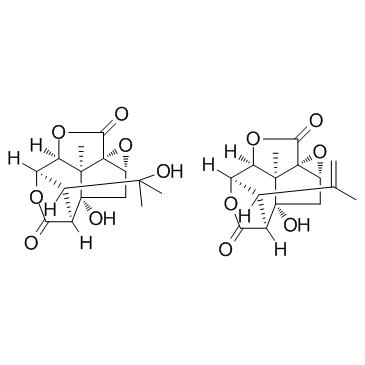
Picrotoxin Structure Picrotoxin
CAS:124-87-8
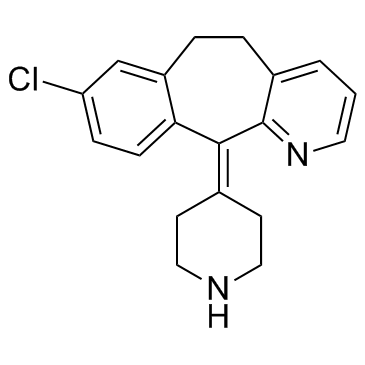
Desloratadine Structure Desloratadine
CAS:100643-71-8