Molecular Neurodegeneration 2015-01-01

Calcium-responsive transactivator (CREST) protein shares a set of structural and functional traits with other proteins associated with amyotrophic lateral sclerosis.

Michail S Kukharsky, Annamaria Quintiero, Taisei Matsumoto, Koji Matsukawa, Haiyan An, Tadafumi Hashimoto, Takeshi Iwatsubo, Vladimir L Buchman, Tatyana A Shelkovnikova

Index: Molecular Neurodegeneration 10 , 20, (2015)

Full Text: HTML

Abstract

Mutations in calcium-responsive transactivator (CREST) encoding gene have been recently linked to ALS. Similar to several proteins implicated in ALS, CREST contains a prion-like domain and was reported to be a component of paraspeckles.We demonstrate that CREST is prone to aggregation and co-aggregates with FUS but not with other two ALS-linked proteins, TDP-43 and TAF15, in cultured cells. Aggregation of CREST affects paraspeckle integrity, probably by trapping other paraspeckle proteins within aggregates. Like several other ALS-associated proteins, CREST is recruited to induced stress granules. Neither of the CREST mutations described in ALS alters its subcellular localization, stress granule recruitment or detergent solubility; however Q388stop mutation results in elevated steady-state levels and more frequent nuclear aggregation of the protein. Both wild-type protein and its mutants negatively affect neurite network complexity of unstimulated cultured neurons when overexpressed, with Q388stop mutation being the most deleterious. When overexpressed in the fly eye, wild-type CREST or its mutants lead to severe retinal degeneration without obvious differences between the variants.Our data indicate that CREST and certain other ALS-linked proteins share several features implicated in ALS pathogenesis, namely the ability to aggregate, be recruited to stress granules and alter paraspeckle integrity. A change in CREST levels in neurons which might occur under pathological conditions would have a profound negative effect on neuronal homeostasis.

Related Compounds

Structure Name/CAS No. Articles
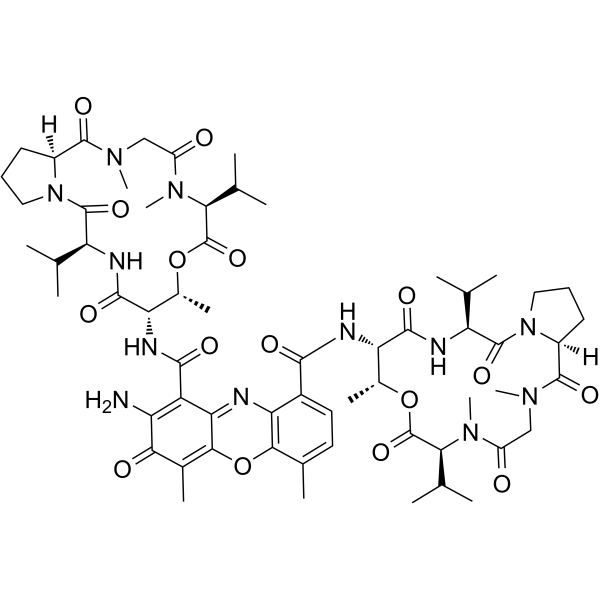
Actinomycin D Structure Actinomycin D
CAS:50-76-0
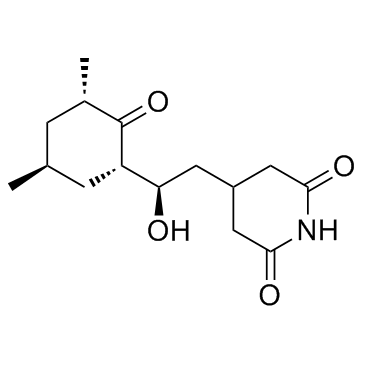
Cycloheximide Structure Cycloheximide
CAS:66-81-9
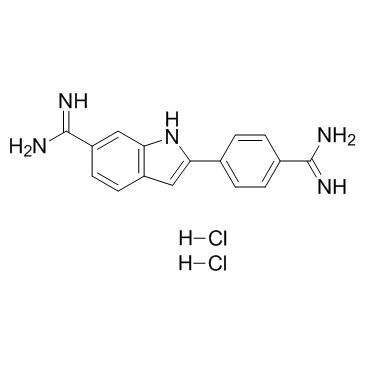
4',6-Diamidino-2-phenylindole dihydrochloride Structure 4',6-Diamidino-2-phenylindole dihydrochloride
CAS:28718-90-3
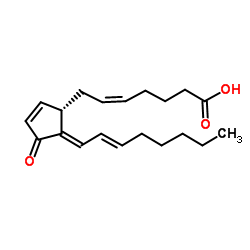
15-Deoxy-Delta12 Structure 15-Deoxy-Delta12
CAS:87893-55-8