2,3,6-TRICHLOROPHENOL
Modify Date: 2025-08-27 18:52:22
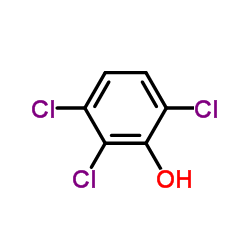
2,3,6-TRICHLOROPHENOL structure
|
Common Name | 2,3,6-TRICHLOROPHENOL | ||
|---|---|---|---|---|
| CAS Number | 933-75-5 | Molecular Weight | 197.446 | |
| Density | 1.6±0.1 g/cm3 | Boiling Point | 230.6±35.0 °C at 760 mmHg | |
| Molecular Formula | C6H3Cl3O | Melting Point | 53-55 °C(lit.) | |
| MSDS | Chinese USA | Flash Point | 78.9±0.0 °C | |
| Symbol |

GHS07 |
Signal Word | Warning | |
| Name | 2,3,6-Trichlorophenol |
|---|---|
| Synonym | More Synonyms |
| Density | 1.6±0.1 g/cm3 |
|---|---|
| Boiling Point | 230.6±35.0 °C at 760 mmHg |
| Melting Point | 53-55 °C(lit.) |
| Molecular Formula | C6H3Cl3O |
| Molecular Weight | 197.446 |
| Flash Point | 78.9±0.0 °C |
| Exact Mass | 195.924942 |
| PSA | 20.23000 |
| LogP | 3.33 |
| Vapour Pressure | 0.0±0.5 mmHg at 25°C |
| Index of Refraction | 1.609 |
| InChIKey | XGCHAIDDPMFRLJ-UHFFFAOYSA-N |
| SMILES | Oc1c(Cl)ccc(Cl)c1Cl |
| Storage condition | 0-6°C |
| Stability | Stability Combustible. Incompatible with strong oxidizing agents, acid anhydrides, acid chlorides. May be hygroscopic. |
| Water Solubility | methanol: 0.1 g/mL, clear |
CHEMICAL IDENTIFICATION
HEALTH HAZARD DATAACUTE TOXICITY DATA
MUTATION DATA
|
| Symbol |
GHS07 |
|---|---|
| Signal Word | Warning |
| Hazard Statements | H302-H315-H319 |
| Precautionary Statements | P305 + P351 + P338 |
| Personal Protective Equipment | dust mask type N95 (US);Eyeshields;Gloves |
| Hazard Codes | Xn: Harmful; |
| Risk Phrases | R22 |
| Safety Phrases | S26-S28 |
| RIDADR | UN 2020 6.1/PG 3 |
| WGK Germany | 3 |
| RTECS | SN1300000 |
| Packaging Group | III |
| Hazard Class | 6.1(b) |
| HS Code | 2908199090 |
| Precursor 10 | |
|---|---|
| DownStream 10 | |
 CAS#:50375-10-5
 CAS#:634-66-2
 CAS#:87-86-5
 CAS#:64981-10-8
 CAS#:935-95-5
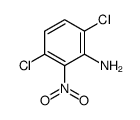 CAS#:15944-74-8
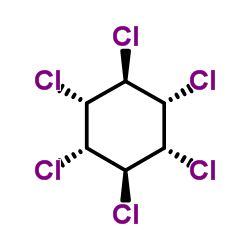 CAS#:58-89-9
 CAS#:1746-01-6
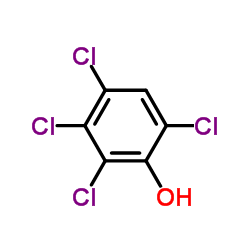 CAS#:58-90-2
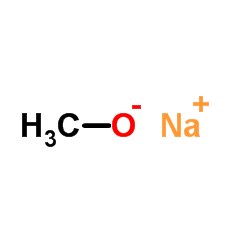 CAS#:124-41-4
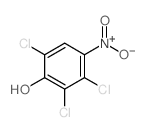 CAS#:20404-02-8
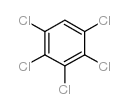 CAS#:608-93-5
 CAS#:13311-72-3
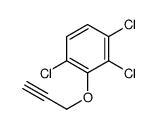 CAS#:15945-64-9
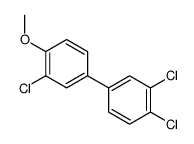 CAS#:124882-73-1
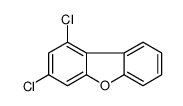 CAS#:94538-00-8
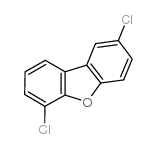 CAS#:60390-27-4
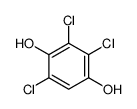 CAS#:608-94-6
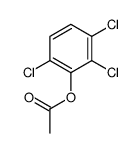 CAS#:61925-87-9
| HS Code | 2908199090 |
|---|---|
| Summary | HS: 2908199090. derivatives of polyphenols or phenol-alcohols containing only halogen substituents and their salts. VAT:17.0%. tax rebate rate:9.0%. supervision conditions:None. MFN tariff:5.5%. general tariff:30.0% |
|
Novel and simple headspace in-tube microextraction coupled with capillary electrophoresis
J. Chromatogr. A. 1346 , 117-22, (2014) • The liquid in a separation capillary is used as an acceptor phase. • Extremely simple but powerful way of liquid phase microextraction. • In-tube microextraction is first applied to headspace extrac... |
| EINECS 213-271-7 |
| Phenol, 2,3,6-trichloro- |
| 2,3,6-TRICHLOROPHENOL |
| MFCD00002165 |
The content on this webpage is sourced from various professional data sources. If you have any questions or concerns regarding the content, please feel free to contact service1@chemsrc.com.
- Shanghai Nianxing Industrial Co., Ltd
- China
- Product Name: 2,3,6-TRICHLOROPHENOL
- Price: Check
- Purity: 98.0%
- Delivery: 10 Day
- Contact: Yang
- Email: sales@echemcloud.com
- Shanghai Jizhi Biochemical Technology Co., Ltd
- China
- Product Name: 2,3,6-TRICHLOROPHENOL
- Price: ¥808.0/100mg
- Purity: 98.0%
- Delivery: Inquiry
- Contact: Liu jia


- Email: 2130147988@qq.com
- Dayang Chem (Hangzhou) Co., Ltd.
- China
- Product Name: 2,3,6-trichlorophenol
- Price: $Inquiry/100g $Inquiry/1kg $Inquiry/100kg $Inquiry/1000kg
- Purity: 98.0%
- Delivery: Inquiry
- Contact: Ms Wang
- Email: enquiry@dycnchem.com
Get all suppliers and price by the below link: